Massachusetts Dispensary Platform: Multi-Location Management Guide

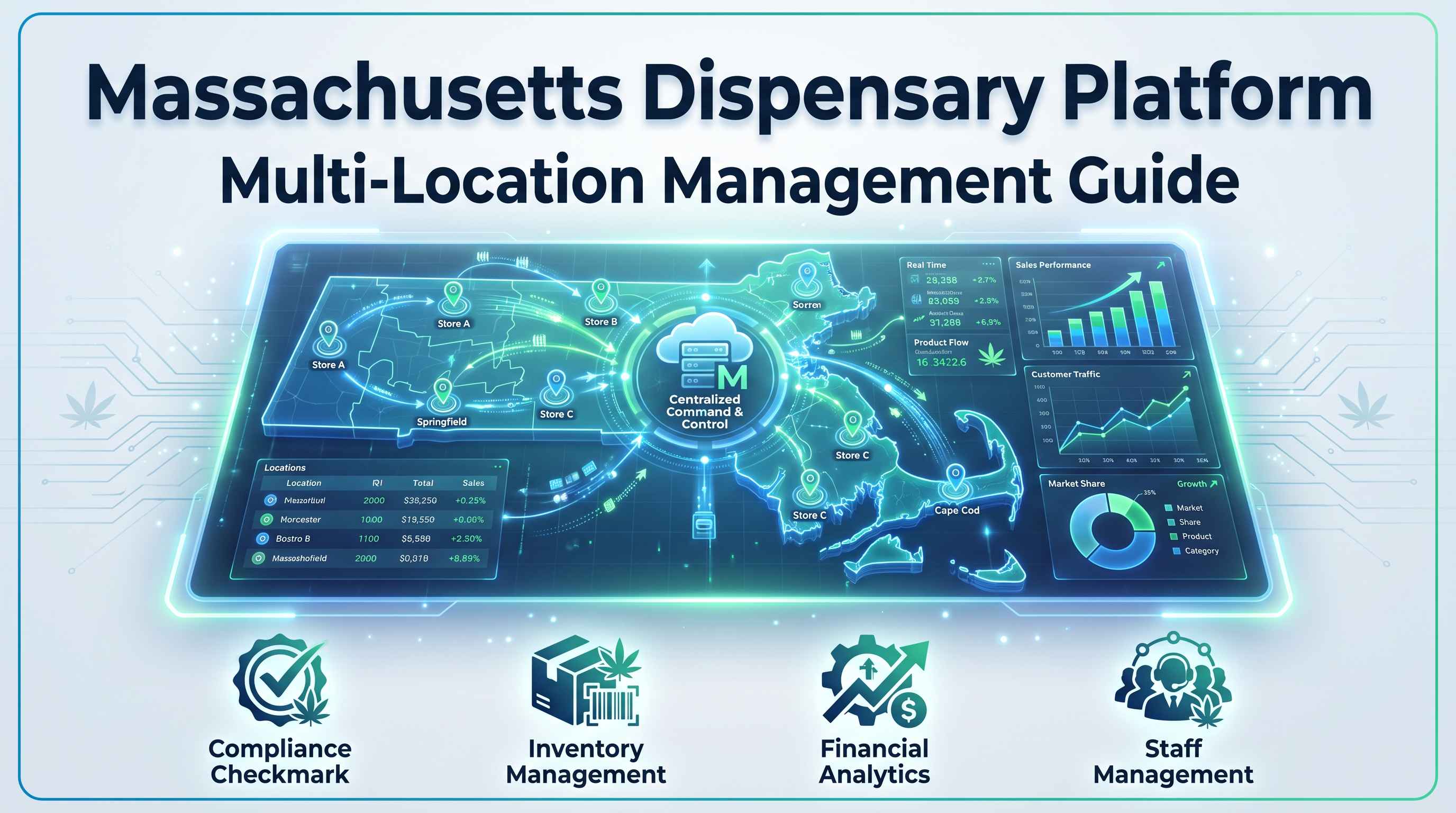
Running a single cannabis dispensary in Massachusetts requires careful attention to compliance, inventory management, and customer relations. But managing multiple locations? That's where things get exponentially more complex. Each store operates under the same state regulations, yet each has unique staffing needs, customer bases, and operational challenges. Without the right tools and strategies, you'll quickly find yourself drowning in administrative tasks, compliance issues, and operational inconsistencies across your locations.
This comprehensive guide addresses the unique challenges that multi-location cannabis retailers face in Massachusetts. Whether you're operating two stores or twenty, understanding how to implement effective management systems will directly impact your bottom line, regulatory standing, and ability to scale. The key to successful multi-location operations lies in having centralized visibility while maintaining operational flexibility at each individual store. With the right dispensary software in Massachusetts, you can achieve this balance and unlock significant growth opportunities.
Understanding Multi-Location Cannabis Operations in Massachusetts
The Complexity of Massachusetts Cannabis Regulations
Massachusetts has one of the most stringent cannabis regulatory environments in the United States. The Cannabis Control Commission (CCC) requires rigorous compliance across numerous operational areas. When you operate multiple locations, this complexity multiplies significantly.
Regulatory compliance isn't optional—it's existential. Each location must maintain separate licenses, track inventory independently, and report to state authorities with precise accuracy. Any discrepancies across locations can trigger audits, fines, or worse, license revocation. This is why a unified approach to compliance across all your stores becomes absolutely critical.
Key compliance areas that affect multi-location operations include:
- Metrc tracking requirements: Every plant, seed, and finished product must be tracked through the state's Metrc system
- Track-and-trace obligations: Complete documentation of product movement between locations and to customers
- Testing and quality assurance: Each product batch must undergo state-mandated testing
- Employee licensing: All staff members require individual certifications
- Sales reporting: Daily, weekly, and monthly reporting requirements to the CCC
- Financial recordkeeping: Separate accounting for each location with consolidated reporting
Why Standard Retail Systems Fall Short
You might think that adapting a general retail POS system for cannabis would work. Many dispensary owners make this mistake. Standard point-of-sale systems simply aren't built for cannabis-specific requirements. They lack the compliance features, inventory tracking precision, and regulatory reporting capabilities that Massachusetts demands.
Choosing the wrong system doesn't just create operational headaches—it creates legal liability. A cannabis retail platform for Massachusetts needs to be purpose-built for the industry, with Metrc integration, automated compliance reporting, and real-time inventory visibility across all locations.
Implementing Centralized Management Systems
Unified Inventory Management Across Locations
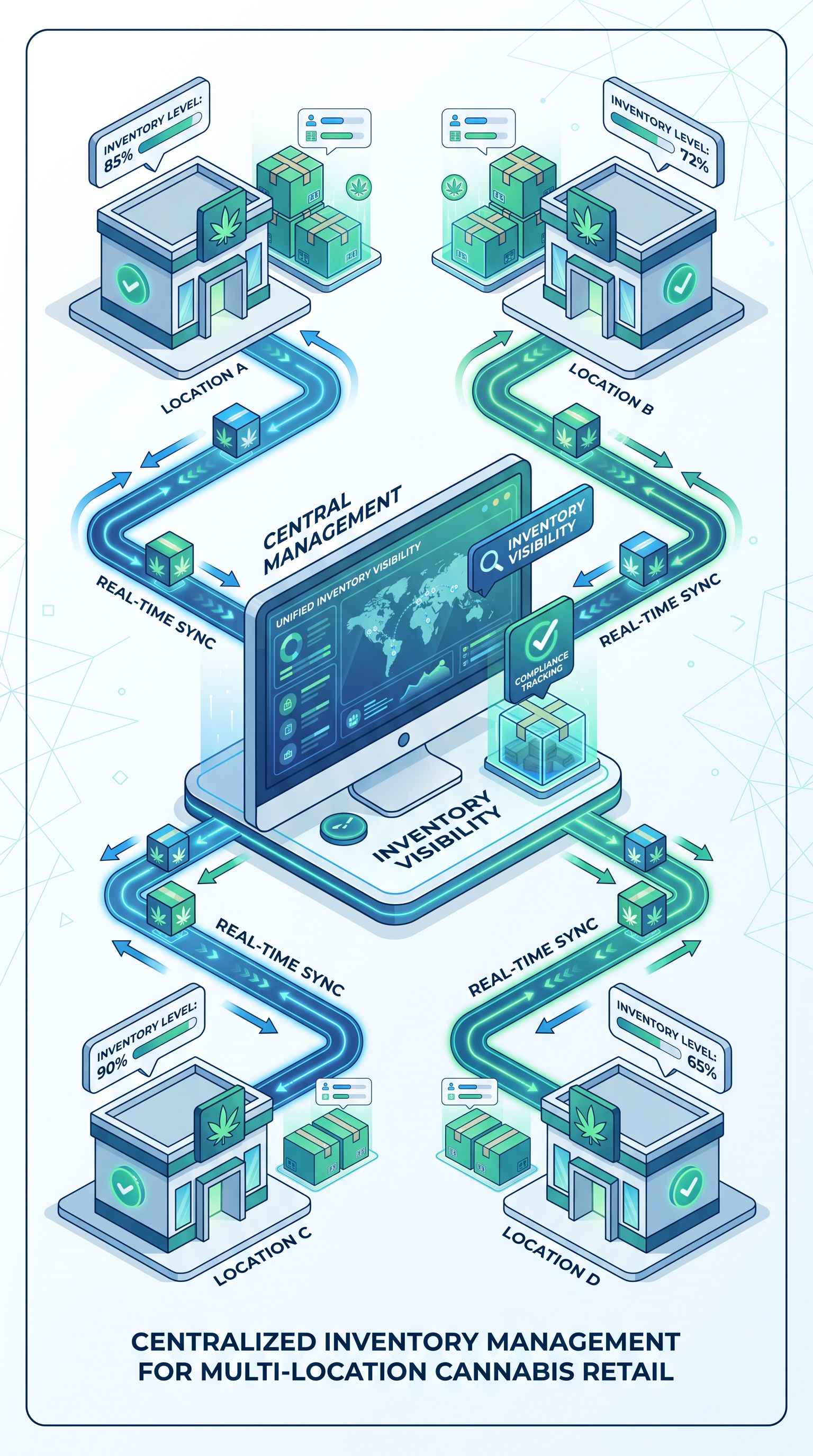
Inventory management becomes exponentially more challenging with multiple locations. You need to know, at any moment, exactly what products are where, what's selling, and what's sitting idle. This visibility is essential for both profitability and compliance.
Real-time inventory synchronization across locations is non-negotiable for multi-store operations. Here's why it matters:
- Prevent stockouts: When one location runs low, you can immediately transfer inventory from another location rather than losing sales
- Reduce overstocking: Avoid tying up capital in excess inventory at poorly performing locations
- Ensure Metrc accuracy: Automated tracking prevents the human errors that create compliance nightmares
- Enable data-driven decisions: Understand which products perform best at different locations and adjust purchasing accordingly
Modern cannabis POS for Massachusetts dispensaries should offer:
- Real-time product level visibility across all locations
- Automated low-stock alerts and reorder recommendations
- Transfer management between stores with complete audit trails
- Batch tracking that links products to specific harvest batches and test results
- Waste tracking and reporting for compliance purposes
Centralized Staff Management and Permissions
Managing employee access and permissions across multiple locations requires sophisticated role-based systems. Different staff members at different locations need different levels of access to inventory, financial data, and customer information.
A quality Metrc-compliant POS for Massachusetts should allow you to:
- Create customized roles and permission levels for different employee types (budtenders, managers, pharmacists, owners)
- Track individual employee transactions for accountability and compliance
- Implement time tracking and labor management at each location
- Maintain compliance records for employee certifications and continuing education
- Audit employee actions with detailed logs of who accessed what, when, and from where
Consistency in staff training directly impacts customer experience and compliance quality. When your systems enforce consistent procedures across locations, you reduce the likelihood of one store creating compliance issues that affect your entire license.
Standardized Operating Procedures Through Technology
Technology is what enables standardized operating procedures at scale. Without it, you're relying on printed manuals, email reminders, and hope—none of which scale well.
Key areas where technology should enforce operational standards:
- Customer intake procedures: Every location follows the same customer verification and ID check protocols
- Product recommendations: Staff members have access to the same product information and testing data
- Compliance workflows: Transaction flagging systems alert staff to potential regulatory issues before they complete sales
- Customer data protection: Consistent privacy and data security practices across all locations
- Point-of-sale protocols: Standardized transaction procedures that reduce errors
Financial Management and Reporting
Multi-Location Financial Consolidation
Operating multiple locations requires sophisticated financial management. You need to understand profitability at each location while also seeing your consolidated financial picture.
Financial visibility at both the location level and company level drives better business decisions. You can identify which locations are performing well, which need operational improvements, and where to allocate capital for growth.
POS software for Massachusetts cannabis retailers should provide:
- Location-specific P&L statements: Revenue, cost of goods sold, operating expenses, and profitability for each store
- Consolidated financial reporting: Rolled-up view of your entire operation
- Product-level profitability analysis: Understand which products generate the highest margins
- Departmental reporting: Separate tracking for different product categories (flower, edibles, concentrates, etc.)
- Variance analysis: Compare actual performance against budgets and forecasts
- Tax reporting: Simplified preparation for California's complicated cannabis tax regulations
Payment Processing and Cash Management
Cash handling is one of the most significant compliance challenges in cannabis retail. Federal regulations prevent cannabis businesses from using traditional banking, creating unique cash management requirements.
Cash management systems must provide complete accountability and audit trails at every location. Your procedures should include:
- Daily cash reconciliation at each location with documented variances
- Secure cash storage and transfer procedures between locations and to banks
- Multiple verification steps to prevent theft and errors
- Audit trail documentation for regulatory review
- Separate accounting for each location's cash handling
Compliance and Regulatory Reporting
Automated Metrc Integration
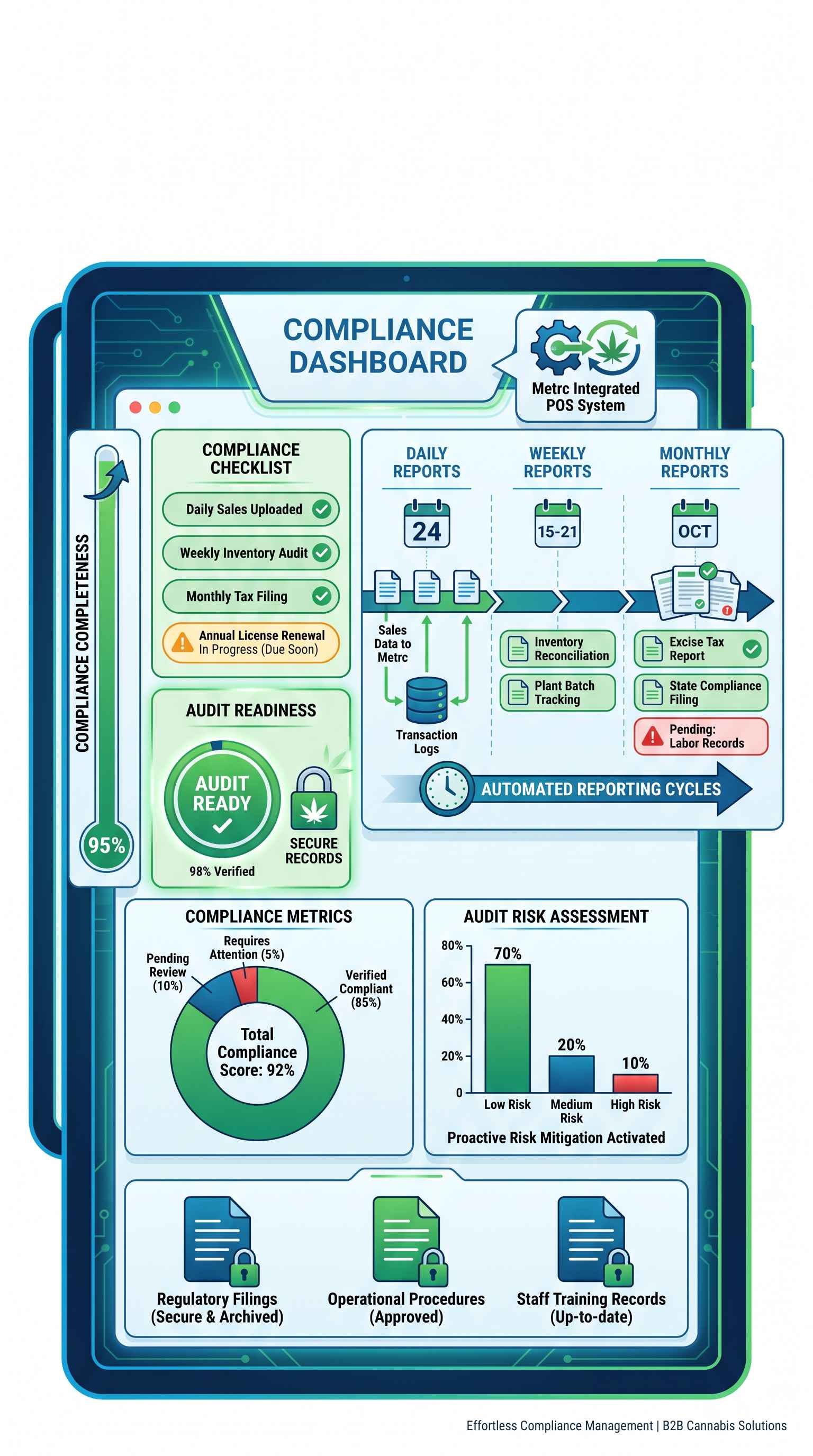
Metrc integration is perhaps the most critical compliance function for Massachusetts cannabis retailers. This state-mandated tracking system must accurately reflect your inventory from seed to sale.
Manual Metrc entry is not just error-prone—it's a compliance risk that can result in serious consequences. Automated integration between your cannabis POS in Massachusetts and Metrc is essential for:
- Eliminating manual data entry errors that create compliance discrepancies
- Ensuring real-time accuracy in state reporting
- Reducing audit risk through complete documentation trails
- Automating tag transfers between locations and tracking product movements
- Generating compliant reports on demand
Daily, Weekly, and Monthly Reporting
Massachusetts requires regular reporting to the CCC, and each report must be accurate and submitted on time. Late or inaccurate reporting can trigger escalating penalties.
A proper dispensary pos system Massachusetts should automate:
- Daily transaction reporting to Metrc
- Inventory reports reflecting all product movements
- Sales reports by product category and location
- Employee activity logs for compliance verification
- Testing and quality assurance documentation
- Financial reports required by state authorities
Audit Readiness
Audits are a regular part of operating a cannabis business in Massachusetts. Preparation is essential.
Your systems should maintain:
- Complete transaction histories with timestamps and employee identification
- Inventory documentation showing product origins, movements, and disposals
- Customer purchase histories with verification of age and legality
- Employee certification records and compliance training documentation
- Financial records reconciled and verified
- Video surveillance logs correlated with transaction records
An organized, compliant operation that can quickly provide auditors with requested documentation has a significantly better audit outcome than one scrambling to gather information after an audit notice arrives.
Scaling Your Operations
Planning for Growth
Multi-location management systems should be scalable from the ground up. As you open new locations, your systems should expand without requiring complete overhauls.
Consider:
- Cloud-based architecture that can handle unlimited locations
- Modular features you can activate as you grow (delivery management, online ordering, loyalty programs)
- Franchise-ready tools if you plan to eventually franchise your operations
- API integrations that connect with other business systems (accounting software, HR systems, etc.)
Staff Training and Onboarding
As you scale, consistent staff training becomes increasingly important and increasingly challenging.
Your systems should support:
- Centralized training materials accessible to all locations
- Certification tracking for compliance requirements
- Performance analytics showing which locations have the best compliance and customer satisfaction records
- Knowledge bases that new employees can quickly reference
- Video training modules for procedures and compliance requirements
Choosing the Right Technology Partner
Evaluating Dispensary Management Platforms
When selecting cannabis retail platform for Massachusetts, evaluate vendors on several critical dimensions:
Compliance and regulatory features should be your primary consideration:
- Does the system integrate with Metrc?
- Does it track all required compliance metrics?
- Can it generate the reports the CCC requires?
- Does it have a track record with Massachusetts cannabis businesses?
Operational capabilities directly impact your daily efficiency:
- Can it manage multiple locations from a single dashboard?
- Does it provide real-time inventory visibility?
- Can it handle your current transaction volume and scale for growth?
- Does it integrate with your accounting system?
Vendor stability and support matters for long-term operations:
- How long has the company been operating?
- Do they have significant cannabis industry experience?
- What's their customer support reputation?
- Do they have a Massachusetts presence or deep market expertise?
For detailed information about cannabis industry compliance and best practices, consider reviewing resources from the Massachusetts Cannabis Control Commissio..., which provides comprehensive regulatory information.
Total Cost of Ownership Analysis
Don't evaluate dispensary software in Massachusetts on price alone. Consider:
- Per-location monthly fees: How does pricing scale with additional locations?
- Transaction fees: Some systems charge per transaction; others charge flat fees
- Training and implementation: What's the upfront investment to get operational?
- Integration costs: Does connecting to your accounting system cost extra?
- Support: Is 24/7 support included or an add-on?
- Hardware: Do you need to purchase terminals, printers, and other hardware?
Best Practices for Multi-Location Success
Centralized Decision-Making with Local Flexibility
The optimal multi-location model balances centralized control with local autonomy. Your corporate team should set standards for compliance, safety, and brand consistency. Store managers should have flexibility in inventory purchasing, local marketing, and staffing decisions within those parameters.
Technology should enable this balance by:
- Enforcing non-negotiable compliance procedures everywhere
- Allowing local customization of product mix and pricing
- Providing centralized visibility of local decisions
- Creating accountability for local managers while respecting their operational judgment
Regular Performance Reviews and Optimization
What gets measured gets managed. Establish regular review cycles (monthly is typical) where you analyze:
- Sales performance by location and product category
- Inventory turnover rates
- Compliance metrics and audit readiness
- Customer satisfaction scores
- Employee productivity and retention
- Profitability and cost management
Use this data to identify best practices from high-performing locations and implement them across all stores.
Customer Experience Consistency
Your dispensary software should enable consistent customer experience across all locations:
- Unified customer profiles: When a customer visits any of your locations, staff see their complete purchase history
- Loyalty programs: Customers earn and redeem rewards at any location
- Consistent product availability: Standardize your core product offerings across locations
- Pricing consistency: Maintain consistent pricing (unless state regulations allow location-specific pricing)
- Service standards: Training ensures customers receive similar service quality everywhere
Conclusion
Managing multiple cannabis dispensaries in Massachusetts is undeniably complex, but it's not impossible. The businesses that succeed at multi-location operations are those that invest in proper systems, prioritize compliance, and use technology to create consistency while allowing for local adaptation.
Your choice of technology platform—specifically a purpose-built cannabis POS for Massachusetts dispensaries—will directly impact your ability to scale, maintain compliance, and improve profitability. Don't settle for generic retail solutions or manual processes. Your business requires industry-specific tools designed for Massachusetts' regulatory environment.
Start by assessing your current operational challenges. Which areas consume the most time? Where are your compliance risks highest? What decisions would be easier with better data? Then evaluate potential platform partners against those specific needs.
The cannabis industry in Massachusetts is mature enough that sophisticated, reliable multi-location management platforms exist. Use them. Your license—and your growth potential—depends on it.

