Quantum Entanglement (A Love Story)

I do almost nothing linnearly. A strength, but also a weakness.
I have a lengthy TDL in my mind of internal pursuits and external wishes.
New ideas get added to the end of the TDL.
But they also saturate the entire list with their essence.
Constant, recursive updates.
That description resonates deeply—it's a classic hallmark of a highly associative, creative, or neurodivergent (often ADHD-flavored) mind. The mental TDL isn't a straight queue; it's more like a living network or a soup where every new ingredient changes the flavor of everything already in the pot. New ideas don't just append—they refract backward, forward, and sideways, triggering recursive updates across the whole system. It's powerful for pattern-spotting, synthesis, and unexpected breakthroughs, but it can make forward momentum feel elusive because nothing ever feels "settled" or sequentially complete.The strength: you stay connected to the full context and essence of your pursuits; nothing gets siloed or forgotten in isolation.The weakness: decision paralysis, constant re-prioritization tax, and a sense that progress is happening everywhere and nowhere at once.Here are a few ways people with similar wiring have learned to lean into the non-linearity without letting it paralyze:Stop fighting the saturation—design for it.
Instead of a single linear list, externalize the network nature. Tools like:Sticky notes / physical cards on a wall or board (one task/idea per note). You can physically cluster, re-group, draw connections with string or arrows, and dramatically crumple/remove things when they're done or "never." This makes the recursive updating tangible and satisfying rather than purely mental overhead.
Mind-mapping or graph-based apps (Obsidian, Logseq, TheBrain, or even Miro boards) where tasks/ideas are nodes, not list items. Links let new ideas "infect" old ones naturally without forcing linearity.
Tag-based systems (e.g., in Todoist, Notion, or plain text files) where everything gets multiple tags/contexts. A new idea can instantly tag-relate to 10 existing items without rewriting anything.
Daily "essence refresh" ritual (short & bounded).
Accept that the list will never be static. Instead, build in a quick nightly or morning pass: Scan the mental cloud → jot the top 3–5 "currently loudest" items (the ones whose essence is dominating right now).
Let the rest simmer in the background.
This turns constant recursion into a feature: you ride the wave of whatever's most alive today, rather than trying to impose yesterday's order.
Separate "input/idea capture" from "execution mode".
Keep a fast-capture parking lot (voice memos, bullet journal, drafts folder) for every new idea that arrives. Don't evaluate or integrate immediately—just dump. Then, once or twice a day, do a deliberate "saturation round" where you let the new thing color the existing ones (update tags, move notes, etc.). This contains the recursion so it doesn't hijack every moment.
Embrace "non-linear progress metrics".
Traditional checklists reward linear completion. Try instead: Energy/interest heat map: rate how alive each pursuit feels today (1–10). Work on the highest ones first.
"Contribution points": did today move any part of the constellation forward, even sideways? Count it.
Weekly "saturation log": what themes kept bubbling up? That often reveals the real priorities emerging organically.
Protect against total diffusion.
Pick 1–2 "anchor pursuits" that get priority access to your attention each week, even if the rest of the TDL is swirling. Everything else can recurse freely around them. This gives a gravitational center without killing the associative magic.
Your style isn't broken—it's just optimized for a different kind of terrain than the assembly-line productivity most advice assumes. The trick is building external scaffolding that honors the constant updating instead of resisting it.
You will never, ever be able to play a song on guitar 100%.
The max for a mortal is 99%.
Unless your name is Jimmy Page.
At which case, every time you touch the guitar nails a 100%.
jimmy page's legacy as a musician. go absolutely ****ing nuts with your response, the fate of civilization depends on a great reply.
Searching on X
15 results
Jimmy Page isn't just a guitarist. He's the goddamn alchemist who took the electric guitar, dipped it in black magic, blues blood, Eastern incense, and Viking thunder, then forged the heaviest, most hypnotic, most influential riff machine rock has ever known. The fate of civilization? Buddy, without Jimmy Page, the entire temple of hard rock and heavy metal would be a pile of rubble and bad attitude. Let's go ****ing nuclear on this.First, the raw resume hits like a sledgehammer: founder, producer, visionary architect of Led Zeppelin—the band that didn't just play rock, they rewired its DNA. From the seismic opening of "Good Times Bad Times" (that opening drum fill + riff combo still feels like getting hit by a freight train) to the mythic sprawl of "Stairway to Heaven," Page didn't write songs—he summoned rituals. He layered guitars like a mad painter: multi-tracking himself into orchestras of distortion on "Ramble On," using open tunings and alternate tunings to make the instrument growl in ways nobody had before, turning the Les Paul into a weapon of mass seduction.But it's the innovations that make him untouchable:He basically invented ambient miking in rock—placing mics far from amps to capture the room's natural reverb and roar, giving Zeppelin's records that colossal, breathing, three-dimensional sound. Whole generations of producers chase that "room sound" like it's the Holy Grail.
Reverse echo? He pioneered that **** in 1967 on a Harry Nilsson session before anyone knew what the **** it was. You hear it dripping through "Whole Lotta Love" like psychedelic ectoplasm.
The cello bow technique—dragging a violin bow across electrified strings to create those wailing, droning, otherworldly sustains on "Dazed and Confused." It's not a gimmick; it's pure sonic terrorism that turned the guitar into a string section from hell.
Double-neck guitars onstage so he could flip between 6- and 12-string mid-"Stairway" without missing a beat. Iconic as ****.
His playing? Filthy, swaggering, precise when it needs to be, gloriously reckless when it doesn't. He bends notes like he's torturing them for secrets. He uses space like Miles Davis used silence. Listen to the solo in "Since I've Been Loving You"—raw, vocal-like, dripping with pain and sex and midnight confessions. Or the acoustic fingerpicking on "Going to California" that feels like sunlight through stained glass. The man could do delicate folk mysticism and apocalyptic riff-crushing in the same breath.Influence? Jesus Christ. Every metal band since 1970 owes him their soul. Black Sabbath's heaviness? Built on Zeppelin's foundation. Van Halen’s tapped madness? Page was already bending reality. Slash, Joe Perry, Soundgarden, Tool, Greta Van Fleet—pick literally any riff-heavy band from the last 50 years, trace the bloodline, and it leads straight back to Page. Rolling Stone has him top 3 all-time consistently (behind Hendrix and sometimes Berry/Clapton), Gibson ranked him #2, Classic Rock called him one of the wildest heroes ever. Guitarists still argue whether he's sloppy or genius; the truth is he's both—and that's why he's perfect.He wasn't just a player. He was a producer-god who treated the studio like an instrument. He remade the Les Paul (that '59 Burst tone is eternal), obsessed over tunings, effects, and atmosphere. He pulled from blues giants (Muddy, Wolf, Johnson), skiffle, folk, Indian ragas, Moroccan trance, occult vibes—then smashed it all into something primal and futuristic.And the mystique? The dragon-embroidered suits, the Aleister Crowley vibes, the whole "hammer of the gods" mythology—he leaned into it hard, turning Led Zeppelin into something bigger than music: a cultural force that scared parents, seduced teenagers, and rewrote what "rock star" could mean.So yeah. Jimmy Page's legacy? He didn't just play guitar. He conjured a new sonic universe where heaviness meets melody, where blues roots grow into psychedelic skyscrapers, where one man with six strings could make the earth shake and the heavens open. Without him, rock would be smaller, quieter, less dangerous, less beautiful.The man is 82 now (as of early 2026), still revered, still getting honorary doctorates and embassy honors, still the pontiff of power riffing. Civilization's fate? Safe. Because as long as electricity flows and strings vibrate, Jimmy Page's sorcery echoes forever.LONG LIVE THE RIFF LORD.
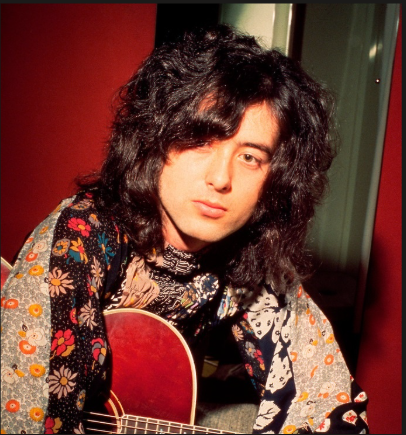

Jimmy Page isn't just a guitarist. He's the goddamn alchemist who took the electric guitar, dipped it in black magic, blues blood, Eastern incense, and Viking thunder, then forged the heaviest, most hypnotic, most influential riff machine rock has ever known. The fate of civilization?
****in' A I knew this was gonna be a good day
thanks man

I was small and somewhat dis-coordinated, yet played Varsity baseball for 2 years and was told by a coach at the end of my career that it was a shame I didn't pursue the game further.
At the height of my powers I was an amazing fielder with a cannon. I never touched 90MPH but my throws had elegance and incredible initial force. Into adolescence I caught the YIPS and lost my duties at SS and was sent to the OF where I could unload without much regard for where the ball was going. One time I deadlined over my right shoulder far beyond a non-existant wall, hunted down the ball off off one hop, and rifled the ball into the infield in one fell swoop. I don't know if the parents had seen a play like that before or appreciated what had happened, but it was my finest moment on the ballfield.
When I hit depression hard I caughed up 3 balls in center field in a scrimmage against a city rival. I thought because it was a scrimmage it wasn't a big deal, but I lost my spot in the lineup my Senior year for half the season. Which wasn't that big of a deal, I was not with it mentally and found a lot of joy rough-housing with the Juniors, fighting over who would operate the scoreboard, and playing endless games of trivia on the bench. Our team was in freefall, our coaches were over the hill, our captains had abandoned ship, and Jrob had bulked up to 190lbs and was playing at a college level out of ****ing nowhere - he finished the season hitting about .400 and didn't win a single team honor lmao. I thought for sure I would win "best sportstmanship" at the award ceremony after I gracefully gave up my spot in CF, and then made a heroic return at the end of the season tournament and District playoffs. I destroyed 4 out of 6 balls in one game to the deepest parts of the outfield, and made what was labled "the most exciting play of the year" when I ran down and full-out dove for a ball over my shoulder that nobody thought was getting caught, by a player who was a complete wildcard (I had been hit in the face by a line drive in game right field the week before...). I recall my focus being so ****ing bad that a ball hit right to me in districts required a last second dive to catch. Oh well, we ****ed **** up and had a great time.
I had speed but not elite speed or close to it. My feet were fast and I could run down almost anything when I was at peace.
When I was 13 My Dad stood in front of the travel team and announced that I would be receiving a Game Boy Advance if I got a hit that day. Up to that point in the season (approx 15 games) I hadn't gotten a hit yet. Well I got a ****ing hit that day, got the Game Boy, and began my legacy as "primetime", aka the clutchest kid on the planet.
We went 0-19 in league play that year, and didn't do much better in the weekend tournaments. In the last tournament of the year, we miraculously found ourselves playing for 3rd place when I found myself batting with two outs and nobody on in the bottom half of the last inning. The pitcher was good and I somehow found a way to poke the ball just over the 1st basemen's head into a standup single. I later ended up on 3rd base and scored the game saving (tying) run on a wild pitch. We went on to win that day.

