Scaling PLO2 (PLO 4-Card Cash Game)
In January, I decided to try scaling PLO2 again.
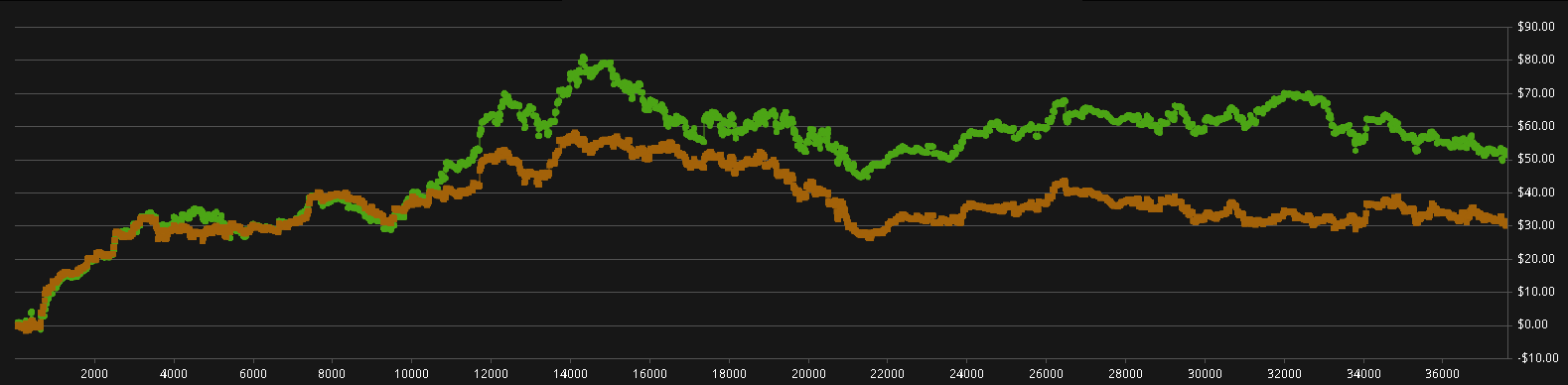
Most of the month was focused on studying. I didn’t grind much. In the last few days, I tested pushing for the leaderboard. Off-table prizes were what saved the session, as my in-game results were mostly losing or breakeven.
In my last fast-poker session on GGPoker, I played ~17k hands and finished 4th or 5th on the leaderboard.
Current main preflop leaks: calling too much in several positions, especially SB and BB. From these spots, I should be folding more and 3-betting more. Overcalling from other positions is also losing EV, but less than in the blinds. Preflop decisions need more automation. This is my main study focus right now.
I’ll return to grinding once my preflop is more solid. The goal is to build a routine that supports higher-intensity grind days, competing for leaderboard podiums while extracting value from promotions (rakeback, flipouts, weekend freerolls).
Started with $100.
Current bankroll: $215.35.
All additional earnings outside cash games (freerolls, flipouts, leaderboard prizes, and rakeback) are included in the current bankroll.
3 Replies
In February, I wasn't able to study as much as I wanted, although I studied as much as I could. I listened to poker-related podcasts and also watched PLO players grinding Rush & Cash.
I met someone who has helped me a lot in the process of becoming a better player. I'm very grateful to him. He's a great person and a great player. He certainly played a part in improving my graph, and we're still in contact. Also, I managed to find good people to be in a study group, which helps me as a player and as a human being in a certain way.
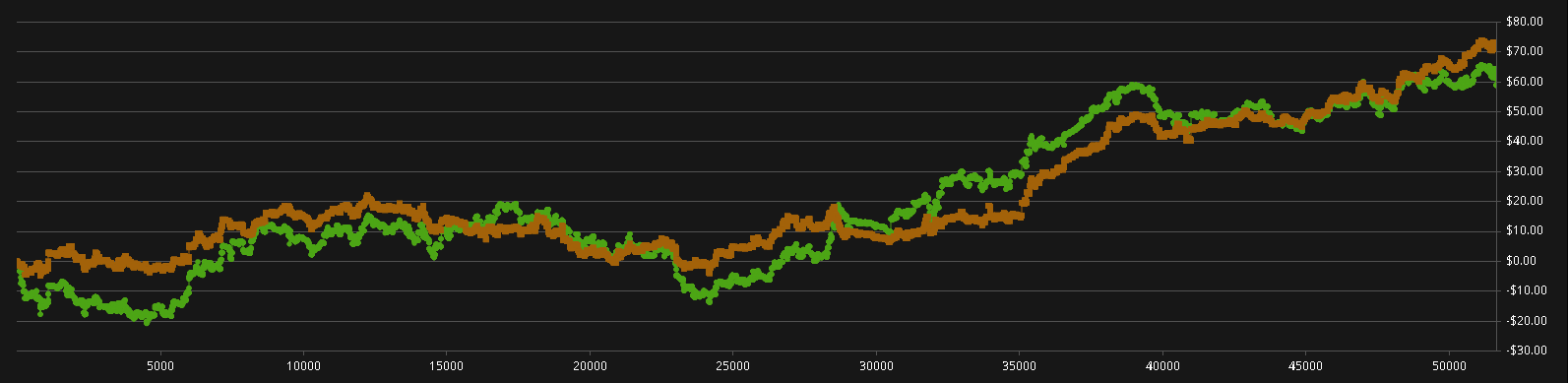
This month I grinded approximately 50, 000 hands, as I intend to study more. I wanted to be more prepared to grind Rush & Cash, but I realized it affects me much more than I imagined, so I intend to grind Rush & Cash, but without aiming for the leaderboard anymore.
In my last Rush & Cash session, I managed 8.2 EV bb/100 in approximately 15, 000 hands.
My current bankroll is $318. Next month I'm going to make 5 buy-ins on PLO5 to see how I perform, and if I can't maintain it, I'll go back to growing my bankroll in PLO2 and return to PLO5 with more buy-ins.
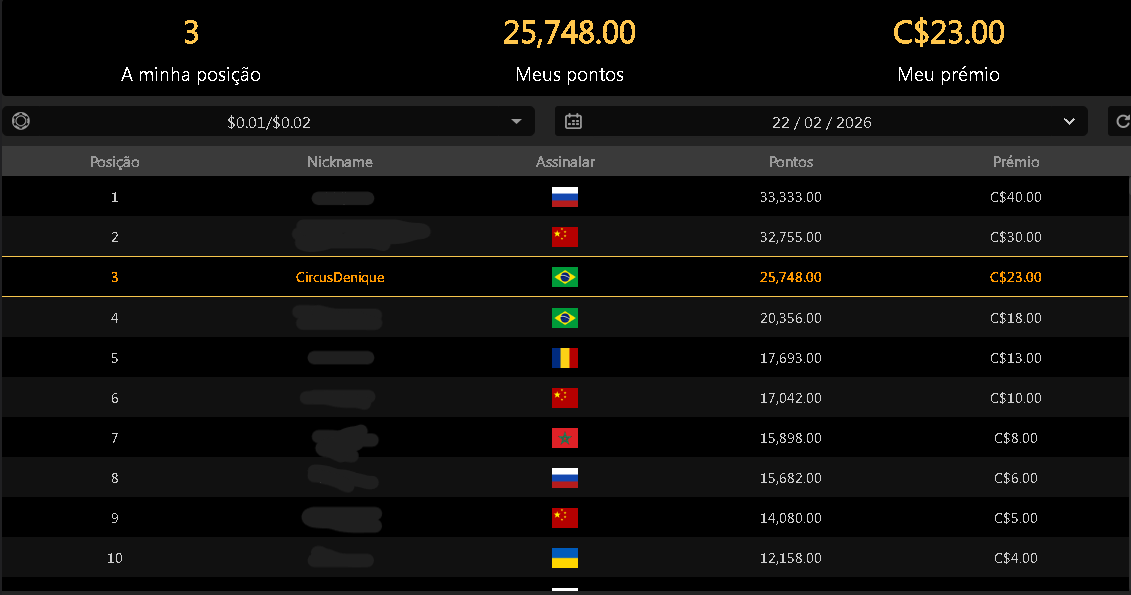
That's all for now. Below is my result from the last grind, and my graph from ggpoker (not including rake).
impressive volume
any tips for playing PLO2 on GG?
gl
Hi, Fixi.
I stopped playing PLO in March due to variance; I tried moving up in stakes but struggled, and then hit a brutal downswing where my opponents were running incredibly hot against me.
As I recall, I tended to raise tighter than GTO recommendations, since you see a lot of multi-way pots at those stakes. I believe adapting to specific players is highly profitable, given the wide variety of player types in the field.
In my view, having a very strong pre-flop range isn't an issue; most players don't seem to pay attention to VPIP or 3-bet frequency, so I didn't mind having stats that were skewed toward the tighter side.
I think my best sessions were the ones where I focused on opening hands that play well in multi-way pots, and I didn't mind over-folding pre-flop with hands that are theoretically standard opens.
Also, I think sticking to a consistent post-flop strategy works well against this field. For a while, I basically used a pot-sized bet for all post-flop actions—which I think is an interesting line—but after further study, I simplified it to half-pot on the flop and pot-sized on the turn, while always trying to understand the ranges that would call me.
I believe the field mostly plays their own cards and tends to be passive, so I was cautious whenever they bet or raised post-flop. I only tried to bluff players I knew were capable of folding on a given street, but overall, I think playing for value in PLO2 on GG (Rush & Cash) tends to be far more profitable than employing a complex strategy.
Regarding 3-bets, I don't believe many AAXX hands—which are theoretically clear 3-bet candidates—should be played that way; we risk facing cold-calls and then having to play a post-flop hand against three opponents. So, I limited my 3-betting range to strong AAXX hands (double-suited with connected side cards, or with great broadway cards for the nut straight).
I believe we can make many theoretical 3-bets with hands other than AAXX, while being prepared to call 4-bets with the right hands (K765ds, JT98ds, as well as other groups like two-pair, etc.).
Since many players only 3-bet with AAXX, we have the advantage of knowing what we're up against. We should be more cautious against weak regulars who know how to 3-bet with hands other than AAXX.
I hope this helps.


