CrushFromZero: The Rookie to Pro Chronicles
Chapter 1: Stumbling Into Poker Paradise
On July 13th, 2025, I had zero clue about poker. I was randomly surfing the internet when a streamer popped up on my feed, battling through hands of some mysterious card game. Something about it grabbed me instantly, the tension, the mind games, the little victories and disasters over a deck of cards. That night, I watched for hours, and honestly? I haven't missed a day since.
Fast forward nine days: on July 22nd, after binging on every poker strategy video I could find (shoutout to the legends who share their thought processes online), I decided to take the next step. I downloaded HoldemResources Calculator, determined to dive headfirst into studying Sit & Go preflop strategy. Postflop? Yeah, that's still over my head, one step at a time. My goal is to master the basics before jumping into the deep end.
And today, August 6th, 2025, I'm opening this blog. I want to document every step of my poker journey, from clueless amateur to, hopefully, stories of success worth sharing. I know this forum is filled with crushers and lifers who may see bits of their own beginnings here, newcomers who might recognize themselves in my situation right now, and, maybe, players who find something helpful in these chapters as I go along.
Very soon, I'll start playing Sit & Go games, since that's the format that resonated with me the most. I'll be beginning at the lowest stakes on iPoker. This feels like the start of an epic story or a total trainwreck. Either way, I'm here to share it.
Let’s see where this goes.
3 Replies
Chapter 2: Realizing the Heads-Up Rabbit Hole
Right before I registered for my first Sit & Go, I had a moment of pause. I was reviewing the structure and realized that once you get to the HU stage, the SB always has position over the BB.
That positional advantage is unique and changes the dynamic completely. In my earlier study, I was only focused on non-HU play. But here the SB gets to act last, and that had to change the game a lot. I realized the HU stage could not be treated as just a smaller version of a normal game. The strategy had to be different.
Instead of just jumping in, I dove into HU theory with the same obsession that got me here in the first place. My focus has been:
Understanding how constant postflop position reshapes opening and defending ranges
Knowing the adjustments needed for both positions
I went through YouTube content and HoldemResources simulations. I wanted to play HU situation with a plan instead of guesswork.
Next chapter (I guess and hope) will cover my first real Sit $ Go sessions and the results, no matter how they go.
Chapter 3: Early Grinds and First Lessons
My first 9 days at the tables felt like stepping onto a new planet. In theory, things seemed familiar, but in practice, everything was wild and unpredictable. I started with a 5€ deposit, the bare minimum on iPoker, and jumped right into the microstakes. The results have been amazing.
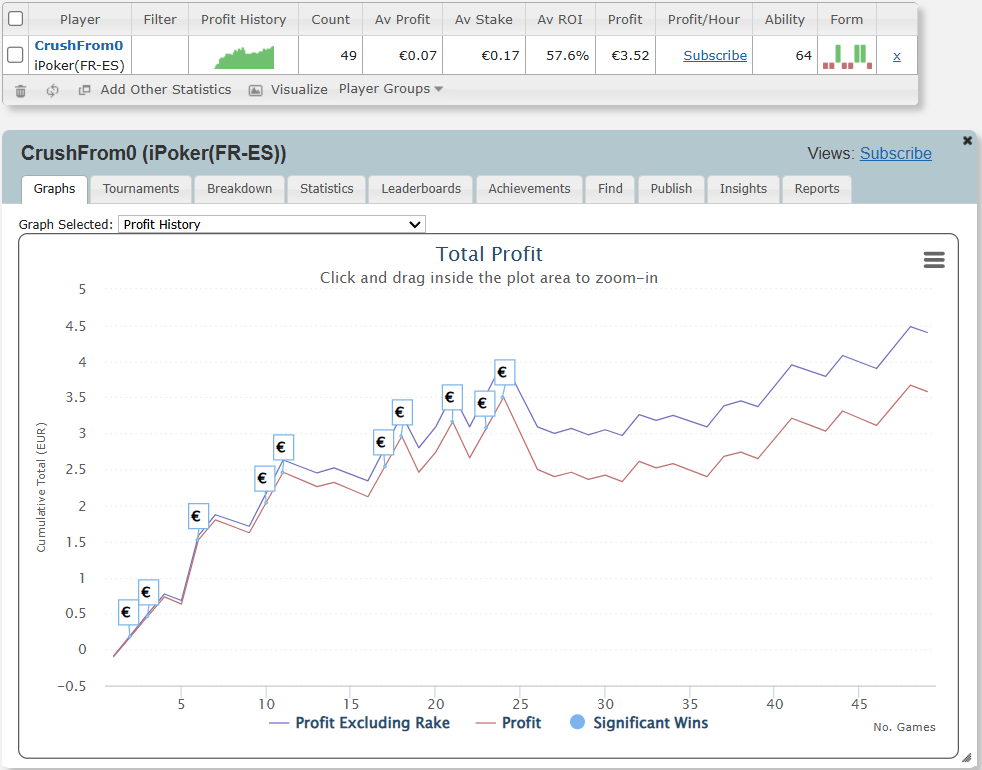
I played 31 of the 0.10€ 6-max turbo SNGs, finishing 1st 11 times and 2nd 5 times. I mixed in 7 of the 0.10€ hyper turbo SNGs with late registration, including one micro MTT for 0.01€ with 300€ in prizes (I did not cash), plus 11 of the 0.50€ hyper turbo HU games where I won 7. At this point, my bankroll sits at 8.47€, so I am pretty happy with the climb.
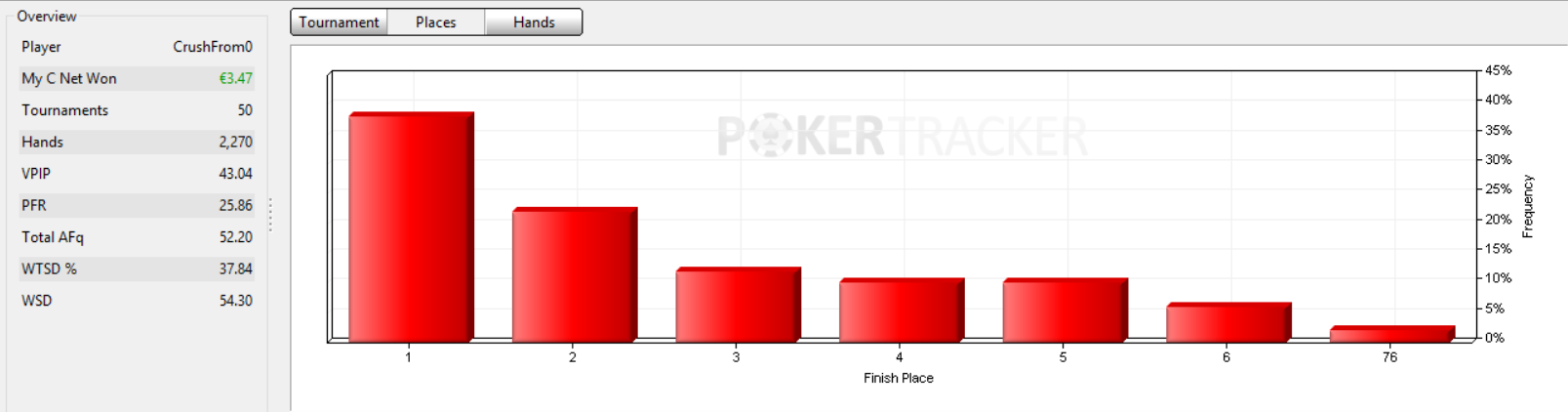
*This is my place distribution. It's completely crazy!
The winrate surprised me, but even more so was how tough it has been to play multiple tables at once. I thought I could copy the pros who run six or more tables without breaking a sweat. The reality is that even trying four tables feels impossible and mentally exhausting. I read this is normal for beginners, but it really limits the volume I can get in. For now, my focus is on playing my best game and learning as much as I can. Real improvement matters more than grinding tons of games, though I still wish I could handle more simultaneous tables. But after some practice, volume will come more naturally. Last sessions I played two tables at once, which is an improvement.
As for strategy, the player pool has clear tendencies. Most players at these stakes hate folding. They rarely bluff or bet for value and mostly play super passive poker. If “calling station” means someone who loves calling but avoids aggression, I am seeing plenty of them. Recognizing these tendencies changed how I play: I bluff less, bet for value more often, and take detailed notes on every opponent.
If I could share one lesson with other beginners, it would be to analyze how each opponent plays and always write notes. Every session reveals patterns and details that make a real difference, even at the smallest stakes.
My next skill to develop is volume. I want to build up to playing more tables without losing quality in my decisions. For now, quality and improvement come first, and I am here to learn as much as possible.
In the next chapter, I will work on building up my multitabling ability and testing new reads against the micro pool.
Chapter 4: Steady Climb and Small Wins
Almost a month into my microstakes adventure, I can feel both the challenge and the progress. Looking back, my volume is up and my confidence is growing. Here’s the latest:
I’ve played a total of 102 SNG
69 of the 0.10€ 6-max turbo SNGs, with 22 first place finishes and 12 second places.
20 of the 0.10€ hyper turbo SNGs with late registration, winning 4 of them and 2 second places. The average players in this SNG is 13 players.
2 of the 0.30€ hyper turbo SNGs, finishing first of eight players in 1.
and 11 of the 0.50€ hyper turbo HU games, winning 7 of them.
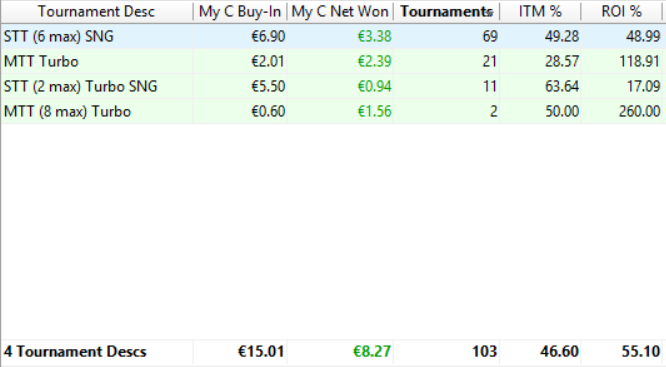
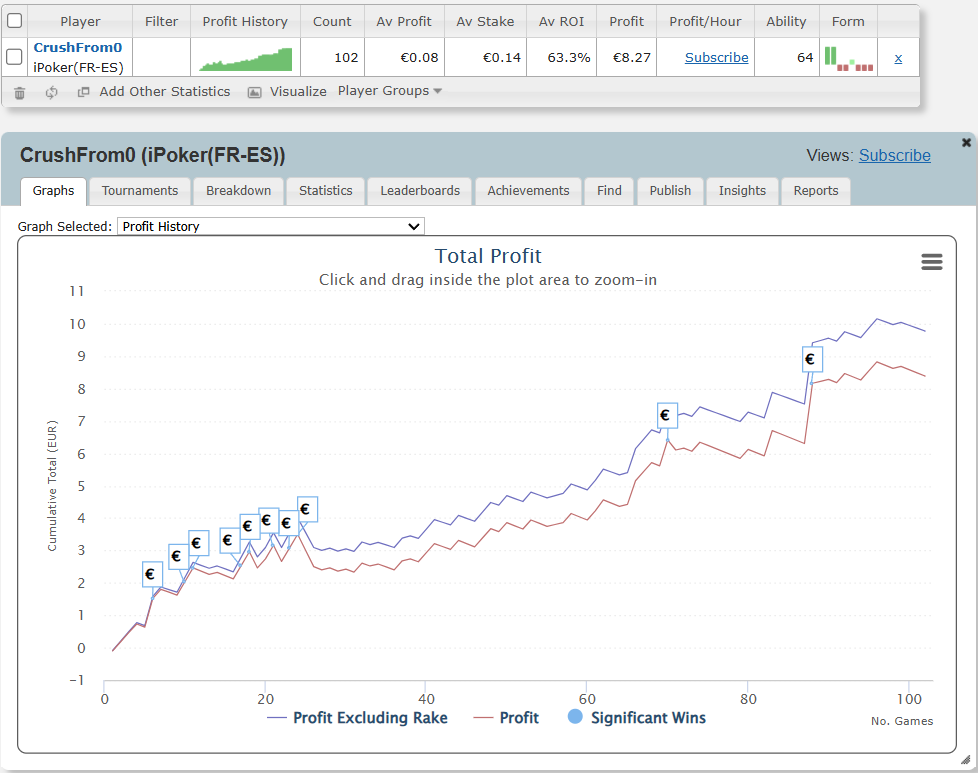
My bankroll sits at 13,27€, and although not every session was a heater, I’m consistently ending up in the green.
The average stack size is 9bb, and I'm managing to win at 48EVbb/100, which feels completely crazy.
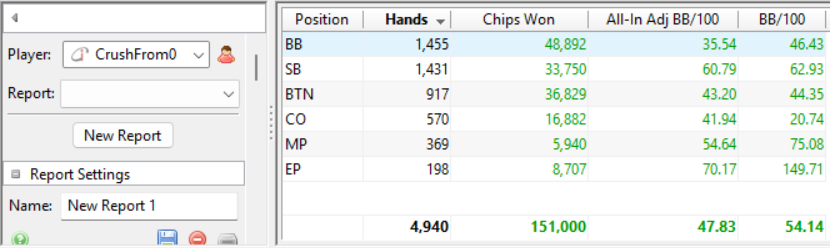
*Every SNG starting stack is 1,500 chips
I can also report a genuine milestone: multitabling. Playing two tables at once used to feel overwhelming, but now it’s second nature. There’s still some frustration about not pushing past two yet. I see the grinders playing four, six, or more, and that goal keeps itching at me. For now, the progress is real, so I’m trusting the process.
The microstakes pool still shows the same core traits as before: most opponents play super passive, calling way too wide and missing out on value and bluffing spots. My biggest leak is probably not adjusting enough to the different kinds of "calling stations" and sticky players. I catch myself relying too much on basic strategies when I could be exploiting what’s right in front of me.
My plan is simple: keep building the bankroll, keep improving, and work towards moving up in stakes. Every small win counts, and the learning process feels just as important as the results.
Next chapter, I hope to report another jump in multitabling comfort and maybe, just maybe, a shot at slightly higher games.
Let’s see how far I can go.


