Is there a strategy which uses perfect jamming?

I claim that:
1. NLHE GTO originated from the fear of going all-in and it wants the player to play poker for as many years as possible (perfect long run).
2. There is a very profitable strategy in NLHE that involves perfect jamming: going all-in as often as possible and adapting your other actions to this strategy.
@1__GTO rather rarely tells the player to go all-in. It focuses on making decisions which are +EV in the long run.
@2__This strategy may be purely theoretical in cash game long run, but surely is executable in a particular, single big MTT. It would require very smart and correct reading of your hand strength (which varies in different spots for the same hand) and also considering all necessary factors. It's definitely not about just being lucky a few times in a row - this can happen to anybody, anytime. It's more about recognizing as many spots for correct jamming as possible. It focuses mostly on being the 1st who goes all-in but of course knowing when to make an all-in call is important, too. Who knows, maybe it could also help to beat a GTO bot since it's not about real $.
By "correct jam" I mean an all-in which when lost may not be called a "stupid" or a "bad" move.
15 Replies

By "rarely" I mean rarely in comparison to my strategy concept.

I think claim one is interesting and you should expand on it. I don’t know whether it’s right or wrong but I certainly don’t *think* NLHE GTO originated from the fear of going all in.

Is there a strategy which uses perfect jamming?
Yes it's called a "
" and it's been around for a long time. Generally these strategies only work at short stacks <15bb deep. At a certain point they just lose a ton of money because shoving e.g. 500bb into a 2bb pot is bad poker.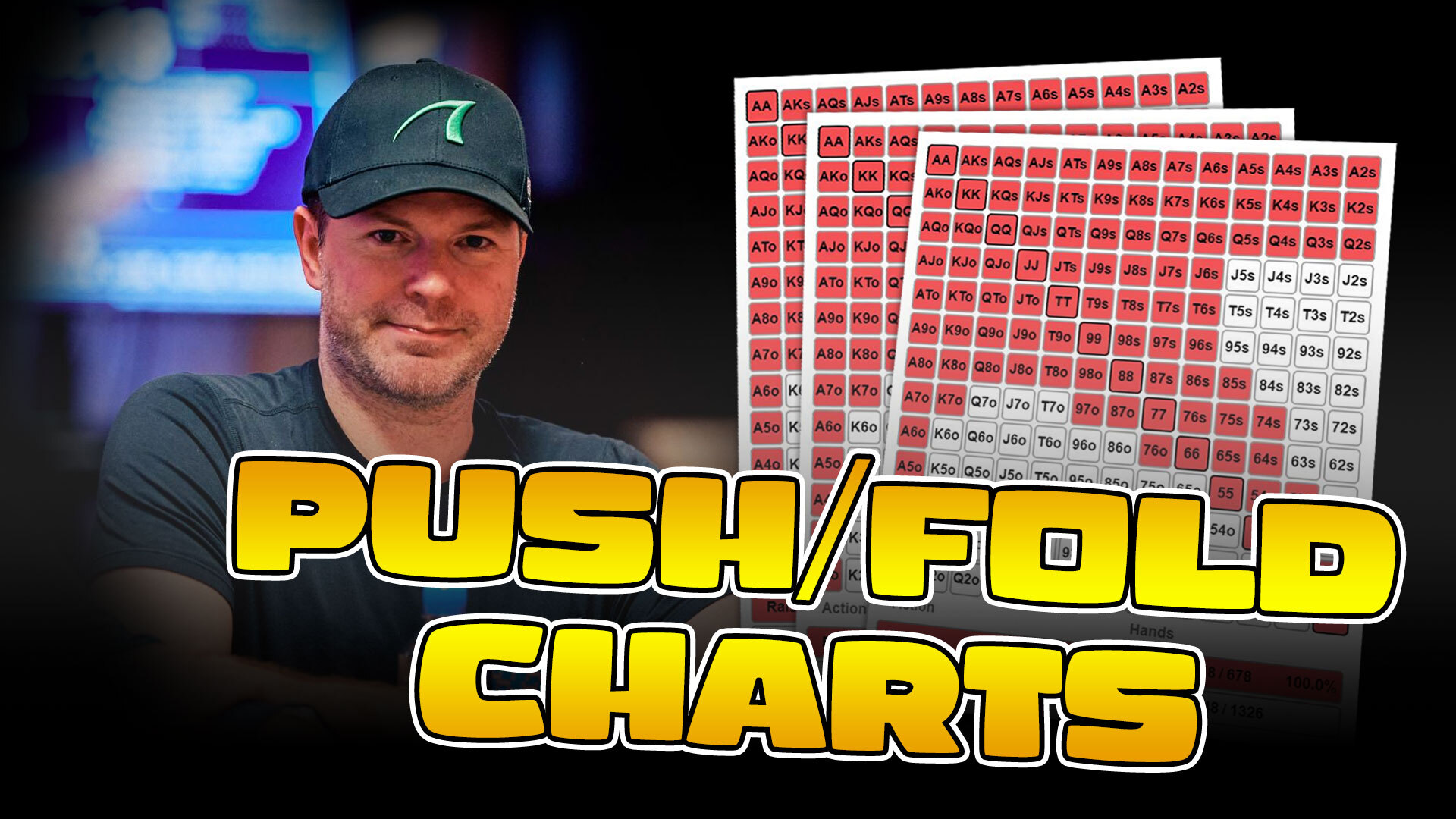
I think claim one is interesting and you should expand on it. I don’t know whether it’s right or wrong but I certainly don’t *think* NLHE GTO originated from the fear of going all in.
Fear is nothing bad, it creates danger - preventing mechanisms. Since NLHE is a special and complex game, this fear is also special and complex, so it could have served as a motivation or inspiration for the author for coming up with a safe solution, like GTO.
At a certain point they just lose a ton of money because shoving e.g. 500bb into a 2bb pot is bad poker.
Of course. I meant jamming earlier than river, mostly on potentially safe flop and turn (and reasonable pot). The pot isn't then as big as on the river, but almost always you still can hit helping cards on the turn or river if you're behind. Personally I hate going into a lost showdown when trying to extract maximum $ gradually on all streets. Unlucky river card can be easily avoided (smaller pot) if you jam and force a fold on the flop. And if you get called and hit unlucky river, at least you know you were ahead when jamming and your decision was good.
A lot of information is in the JQKA overcards when they appear on the flop. It makes a huge difference whether the overcard is a J or Q or K or A. I would compare this to the difference between having 13, 14, 15, 16 points in Blackjack. Same thing with paired flops: JJx, QQx, KKx, AAx.
I know that it's not possible to guess all the right spots for jamming, but there are potentially so many of them in reality, that finding 40% - 60% of them could bring good MTT results in my opinion.
I play MTTs against very good bots only, but I'm amazed how many all-ins you can squeeze into one tournament sometimes.
I also have a feeling that NLHE is so overloaded with information that even just detailed reading of all card/hand values is difficult if you want to be flawless with it.
I've just won a 360 MTT against those monster bots and check this out:
Total number of hands played: 94
Pre-flop 1st move all-in combo sequence: hands from 1 to 49
It wasn't very strategic, but 49 jams in a row feels crazy, because they often call and usually with good hands. I was running good like a god !!! I stopped jamming when I got 72 off suit, because I knew I have a delivery to deliver.
This is how you play MTTs 😃
Not a truly perfect one, but push/fold (jam-or-fold) is the closest. It’s used with short stacks where all-in decisions are based on math and ranges, though smart players still adjust to opponents.
The reason GTO strategies don’t jam as much as a push/fold is simple and has nothing to do with fear. It has to do with the inability to get your value hands called sufficiently often to make such a strategy have higher EV than a strategy where value hands are bet for smaller amounts. If you are 100bb deep, open pre to 2.5 and jam a flop like K83r for 97.5bb, for example, what hands are calling? KK, 88 and 33 (maybe)? This is going to be such a tiny portion of villain’s PF range that your EV from the bet will not be much more than the 5bb already in the pot. Further, jamming like that allows your opponent to play nearly perfectly. Minimum defense frequency in a spot like this is just about 5%. Villain doesn’t really need to call with most of his bluff catchers. Most of the time you would only get called when you are beat, assuming you aren’t only jamming when you have the nuts. If that’s your strategy, though, then villain has no reason to ever call your jam, so that isn’t a viable strategy.
A smaller bet size will force villain to call with a much wider range and allow you to extract value more frequently. Winning an additional 10bb on average, 40% of the time beats winning an extra 90bb if that only happens 3% of the time (4bb vs 2.7 bb EV)
very often jamming is either an excess of aggression, or it's done to avoid tough spots in later streets.
GTO doesn't need that.

I claim that:1. NLHE GTO originated from the fear of going all-in and it wants the player to play poker for as many years as possible (perfect long run). 2. There is a very profitable strategy in NLHE that involves perfect jamming: going all-in as often as possible and adapting your other actions to this strategy.@1__GTO rather rarely tells the player to go all-in. It focuses o
There are strategies for all avenues of play. But in terms of Super-Jamming, I use this in tournaments.
The reason GTO strategies don’t jam as much as a push/fold is simple and has nothing to do with fear. It has to do with the inability to get your value hands called sufficiently often to make such a strategy have higher EV than a strategy where value hands are bet for smaller amounts. If you are 100bb deep, open pre to 2.5 and jam a flop like K83r for 97.5bb, for example,
true
The thing is, push/fold basically IS the GTO solution once you get short enough. Under 15bb or so, solvers spit out near-pure jam/fold ranges because that's where the math works out. The OP's intuition isn't wrong, it just applies to a specific stack depth window that MTT players hit constantly, especially late in tourneys. The issue with trying to force a jamming strategy at 60bb+ is what the previous post said: you're pricing out all the hands you're crushing.
By "correct jam" I mean an all-in which when lost may not be called a "stupid" or a "bad" move.
I think your theory is flawed, because it’s like Russian roulette. If you keep pulling the trigger, circumstances will catch up with you.
Being unpredictable is most important, but I am rarely looking to play for stacks, cash or tourney. When you shove & I call, you are beat.
Sometimes you fall into a situation where an all-in bluff makes sense, but you don’t go looking for it. People catch-up & those 10% chances win sometimes.
I don’t play for fun, to gamble, or play theoretically correct. I need to walk out with more money than I had. Betting 500 to win 100 is not the way.


