GTO problem BN vs CO 3b pot
Hello!
I am trying to wrap my head around the following GTO problem.
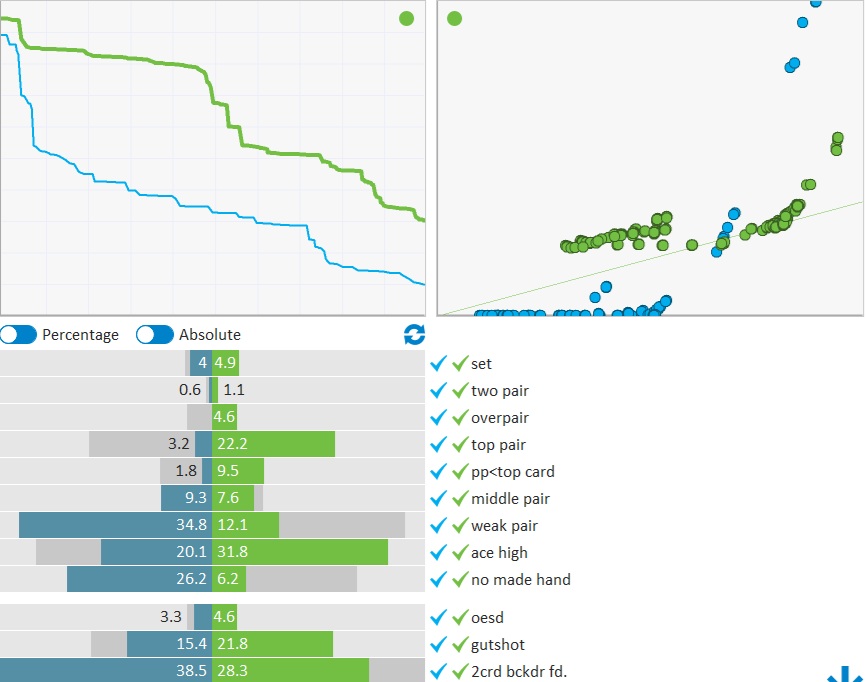
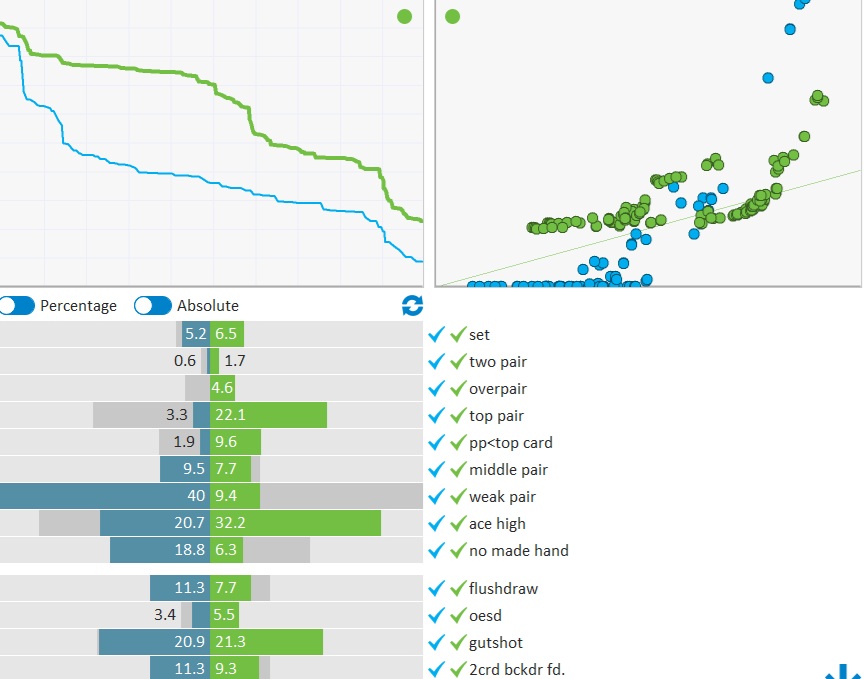
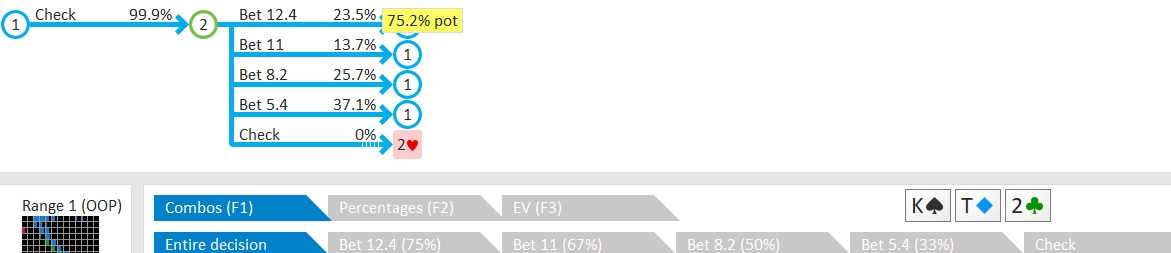
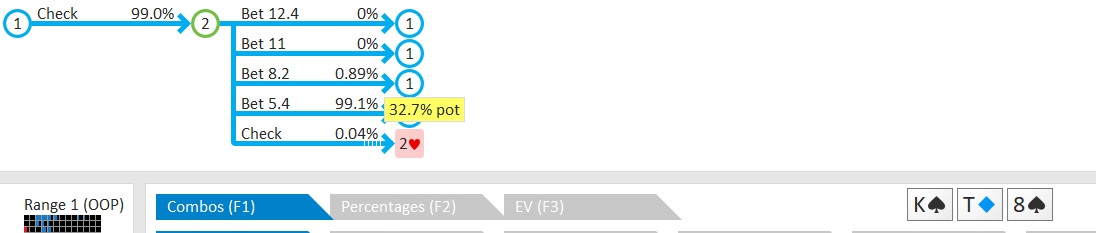
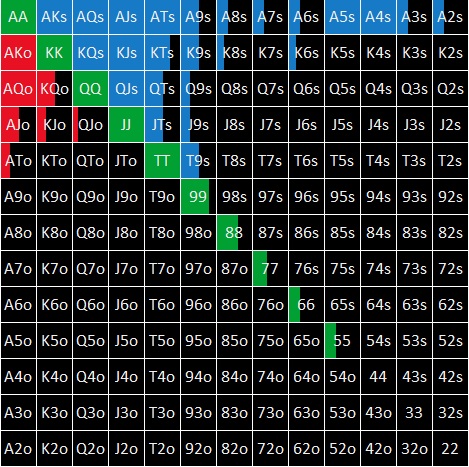
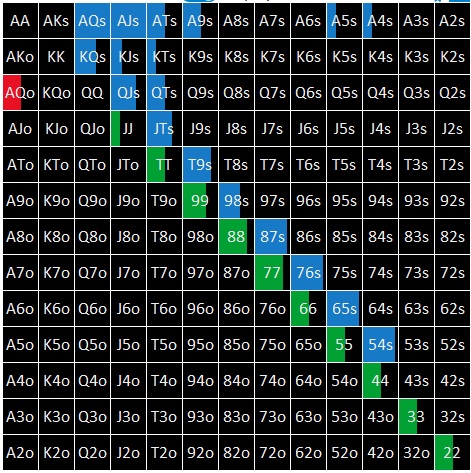
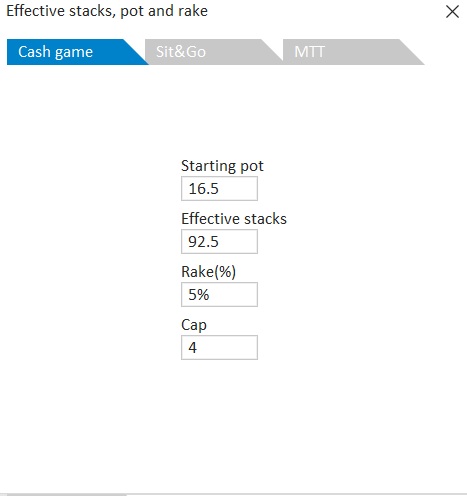
The BTN 3bets the CO and the latter just calls and we go to the flop (check ranges in the uploaded pictures). There are two different flops - KT8t and KT2r. For some reason the solver is betting range for a 33% PSB on the first board and mixing between small, medium and large bet sizes on the second. The EQD graphs are almost identical. Does anyone have any idea why there is such a huge difference between the two?
All the necessary information is in the uploaded pictures.
7 Replies
The first EQ graph is from KT2r.

I would say you can just range small on both for little to no EV loss, though I haven't checked.
Regardless, the answer lies in how equities shift from flop->turn->river between the ranges.
KT8tt has more connectivity with the suits and the 8. KT2 has significantly less connectivity as 2 is a blank and there is no flush draw, so there will be less shifts in equities from flop->turn->river. On more static boards and when ranges are closer to nuts/air there are going to be more combinations in IP range that gain more EV by utilizing a sizing ~geometric. For the SPR you've chosen a geometric sizing is going to be pretty close to 2/3 size.
probably something to do with low cards being out boarded deded
probably something to do with low cards being out boarded deded
Thanks for the reply!
Yeah, that’s a really interesting spot and your observation is totally valid — the equity graphs do look nearly identical, so it’s natural to wonder why the solver plays them so differently. The key is that the equity graph only tells part of the story: it shows how much raw equity each range has on the flop, but it doesn’t account for how easy that equity is to realize across future streets. That’s where the real difference between these two boards lies.
On the KT8t board (the dynamic one), there are a ton of potential draws: open-ended straight draws like QJ, flush draws, combo draws, and hands with backdoor potential. The middle card (8) connects with a lot of suited connectors and one-gappers that called the 3-bet. So even though both players’ equities are fairly flat, the volatility is really high — turn and river cards are going to shift equities a lot, and that gives the out-of-position player (CO) opportunities to apply pressure later. The button doesn’t want to bloat the pot and end up facing big check-raises with medium-strength hands or draws. That’s why the solver prefers a small bet with the entire range here: it denies equity to all those hands with live outs and backdoors, while keeping the IP range protected and under control. Betting small also allows us to realize equity with our own draws and marginal hands efficiently, without turning the pot into a mess.
Now compare that to KT2r. This board is much more static. There are almost no draws — maybe some very thin backdoor straight or flush possibilities, but nothing meaningful. The best hand now is very likely to still be the best hand on the river. That means the solver doesn’t need to protect hands or deny equity in the same way. Instead, it shifts to a more polarized strategy: big bets with nutted hands (sets, two pair, maybe strong top pair), and bluffs with hands that have little chance of improving but can fold out better hands. The solver also mixes in some small bets and checks with medium-strength hands that don’t want to face a raise. It’s all about the stability of the board — we can afford to play big because the situation won’t change much and we hold the nut advantage.
So yeah, even though the equity curves look similar, the shape of the board — how dynamic it is, how much pressure we might face, and how much protection our range needs — completely changes how the solver chooses to play it.
Yeah, that's a really interesting spot and your observation is totally valid - the equity graphs do look nearly identical, so it's natural to wonder why the solver plays them so differently. The key is that the equity graph only tells part of the story: it shows how much raw equity each range has on the flop, but it doesn't account for how easy that equity is to realize across
A great write up, good stuff Jiliac.


