I need a GTO genius...
Looking at ranges for 14BB HuSnG on GTO WIzard, I saw that the BB calling range vs open-shove contains hands like KTo, 97s but not KQo... I ran the hand vs range equity simulation (pot odds needed are 46.4%) vs (the already weird) SB shoving range: KQo has 49.9%, 97s has 44.8%. Since there's no need for board coverage and blockers seem irrelevant, how on earth is this really Nash equilibrium??
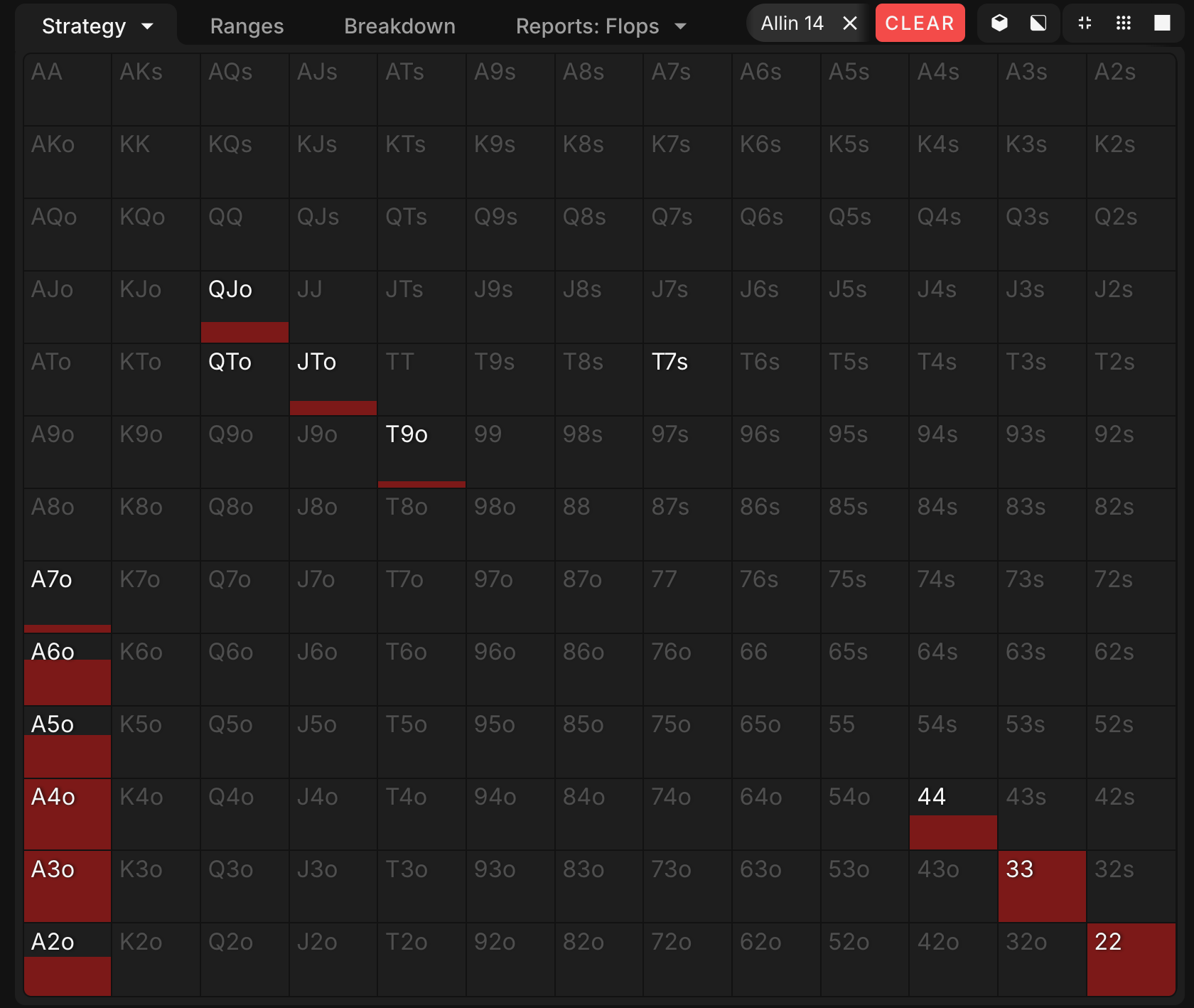
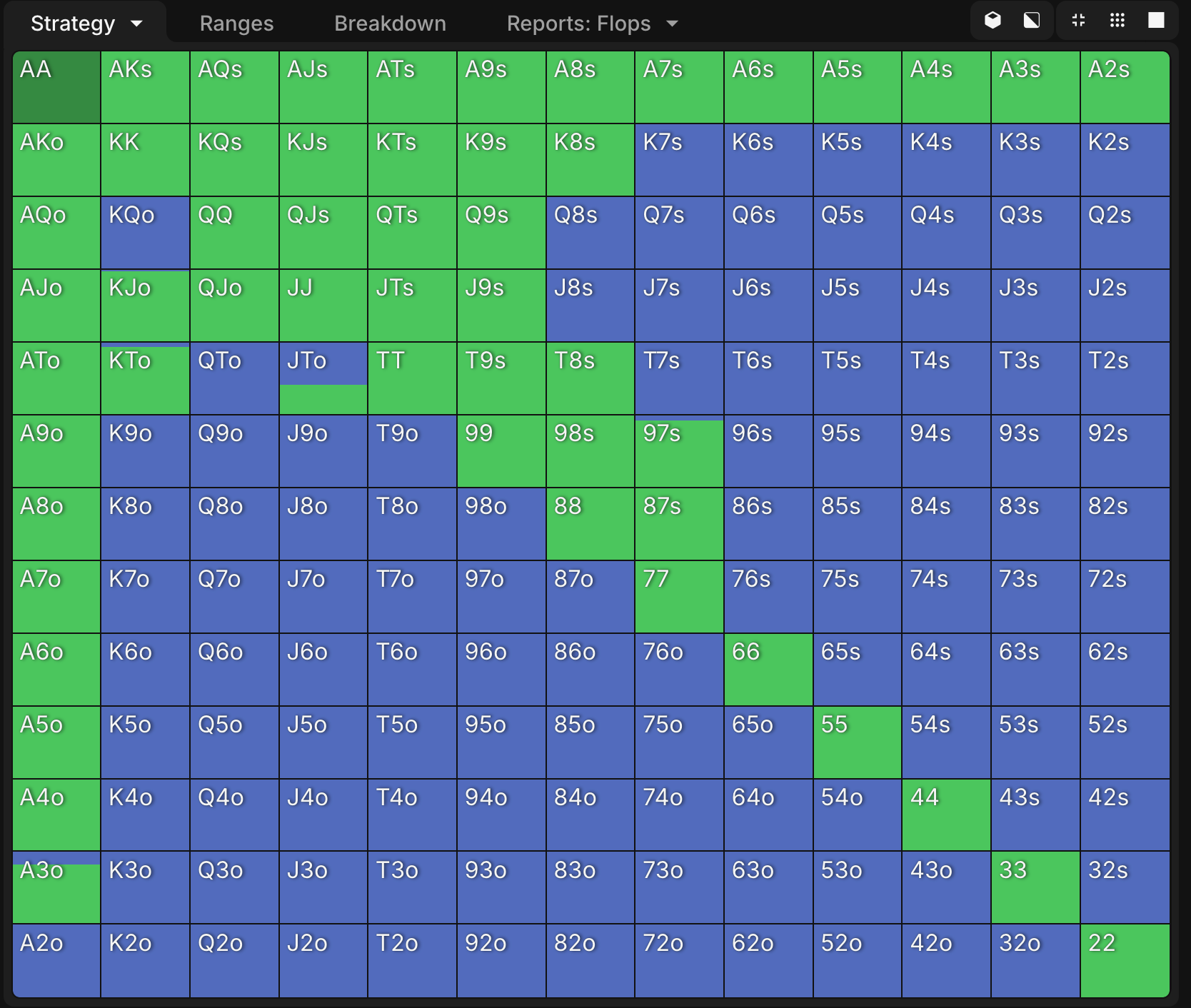
Below the two ranges
8 Replies
What are the allowed sizings/action and I'll run it in HRC for you. Should only take a minute, but at a glance this looks a bit weird to me also.
Options are: fold call raise 2 all in 14. I tried general ( sims with more sizing) research and basic solutions, which are all the same…
https://app.gtowizard.com/solutions?solution_type=gwiz&gmfs_solution_tab=ai_sols&gametype=HuSngGeneral_V3&depth=14&gmfft_sort_key=0&gmfft_sort_order=desc&history_spot=1&gmff_favorite=false&preflop_actions=RAI
Sim I ran basically looks same, so it's just due to blockers from QJ and the equity KQ has vs. the other stuff. The shove range is such that KQ call is indifferent... sometimes these jams are basically making low pp or in this case exactly KQ indifferent.

It looks weird but it's correct. You get the same results with any preflop solver.
KT makes more (one-card) straights than KQ, thus it has more equity against a range of small pocket pairs or ace rag hands.
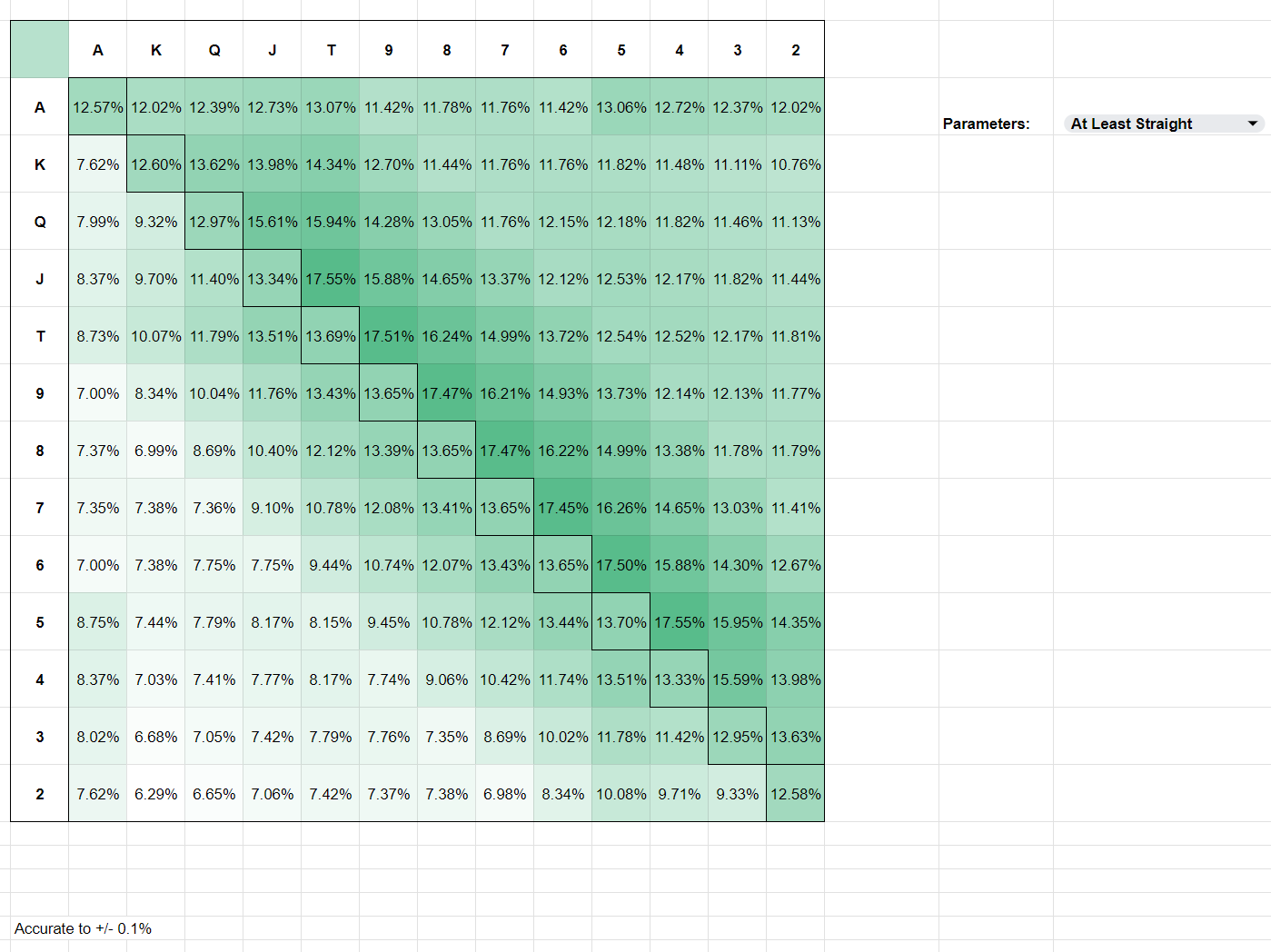
It's not card removal btw. KT has more equity than KQ even if you remove the QJ/JT stuff from villain's shoving range.
Equity vs GTO shoving range:
Equity vs (55-22, A5-A2)
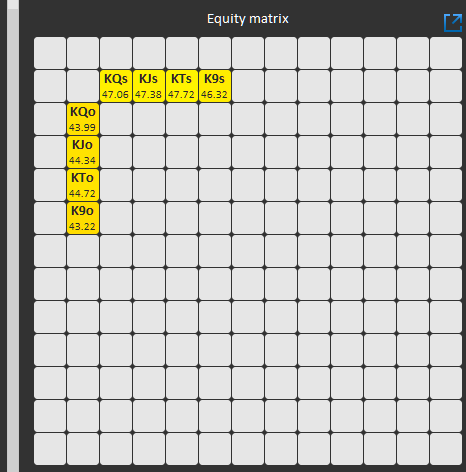
Note that this is an extremely trivial decision. The difference is a fraction of a percent equity. It just so happens that KQo is right on the call/fold line here so it's more noticeable.
I stand corrected, thanks.

It looks weird but it's correct. You get the same results with any preflop solver.KT makes more (one-card) straights than KQ, thus it has more equity against a range of small pocket pairs or ace rag hands. It's not card removal btw. KT has more equity than KQ even if you remove the QJ/JT stuff from villain's shoving range. Equity vs GTO shoving range:Equity vs (55-22, A5-A2)Not
That makes sense for KQo vs KTo, but what about the 97s vs KQo example? It seems strange to me as well, but I don't know if I'm missing something obvious.
Originally posted by KKGlaceman:
"I ran the hand vs range equity simulation (pot odds needed are 46.4%) vs (the already weird) SB shoving range: KQo has 49.9%, 97s has 44.8%. Since there's no need for board coverage and blockers seem irrelevant, how on earth is this really Nash equilibrium??"
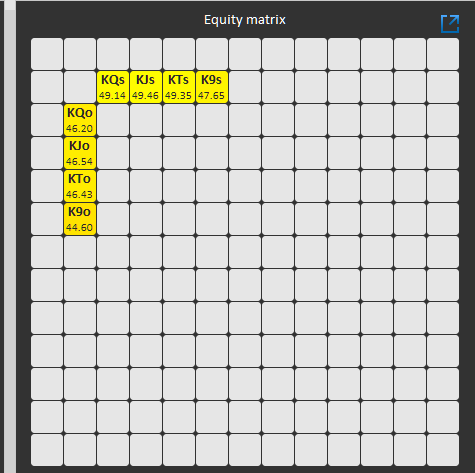
Here's the equity matrix facing the SB shove. 97s has 46.5%, KQo has 46.2%.
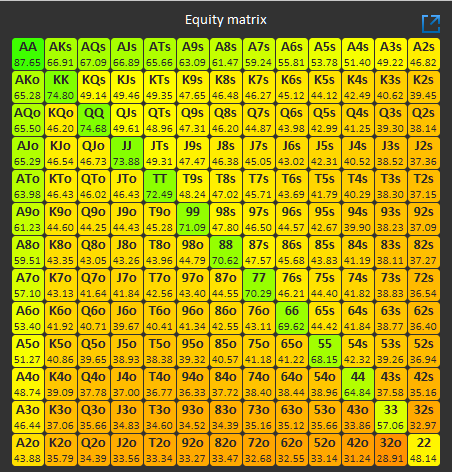
So when OP says:
I ran the hand vs range equity simulation (pot odds needed are 46.4%) vs (the already weird) SB shoving range: KQo has 49.9%, 97s has 44.8%.
They simply didn't run it correctly. I guess they used software that didn't correctly weight of each combination.
Just for fun, you may be wondering why SB is shoving stuff like QJo and JTo...
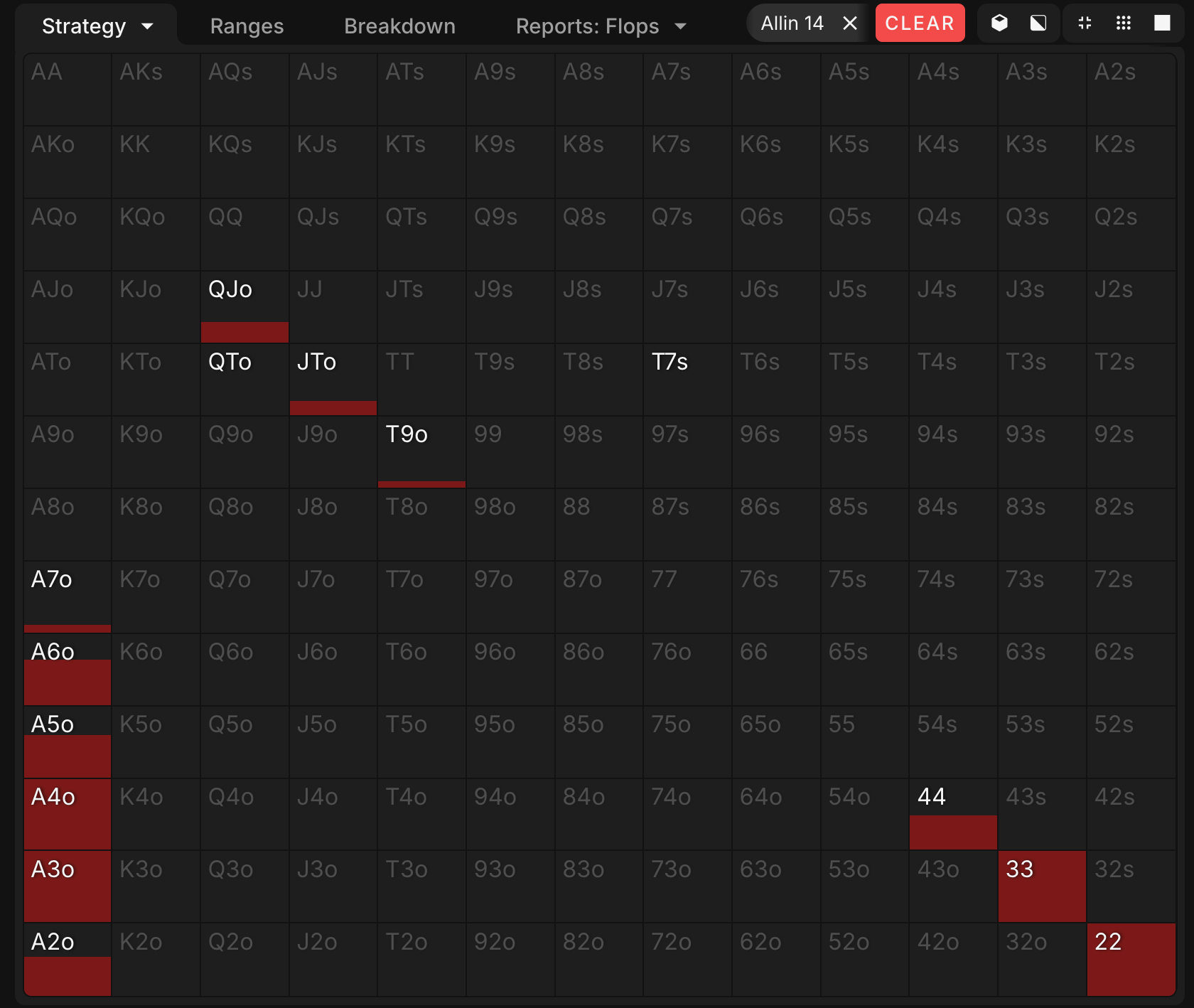
That's a weird shoving range right? A pretty natural simplification of this would be to shove something like (55-22, A5o-A2o). These represent all of SBs vulnerable high equity hands that benefit a lot from shoving.
What should BB defend against that range?
Strategy + Equity
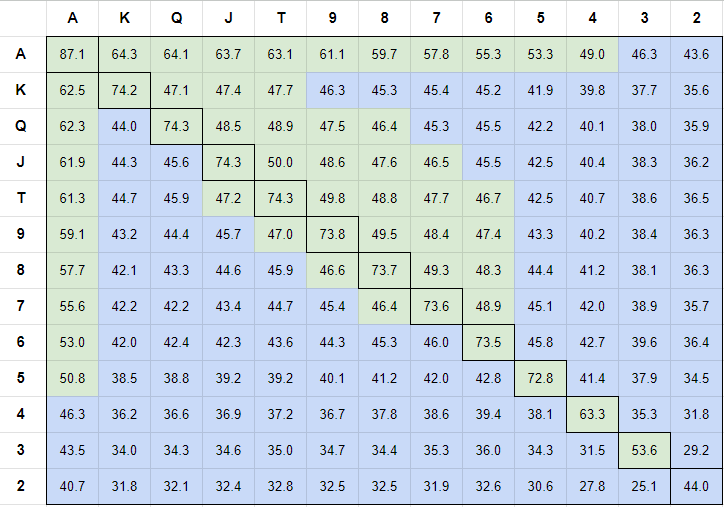
Offsuit broadways as strong as KQo are snap folding, yet hands like T6s are calling.
But this defense is exploitable. Now hands like QJ are incentivized to shove because they fold out hands that dominate them (e.g. KQo), while getting called by worse (like T6s).
So SB starts adding back in some of these weird mergy hands like QJo, JTo, etc. And that's how you end up with that shoving range.

I saw that the BB calling range vs open-shove contains hands like KTo, but not KQo... how on earth is this really Nash equilibrium??
Often, the easiest way to understand these spots is to directly compare hand vs hand equity.
This is the range that BTN shoves:
Vs A7-A2o, both KQ and KT have roughly the same equity (KT is actually slightly ahead).
Vs 44-22, the same is the case.
The last significant part of BTN's shoving range consists of QJo, JTo and T9o hands.
Here, KQ only dominates QJo, while KT dominates both JTo and T9o. This keeps their equities against that part of the range very similar.
Interestingly, KJ performs better than either of them.
In conclusion: There is no part of BTN’s shoving range vs which KQ clearly outperforms KT, or especially KJ. Therefore, if one of these hands should be folded, KQ is the most logical candidate.


