'Hand Question (Solver)
I just don’t understand it (I’m still a beginner when it comes to GTO).
I solved the situation and don’t understand why Q♦ in the hand calls the all-in most frequently.
My logic: I would call the all-in most often with QQ if I didn’t have the Q♦, so I wouldn’t block the bluff with the diamond flush draw. Can someone please explain this to me?
[image]nhc54JY.jpg[/im
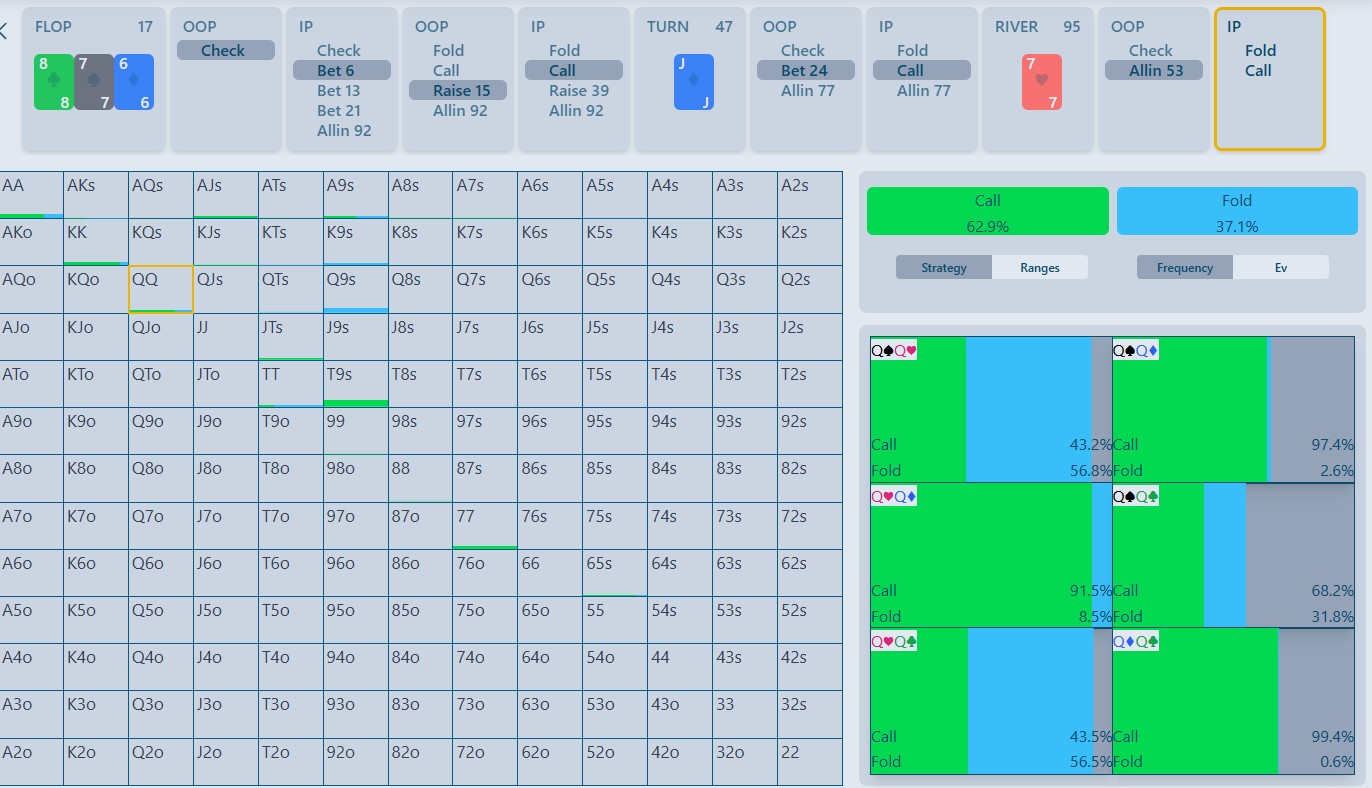
..]
3 Replies
Hi man,
what's your solver ??? you don't understand because you are not using the right solver to understand. it's impossible to understand the interface. I don't even see the exact preflop ranges.
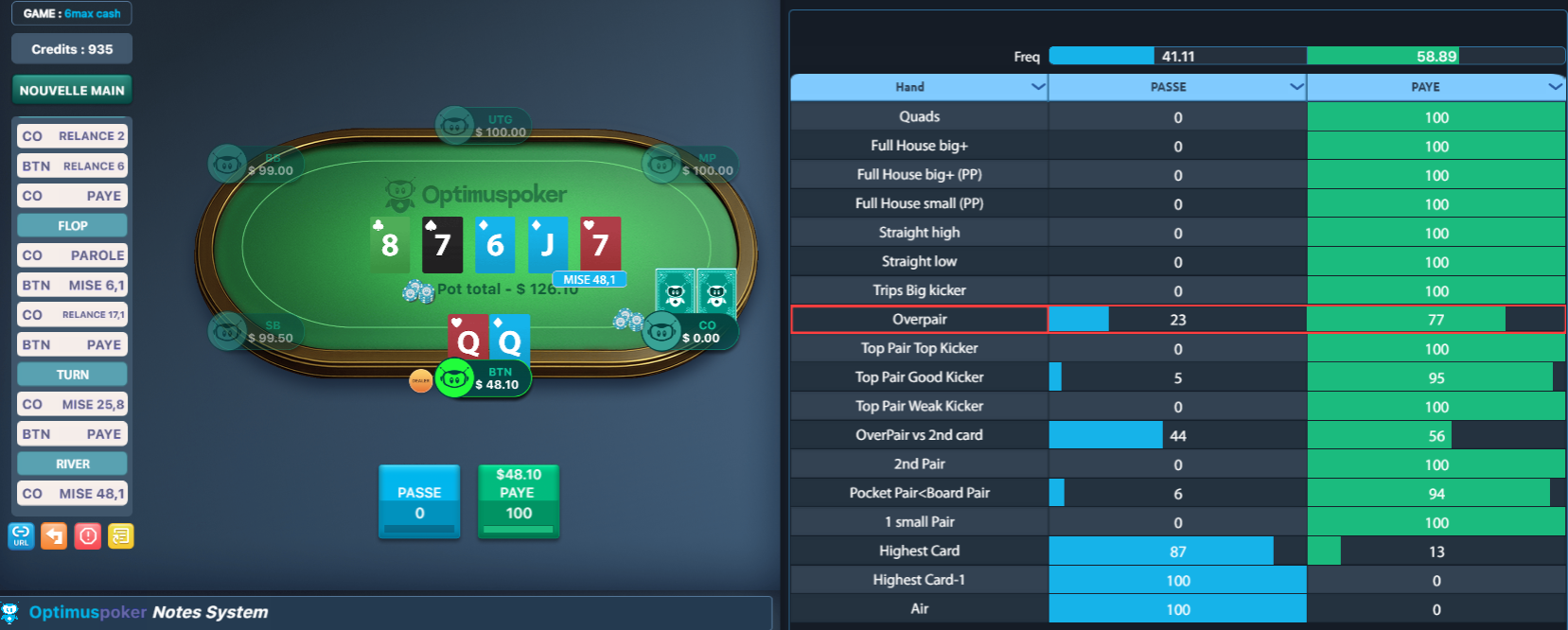
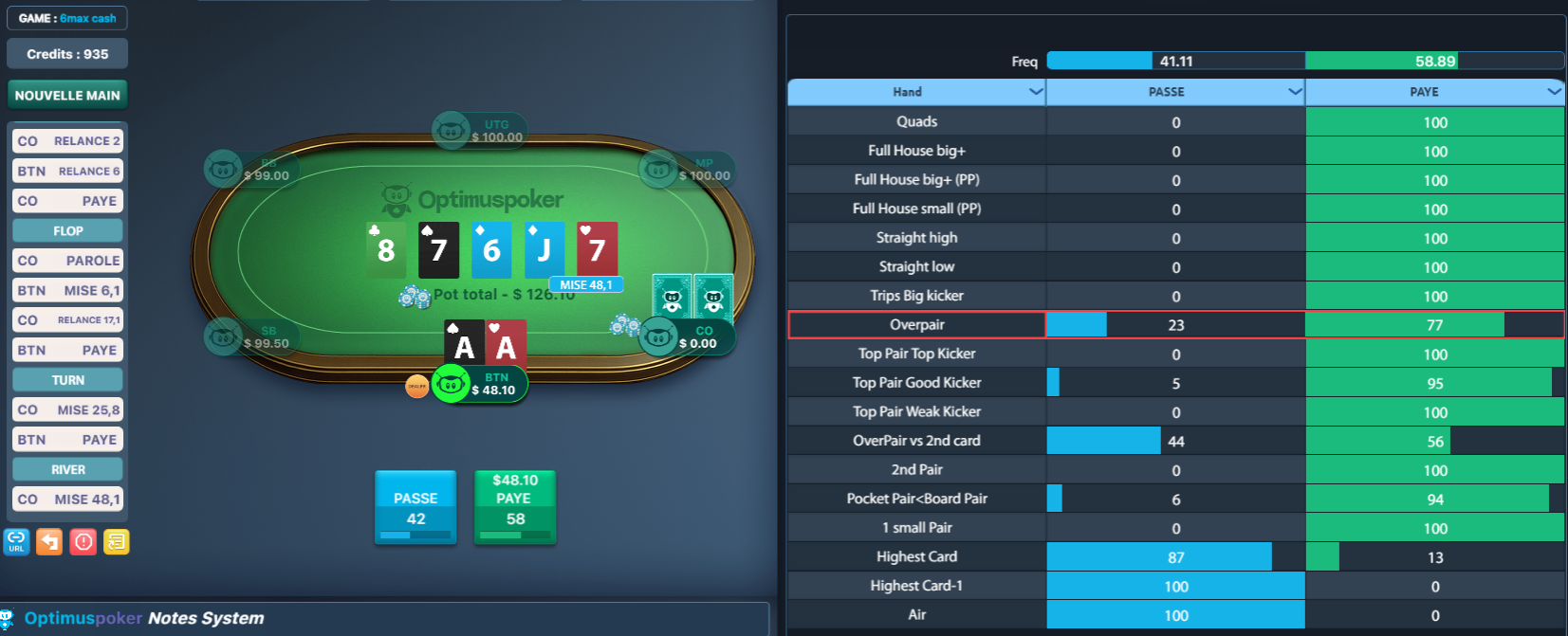
https://optimuspoker.com
Yes, my mistake. The preflop ranges for the given situation are prepared in advance. You then copy the ranges into the solver (IP and OOP), enter the effective stack size and the pot size, and run the solve.
Unfortunately, I no longer remember the exact ranges—only that it was a 3-bet pot. I should have taken a screenshot of both ranges as well.

I can't speak specifically to the situation in your solve, but generally I have seen similar results as a result of a chain of logic like what follows.
The aggressor wants you to fold when they are bluffing.
Your missed flush draws will fold to their bluff.
Therefore when they are bluffing they would prefer to not block your missed flush draw folds.
As a result they do not typically use hands with a diamond as bluffs.
If the aggressor is not bluffing with diamonds, then when we do have a diamond we unblock the hands they are bluffing with.
I hope that makes sense...
Suffice it to say, if you're playing a lower stakes human opponent this is likely irrelevant. If anything they're probably more likely to bluff when they have a missed flush draw, not less likely the way a solver is.


