Stoicism meets Zen
This is kind of an offshoot from a conversation easybet and I were having in another thread. I haven’t really revisited Stoicism since school, but I must’ve memorized Epictetus’ opening lines because I can still recite them verbatim. I’ve also got a cursory, working familiarity with Zen. I wanted to explore how the two might connect, so I asked ChatGPT for help:
Stoicism meets Zen
Stoicism, at its core, has much more in common with Zen insight than most modern readers realize, especially when you strip away the later Roman moralism and read it as a spiritual psychology. Ancient Stoicism wasn’t just a philosophy of virtue or rational ethics—it was a practical path of liberation. Its aim was
ataraxia, unshakable peace through the alignment of human consciousness with the logos, the rational order of the cosmos.
1. Logos and Emptiness
For the Stoic, the cosmos is a single living being, animated by logos, divine reason or intelligence. For the Zen practitioner, ultimate reality is śūnyatā—emptiness, the boundless field in which all things arise and pass away without fixed essence. At first glance, they seem opposed: one speaks of rational order, the other of emptiness beyond concepts. But both point toward a direct apprehension of the whole—an experience in which separateness dissolves.
“When you want knowledge and wisdom as much as you want to breathe, you will find it.” — Epictetus
“Mountains are mountains again.” — Zen saying
Both traditions insist that awakening isn’t a flight from reality but a reconciliation with what is.
2. The discipline of assent
Stoic practice centers on assent—training the mind to withhold judgment until a perception aligns with reason and nature. This discipline dissolves the false dichotomy between inner and outer, subject and object. Similarly, Zen meditation cultivates non-judgmental awareness, the empty mind that neither grasps nor rejects phenomena.
“Men are disturbed not by things, but by the views which they take of things.” — Epictetus
“When hungry, eat; when tired, sleep.” — Zen saying
In both, suffering arises not from events but from mental resistance.
3. The ego as illusion
Both Stoicism and Zen seek to transcend the tyranny of the “I.” The Stoic dissolves ego into participation with the whole—the citizen of the cosmos (cosmopolites). The Zen practitioner sees the self as a construct, empty of inherent being.
“You are a soul carrying around a corpse.” — Epictetus
“Show me your original face before your parents were born.” — Zen koan
For both, the individual self is a provisional form, a temporary knot in the current of Being.
4. Practice as alignment
For the Stoic sage, the task is to live in harmony with logos—to will what nature wills. For the Zen adept, it is to act spontaneously from [I]no-mind(mushin)[/I], where there is no gap between thought and action. Both express a unity of consciousness and cosmos, where doing and being are one.
“Do not seek for things to happen as you wish, but wish for things to happen as they do.” — Epictetus
“Sitting quietly, doing nothing, spring comes and the grass grows by itself.” — Zen saying
Each is a discipline of consent to the Real, beyond judgment or striving.
5. Beyond words
Both traditions see language as the veil of truth. Stoicism emphasizes rational logos, yet its end goal—inner silence and harmony with nature—transcends speech. Zen’s distrust of conceptualization is even more radical: words obscure what is self-evident.
“Silence is better than unmeaning words.” — Zeno of Citium
“Those who know do not speak; those who speak do not know.” — Laozi (influential on Zen thought)
The end of philosophy, for both, is the same as the beginning of wisdom: wordless understanding.
6. Liberation and acceptance
The Stoic apatheia—freedom from passion—isn’t indifference, but a serene acceptance of nature’s unfolding. The Zen nirvana is not annihilation but the extinction of delusion. Both paths end in radical intimacy with the real.
“Fate leads the willing and drags the unwilling.” — Cleanthes
“Let go or be dragged.” — Zen proverb
Both affirm that freedom isn’t the power to control life, but the power to say yes to it.
7. Conclusion
When Stoicism meets Zen, philosophy and direct insight converge. Both are paths of self-transcendence through disciplined attention, both are grounded in present-moment clarity, and both dissolve the illusion of separation between self and cosmos. The Stoic logos and the Zen emptiness are two languages pointing to the same realization: the unconditioned ground of Being.
10 Replies
Anything anti self (which promotes denying or dissolving the self) is anti human.

I'm curious also
The earliest stoics lived before the burning of the library of Alexandria, after the Buddha.
The earliest stoics lived before the burning of the library of Alexandria, after the Buddha.
I don’t really know the Stoic story, but I was into the Mystery Schools, which shared similar ideas. The roots of Hermeticism probably go back to prehistory, to oral traditions.
The thing is, humans 100,000 years ago already had our brain capacity. Estimates say only a few thousand of us made it through the Ice Age. So who knows what got swept away in floods. The Sphinx was buried up to its neck in sand when Napoleon saw it. And I guess we've got some ant dna in us with pyramids scattered all over the place.
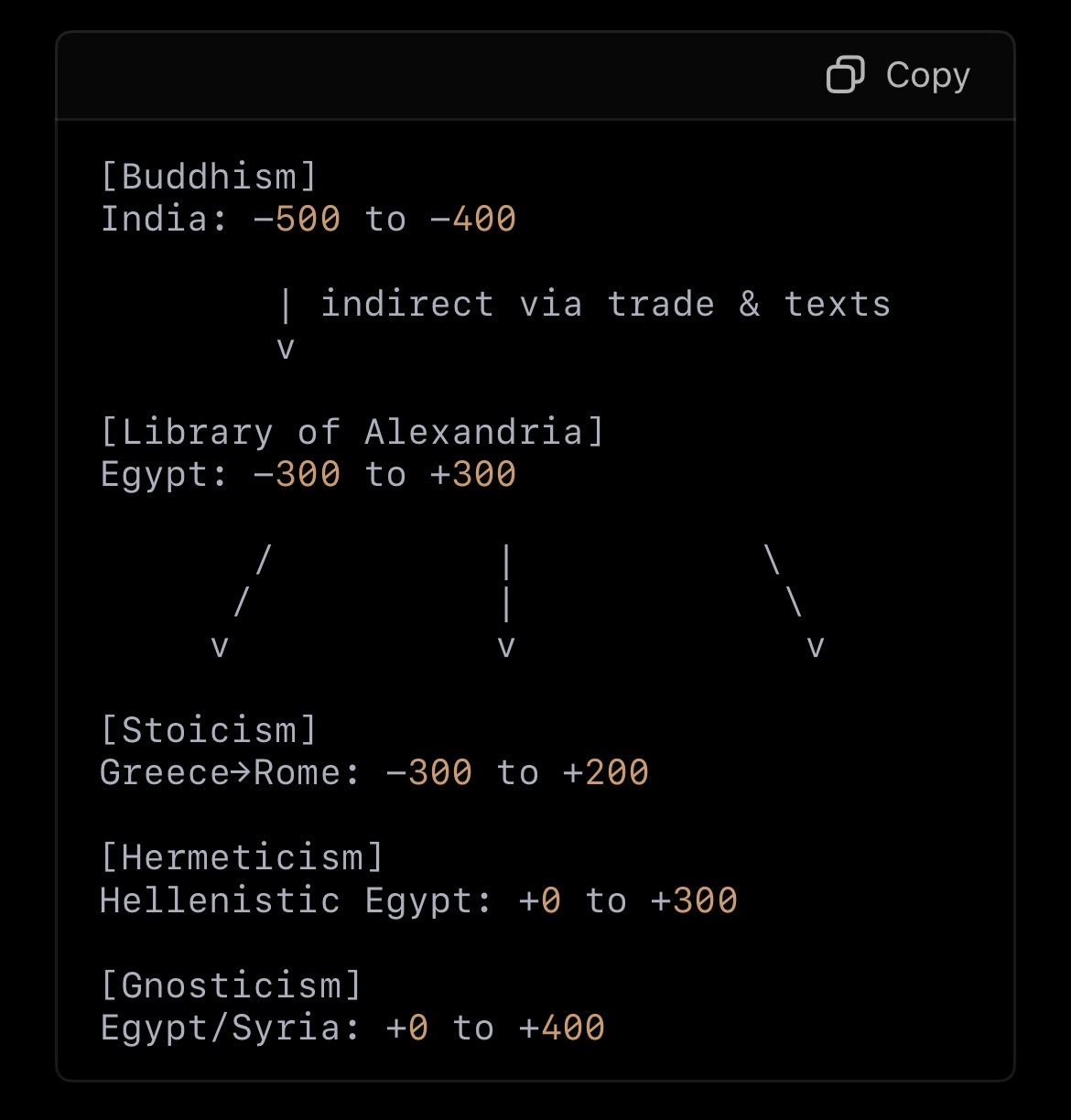
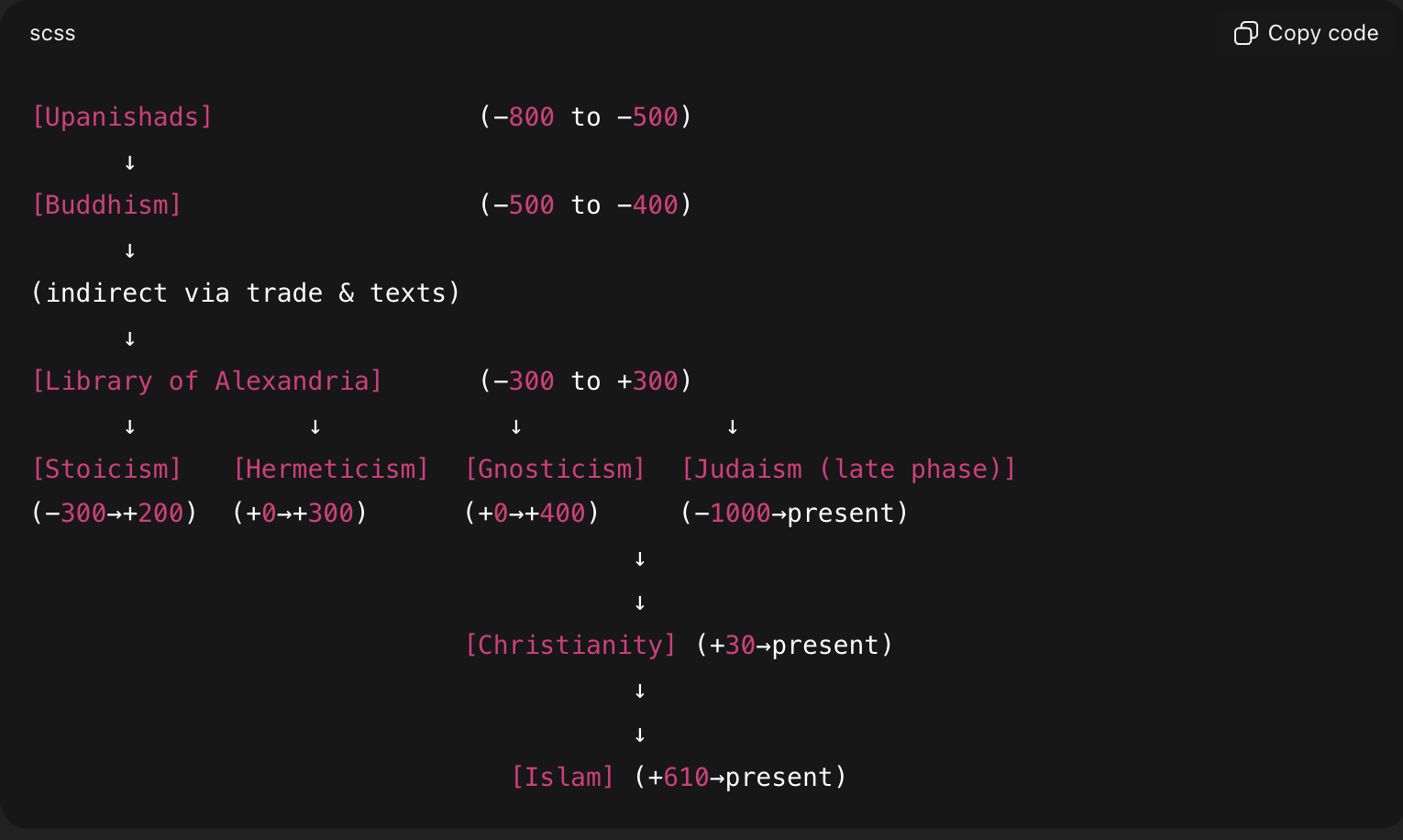
The early Catholic church's censorship/filtering of the information is worse still. ' Jesus is God but no one else, just shut it down right there'
“I have discovered an ancient path, an ancient road, followed by the rightly self-awakened ones of former times.” — Buddha
As I said, I think this stuff goes way, way back. It’s like with agriculture. We point to one place or time where it “began,” but the roots were already there long before.
And yeah Bruno got burned. But I dont put much stock in Western mysticism. I've read some of it and it just comes across like they're trying to put Humpty Dumpty back together again with duct tape.
I posted the totally wrong clip of the same title. This is more fitting.

