A thread for unboxing AI

The rapid progression of AI chatbots made me think that we need a thread devoted to a discussion of the impact that AI i

Of course it's a "serious player", but my claim is that it should be TWICE what USA + europe is, and that wouldn't surprise anyone, just because of demographics. That maybe some day China will be > USA is obviously probable, but it should be TWICE USA+ the EU *already*. And that if they were just even paced with us.
Population size isn't much of a factor with innovation. Innovation mostly comes from a diversity of ideas, not some lone genius inventor. That's pretty much the anti-thesis to a country deeply ingrained with Confucianism. Countries or cultures that build walls around their ideas tend to build walls around their people too.
Population size isn't much of a factor with innovation. Innovation mostly comes from a diversity of ideas, not some lone genius inventor. That's pretty much the anti-thesis to a country deeply ingrained with Confucianism. Countries or cultures that build walls around their ideas tend to build walls around their people too.
A culture can be more or less conducive to innovation and i can agree confucianism might be less optimal than western individualism for that, yet innovation is all about having very smart people, as many as possible, and rewarding them to innovate.
Not the lone genius, the teams of 100-500-1k-5k people all dramatically smarter than normal human beings that develop everything since the dawn of time. Not just having the idea, but executing it in a polished way as well. The "Manhattan project" (perhaps without, or with less, secrecy) is how innovation happens. Bell labs. Normal people need not apply nor they matter in the slightest.
The top 1% (or far less actually) does all the innovation. So population matters just because with more people, you have more people that qualify to be useful to innovate, simple as that.
Anyway china invented paper, gunpowder, the printing press, and paper (fiat) money among other things so it's not like they have an abysmal track record.
A culture can be more or less conducive to innovation and i can agree confucianism might be less optimal than western individualism for that, yet innovation is all about having very smart people, as many as possible, and rewarding them to innovate.Not the lone genius, the teams of 100-500-1k-5k people all dramatically smarter than normal human beings that develop everything sin
It doesn't take hundreds of 3 sigmas to figure out how to bend a wire into the shape of a paperclip. All that sort of micro innovation added up over the eons has to outpace the impact of big ideas. In fact they're a necessary foundation to the big ideas.

Everything I've read on economics of agglomeration suggests population size and density are very strongly positively correlated with innovation.
Where China starts losing out is the regulatory/legal environment there is awful (except when your industry is favored by the government) and labor/idea mobility is far more limited than in the US.
The idea that Confucianism inherently tends to create walls around people and therefore ideas has mixed evidence at the best. Yes they can emphasize conservatism and hierarchies but we've also seen evidence that it can encourage team work and be rather conducive to large projects and information sharing. See Japanese Kaizen factories and Korean R&D labs. Furthermore, for MOST of history, there was more innovation out of China than out of Europe.
I am more open to the idea that isolationism (which to be fair, Confucianism could encourage) and complacency stifle innovation, both of which China arguably is now guilty of.
It doesn't take hundreds of 3 sigmas to figure out how to bend a wire into the shape of a paperclip. All that sort of micro innovation added up over the eons has to outpace the impact of big ideas. In fact they're a necessary foundation to the big ideas.
Even the amount of embedded innovation and manufacturing refinements to get the paper clip to what it is today is vastly underestimated.
Just a few sciences that are involved (and STILL being innovated on today)
Material science - getting the steel alloy composition correct so it doesn't snap nor bend permanently is not as easy as people think
Manufacturing processes - getting the wires to precise shape and then ensuring the end results have desired properties (no sharp edges, desired strength etc.)
Shape of the paper clip itself is a design innovation as a result of countless iterations on the shape
This is to say nothing of the uncountable optimizations that happen in the supply chain that happens every day.
If you dig even a little bit, you could find almost everything that surrounds us has some incredible amount of innovation/iteration/technology built into them. And you really don't miss them until you travel somewhere and see a more primitive version of what you use on a daily basis.
Everything I've read on economics of agglomeration suggests population size and density are very strongly positively correlated with innovation.Where China starts losing out is the regulatory/legal environment there is awful (except when your industry is favored by the government) and labor/idea mobility is far more limited than in the US.The idea that Confucianism inherently t
A good litmus test is which culture is less prone to disruption because that's what innovation does. China was communal before communism, which contrasts with Western individualism on that spectrum. Collectivist thought avoids chaos. Fear of failure, way, way higher than in the West. And as I said, the biggest is their discouragement of disruption. I think adding all that up is greater factor than "density" in the scheme of things. That's why while they had great inventions it always plateaus, very un Silicon Valley like.
A good litmus test is which culture is less prone to disruption because that's what innovation does. China was communal before communism, which contrasts with Western individualism on that spectrum. Collectivist thought avoids chaos. Fear of failure, way, way higher than in the West. And as I said, the biggest is their discouragement of disruption. I think adding all that up is
You’re conflating the late Qing dynasty with Chinese society as a whole. The late Qing dynasty was not the first nor the last ruling regime to stifle technological innovation as a consequence of conservative elements winning in the political struggle over reforms.
As for Chinese culture being less prone to disruption… you clearly don’t know jack about Chinese history. Just look for any animated gif of Chinese borders, and even that understates the amount of civil strife that happened under every dynasty.
I have never hidden my disdain for the CCP and the willful blindness of many Chinese citizens, even when they are in a position to open their eyes (living overseas for example.) But it’s a **** take, a take that’s a remnant of colonial thinking, to say Chinese culture inherently stifles innovation. With the exception of maybe last 200 years, 200 if you stretch to the very beginnings of the Industrial Revolution, China as a whole didn’t just keep up; they led in a whole lot of fields.
Incidentally the most reliable stimulant I’ve found for technological innovation is war.
The concentration of resources and minds plus the existential threat to said minds creates technologies in a hurry.
Then after the war, we get a period of rapid growth as we put the new technologies to civilian use.
I think that's absolutely right.
The war in Ukraine is a serious catalyst. Before the peace comes there's commonly a deadly period as the new tech changes the old geopolitical balance.
Very nice video about how AI can *already* be used to make fake credible content with serious potential consequences

Military development has at the least played a part in many of the most widely used products of our time.
Computer, camera, cellphone, duct tape, sunglasses, utility vehicles, and many more
YouÂ’re conflating the late Qing dynasty with Chinese society as a whole. The late Qing dynasty was not the first nor the last ruling regime to stifle technological innovation as a consequence of conservative elements winning in the political struggle over reforms.As for Chinese culture being less prone to disruptionÂ… you clearly donÂ’t know jack about Chinese history. Just lo
Except for leading in the most important field for the advancement of human civilization: the harnessing of energy. As I said, they made some huge advances but then plateau. And that includes the most important sector, electricity. They haven't contributed anything at all to that field until recently and even now it's more like with Mao where it was mostly application and scale of existing technology, not genuine novel ways of doing things. Sorry, when you have a billion people to feed, not taking the initiative on that is more a feature than a bug, imo. And sure as you said, when at war.... well that's basically what happened 25 years ago when they realized they were at war with the reality of producing more energy or perishing. That's different than producing more energy to prosper.
But this isn't a good or bad, right or wrong thing in my mind. That sort of reactionary/proactive spectrum exists across humans and optimal is probably some balance between the two. And in the grand scheme of things, the difference isn't all that great anyway. Plus I agree with them in a philosophic sense in that while sure humans are capable of kicking it up a gear say in times of war, that comes at a cost of deprioritizing other things we value, so just because we could should we if it means foregoing the latter. Or more to their point, should we foster a profit at all costs, perpetual keeping up with the Jones' living standards, etc... culture as a sort of de facto war to keep us prioritizing material progress. And our notions of freedom haven't really been pushed to the extreme. It's conceivable that in 5-10 years assault weapons won't be the issue but rather diy dirty nukes and bioagents along with the possibility of not getting killed or caught, will be the weapons of choice for anyone wanting to kill a lot of people. Then what? Maybe China already knows people will choose security over liberty when squeezed.
I don’t even understand what you’re droning on about electricity. What you’re describing is a historical accident similar to the Mongols not conquering Japan due to **** luck with weather. One or two dominos falling in different directions, Cixi dying earlier for example or Guanxu discovering the coup earlier would have created very different historical scenarios.
Recent Chinese innovations that are reverberating through our lives today:
Super app ecosystems: WeChat
Digital payments: WeChat/AliPay (QR code/Apple Pay are all arguably progenies)
Tech driven mass state surveillance
TikTok’s/Reels
You can argue these aren’t “foundational” techs and they just scaled existing technologies and ideas.
But guess what, the Brits didn’t invent the steam engine either.
Going further back, and in a twist of irony, the age of exploration and the resulting abundance of food and materials for the colonial empires would not have happened or would have happened much later if not for a Chinese invention: the magnetic compass.
Military development has at the least played a part in many of the most widely used products of our time.
Computer, camera, cellphone, duct tape, sunglasses, utility vehicles, and many more
GPS, global jet travel, the internet, etc.
There is also something that people don’t quite realize: global logistics networks.
The US military pioneered a **** ton of modern supply chain techniques because operations research/management literally didn’t exist as a study before WWII (rudimentary predecessors made the Germans almost invincible in WWI); humans simply didn’t need to move as much material and as many people across the world as WWII required from the United States.
A bit part of how the Japanese became a manufacturing power house is MacArthur and early operations researchers taught the Japanese people everything they knew (and wanted to try)
Btw, to this day, American military doctrine can be described as overwhelming fire power backed by overwhelming logistics. We got no equal. We are the wal mart, Amazon, and Samsung (manufacturer of like everything) all rolled into one when it comes to delivering deaths to any corner of the world.
China couldn't draw a steam engine or even something like a mechanical clock until a hundred or so years ago. Again, not a big deal in that sense because a lot of people couldn't. But in the sense that you seem to be arguing that China is even remotely on par with the West in terms of innovative contributions to mankind it is. We could remove China from the equation and the world is pretty much the same; remove the West's contribution and the world is probably pre-electric or pre-industrial to any great extent. So there's no comparison in that sense.
Again, that's a historical accident. China was reverse engineering and copying steam engines and had decent success until Cixi and her conservative gang coup'ed Emperor Guanxu into house arrest. Japan was a contemporary monarchy, who was arguably even more closed/conservative than China, that managed to reform (with a lot of assassinations btw) and ended up being a colonial power itself.
You have a strong recency bias in terms of technological innovations as contributed by "cultures."
Let's take some of the most foundational elements of our world today:
Number system, namely decimals and 0: Indian via the Islamic world
Paper and paper money: China via trade routes
Gunpowder: China via trade routes, and contrary to what you seem to believe, was utilized in primitive cannons before in Europe. China at the time was peaceful and simply didn't need to invest in such technologies.
I'd actually grant modern steam engine and electricity are European (specifically English, for the most part), but then again, in the grand arches of history, those are pretty recent inventions.
Again, that's a historical accident. China was reverse engineering and copying steam engines and had decent success until Cixi and her conservative gang coup'ed Emperor Guanxu into house arrest. Japan was a contemporary monarchy, who was arguably even more closed/conservative than China, that managed to reform (with a lot of assassinations btw) and ended up being a colonial pow
I seem to remember that movable type was a Chinese thing also.
If was but I excluded it because
1. European printing press (with movable types) was probably independently invented. (compare this to compass which has well documented diffusion from China before it enabled the age of exploration and, by extension, colonialism.)
2. Press based printing is becoming less relevant today

Incidentally the most reliable stimulant I’ve found for technological innovation is war.
The concentration of resources and minds plus the existential threat to said minds creates technologies in a hurry.
Then after the war, we get a period of rapid growth as we put the new technologies to civilian use.
War also has tendency to remove the ability to ignore certain aspects of reality.
For example, to use a debate that rages on this forum: People can rail about vaccines for years on end, but if you send your army into war without vaccinations, you'd lose a lot of manpower. Sick soldiers fight poorly. Dead soldiers are even worse as they don't fight at all. Critically ill soldiers are truly the worst as they don't fight at all, but you still have to spend resources on them. So, if you got the resources to do so, the conclusion becomes fairly simply, now line up for your shots.
That does not mean I view war as a catalyst for truth. It is not. There is plenty of lies that are either not affected or promoted by war. And of course, even a lie that puts you at a disadvantage does not mean you will lose a war because of it.
However, war is extremely final as far as politics go. Thus it reduces some debates and choices into fairly simple binary propositions. If you land on the wrong side of those you put yourself at a severe disadvantage and greatly increase the risk of losing.

Gunpowder: China via trade routes, and contrary to what you seem to believe, was utilized in primitive cannons before in Europe. China at the time was peaceful and simply didn't need to invest in such technologies.
this is wrong, if you're interested in this read the gunpowder age by andrade where it talks about the development of it as a medicine and how it began being used for other uses in china and then was adopted by the mongols and was a major reason why the mongols conquered so much and so quickly because they had gunpowder which absolutely terrified opposing armies which never experienced that before and also lay waste to city defenses not designed to withstand such a thing
take baghdad - a place which at the time was considered one of, if not the most heavily defended and fortified city in the world
there were two recent attacks upon it before the mongols so we have a very good idea of how firm its defenses were
1136 - the seljuks never bothered to attack it, just did a blockade and got lucky that the local population decided to rebel against the caliph on their own https://en.wikipedia.org/wiki/Siege_of_B...)
1157 - the seljuks once again go after the caliph and after 6 months of failure leave due to a civil war emerging for the seljuks
so the city is twice threatened by enormous armies and repels them
fast forward to the mongols in 1258 and in 13 days they knock down the walls and slaughter between 200k to 2 million inhabitants depending on which sources you believe
13 days for what was considered one of the best defended cities in the world


so it wasn't trade routes but mongols
china was not peaceful at the time - not even remotely
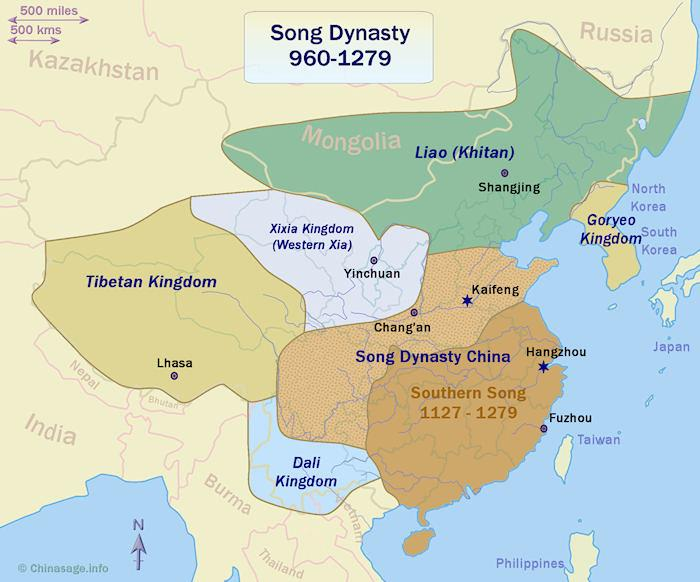
they were actively shrinking and losing land to their upstart neighbors, so much to the point that we separate the song dynasty into northern song (when it was china proper in the map below) and southern song after decades of constant warfare had shrunk it south of the river huai
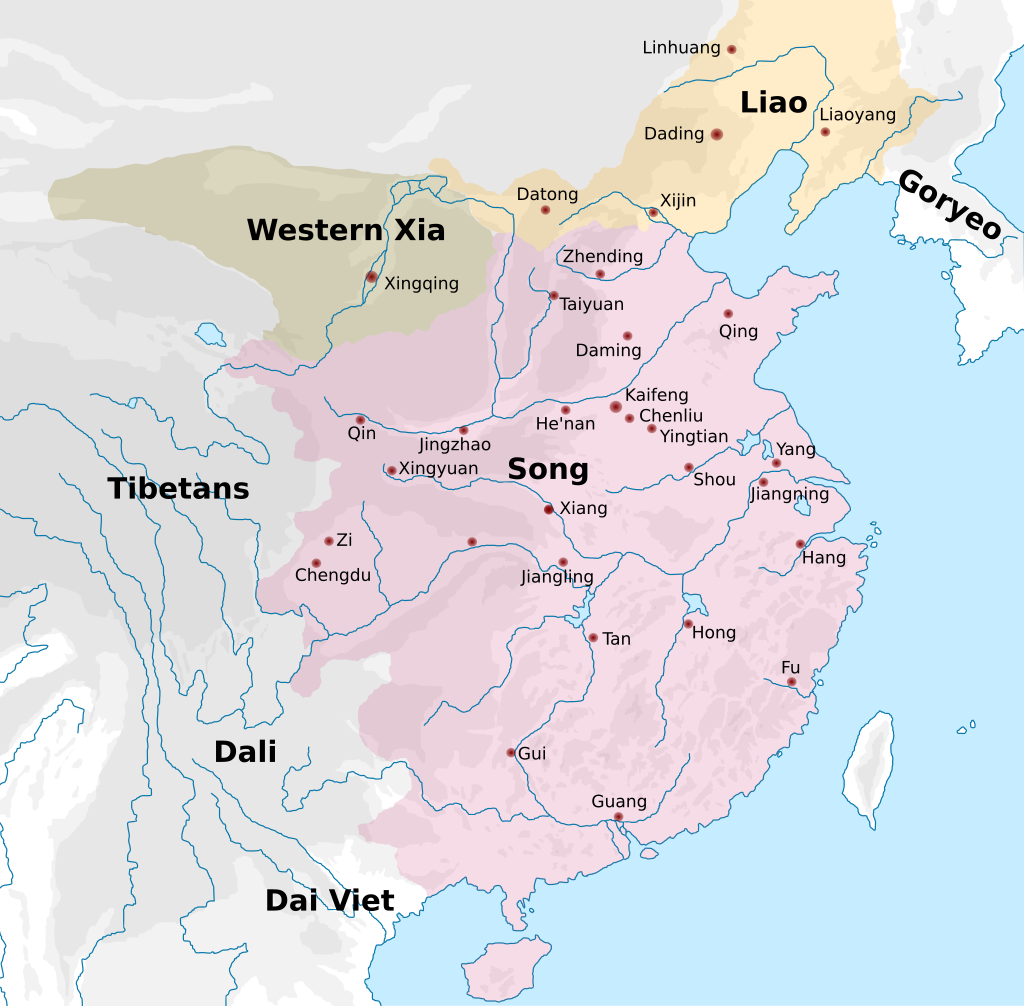
and then on top of all of that, the mongols then swept in and the song had to deal with that, and dealt with it so well that it held out so long against the mongols that they were able to conquer lands as far as the middle east and eastern europe before finally securing all of china - that siege of baghdad was several decades before they could finally snuff out the song
gunpowder is also precisely why the mongols where a flash in the pan - since it was so easy to aquire with common ingredients, once the secret gets out everyone has it and when everyone has gunpowder, it's far easier to defend against an army which is primarily on horseback
with gunpowder not only could any idiot learn to point and click (learning to be effective with a longbow required years of practice and incredible strength) and then you just assemble on the fly mobile fortifications to drag along with your army and setup at the field of battle to stand behind and shoot through the slits
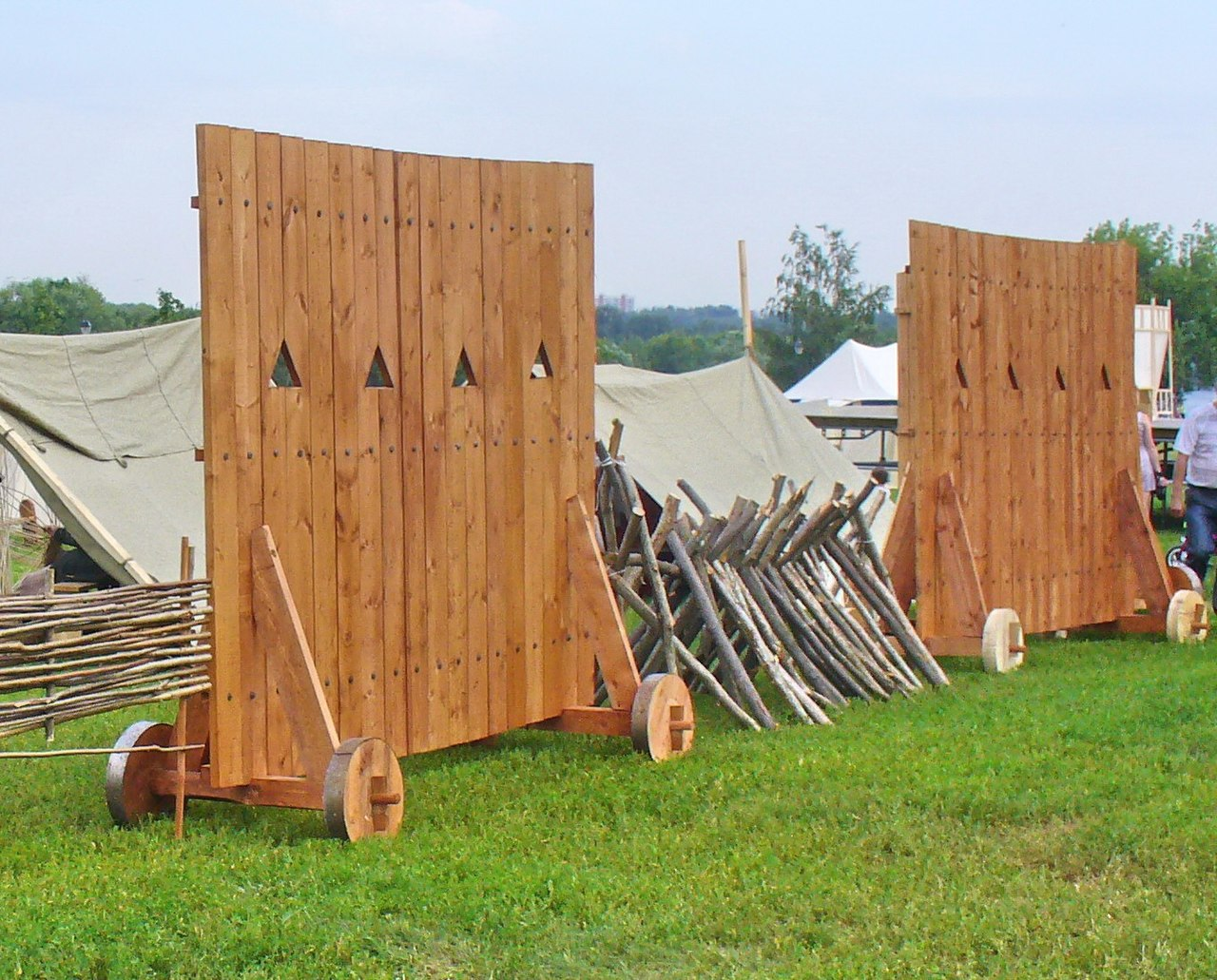
this above is why nomads went from being elite forces taking down rome and conquering the world to destitute goat cheese peddlers
and i digress
in asia they didn't develop cannons - they instead developed anti-personnel weapons - things like grenades and weapons more like modern shotguns than rifles
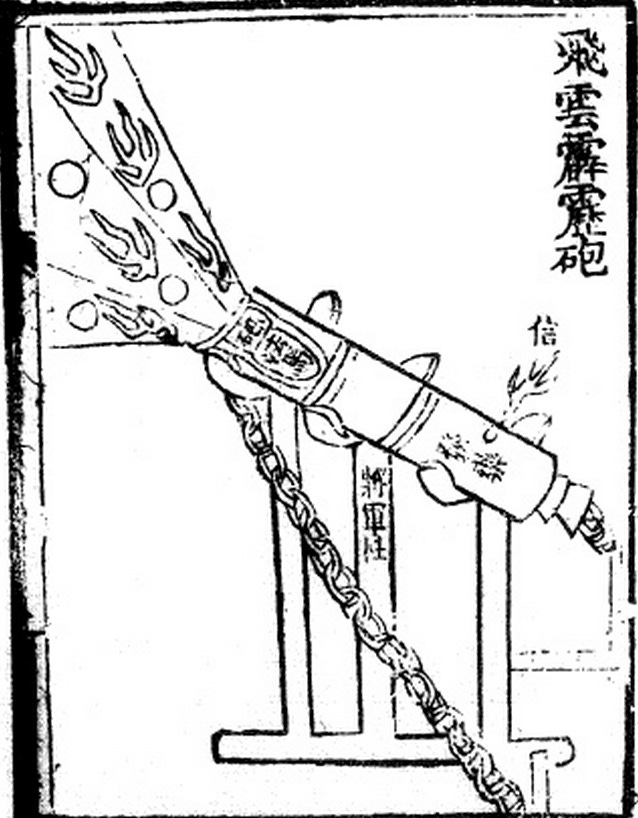
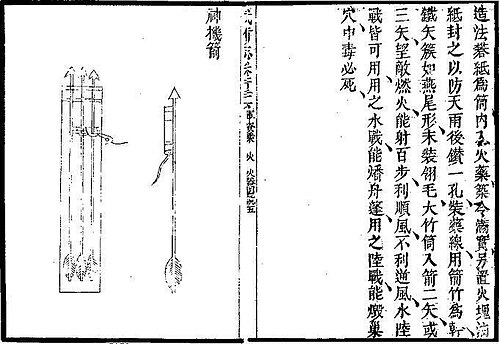
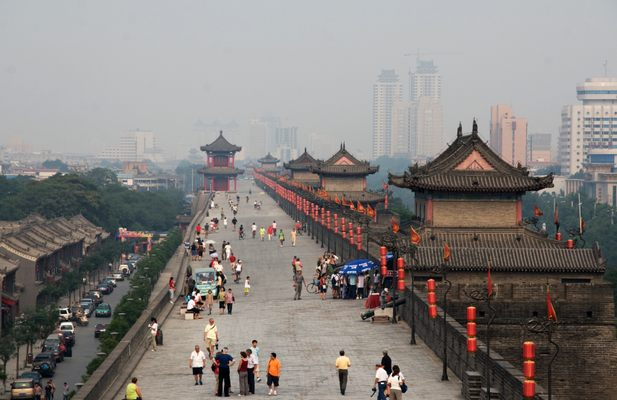
the reason for this is that this is what a city wall looks like in asia

they also constructed bombs, which were often loaded into catapults and trebuchets and were anti-personnel in nature
they are huge and have earthen cores - they even survived modern conflicts like ww2, the only reason why not every city in china has them anymore is most places voluntarily tore them down because of the traffic congestion they caused - beijing still had its city walls up until the 1960s
the only cities which still have them today are those which were too poor and undeveloped to require their removal until they became rare enough to be sought out by tourists again
there's no knocking that down with a cannon, not even a modern one can knock that down
compare that to the city walls of europe


narrow with just enough width for 1-2 people and no earthen core - just stone - this kind of wall is easily knocked down by cannons and thus why the only ones around today are either modern star fortresses specifically designed to withstand cannon (with the earthern core)
actual set piece battles are incredibly uncommon as that requires either the weaker army to be trapped and yet oddly prefer to fight over surrendering or for the even rarer instance of both armies to think they are the ones with the advantage - because of this, for the most part warfare is about sieging cities
so the far greater need was not in anti-personnel but rather in taking down fortifications so gunpowder development was primarily driven towards cannons which would be worthless back in asia - which was the far better technology tree to follow because that eventually produced far better anti-personnel weapons as well in the form of muskets and cannister shot
It was only a matter of when. AI controlled drones are here.
Ukraine releases new footage of daring AI strikes that crippled Putin’s bomber fleet
...
"During the flight, some drones lost signal and switched to performing a mission using artificial intelligence along a preplanned route. After approaching and contacting a specifically designated target, the warhead was automatically activated,” the SBU added.


The variety and scale of what is coming is mindboggling
It was only a matter of when. AI controlled drones are here.
The variety and scale of what is coming is mindboggling
One immutable fact in warfare seems to be weapons advance faster than defenses.
It's easier to kill and destroy than to protect, in general. Maybe it just comes down to attacks only need to succeed once for defenses to fail permanently.

One immutable fact in warfare seems to be weapons advance faster than defenses.
It's easier to kill and destroy than to protect, in general. Maybe it just comes down to attacks only need to succeed once for defenses to fail permanently.
Or it could just be that defenses tend to be reactive responses to new weaponry and tactics.

