Why does position affect strategy and EV?

Everybody knows that position is advantageous.. but why?
I ran some toy game simulations and I'm still not exactly clear on why position increases EV.
The only example I could find where position did not change anything was the polarized vs bluff-catcher toy game.
In all other examples I could find, there were clear differences in strategy and EV based on position.
**************************
Here's three toy games where both players have exactly the same ranges, yet strategy and EV changes based on position.
For the first two toy games GTOW AI (automatic bet-sizing) was used.
**************************
BTN RFI range vs BTN RFI range (forced c...:
Spoiler
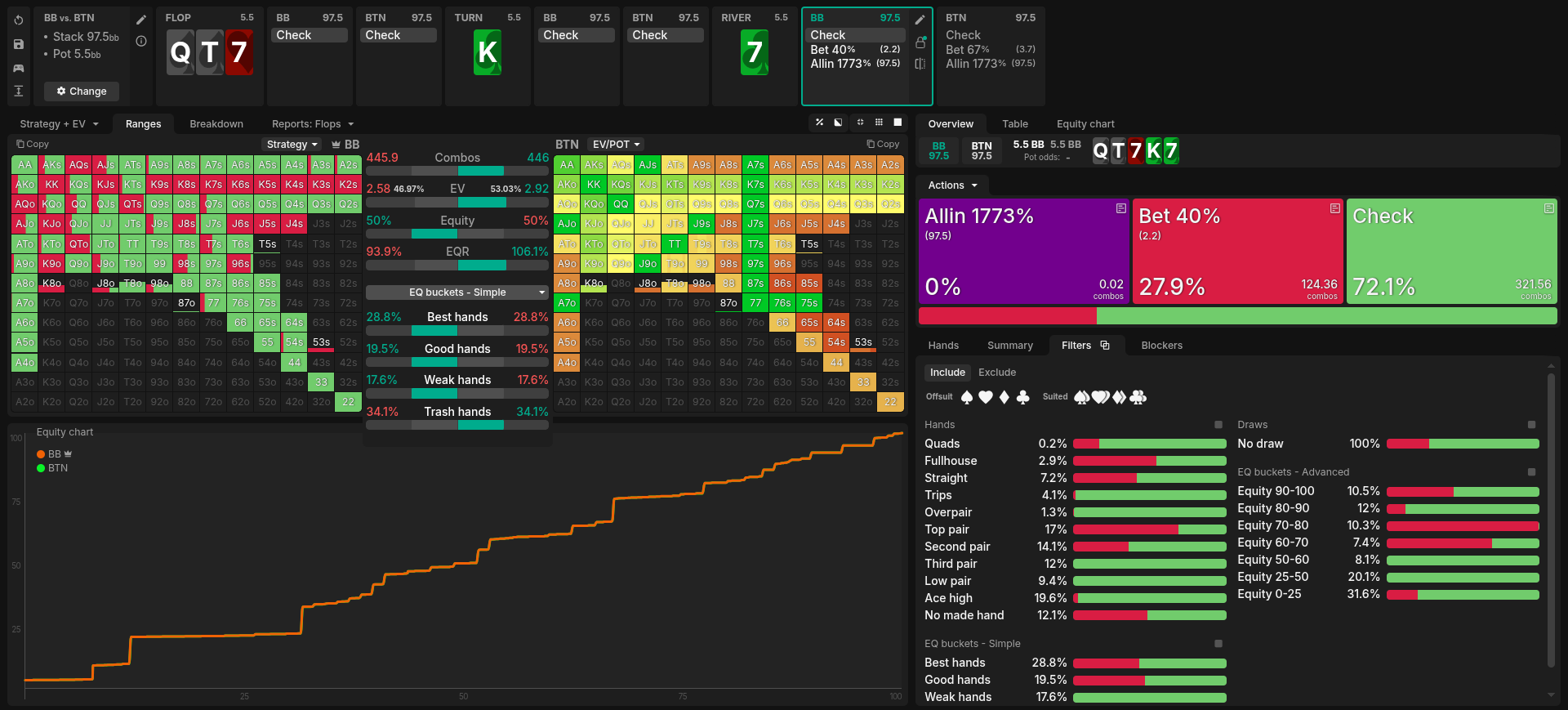
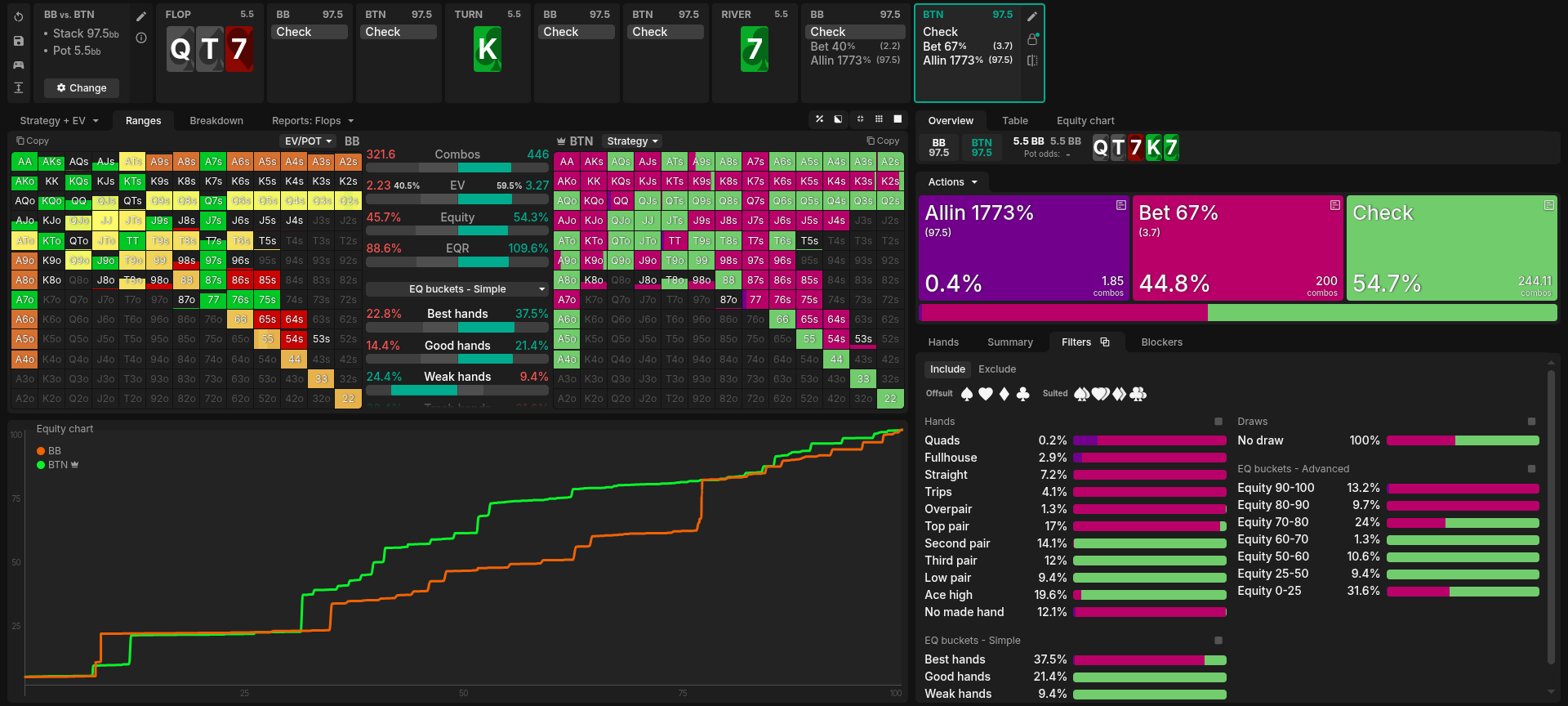
As you can see, betting strategies are very different.
**************************
Polarized vs Polarized (forced check to ...
Spoiler
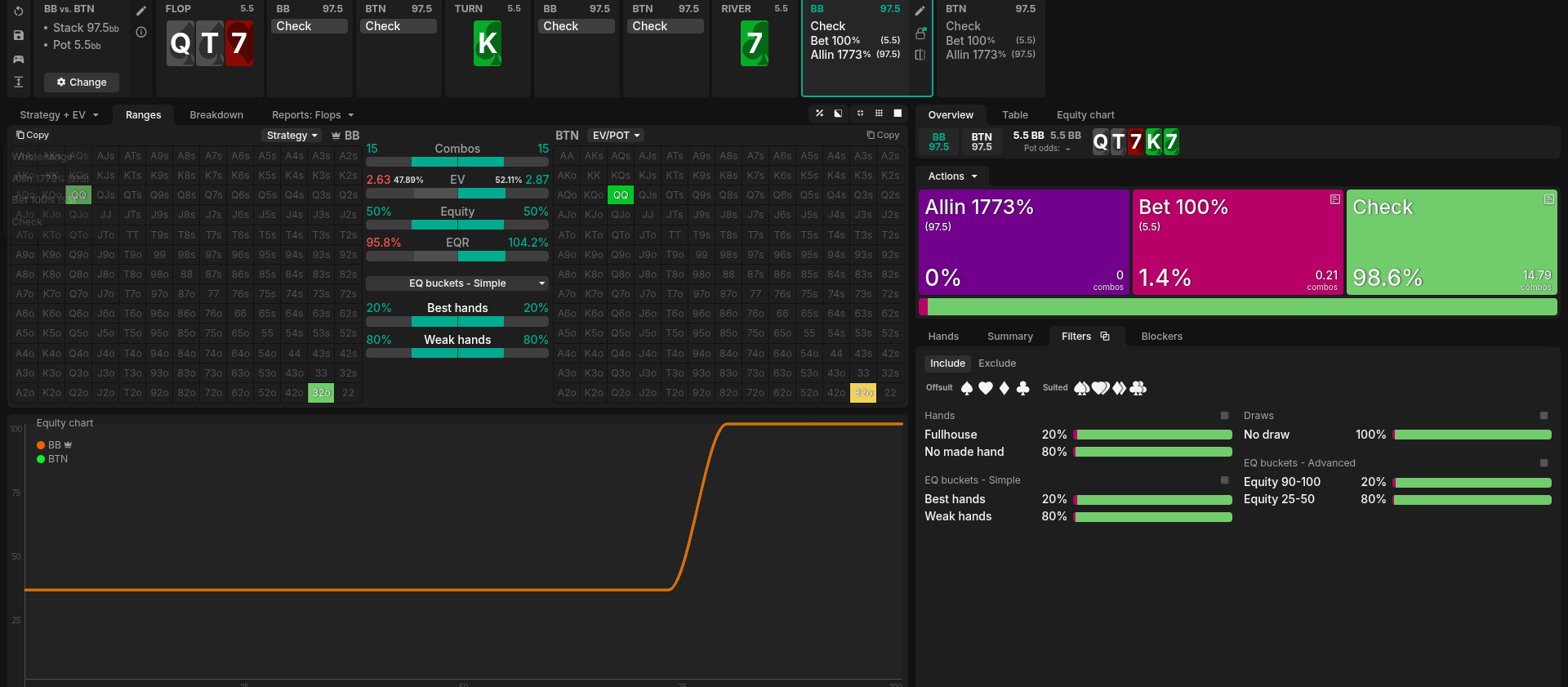
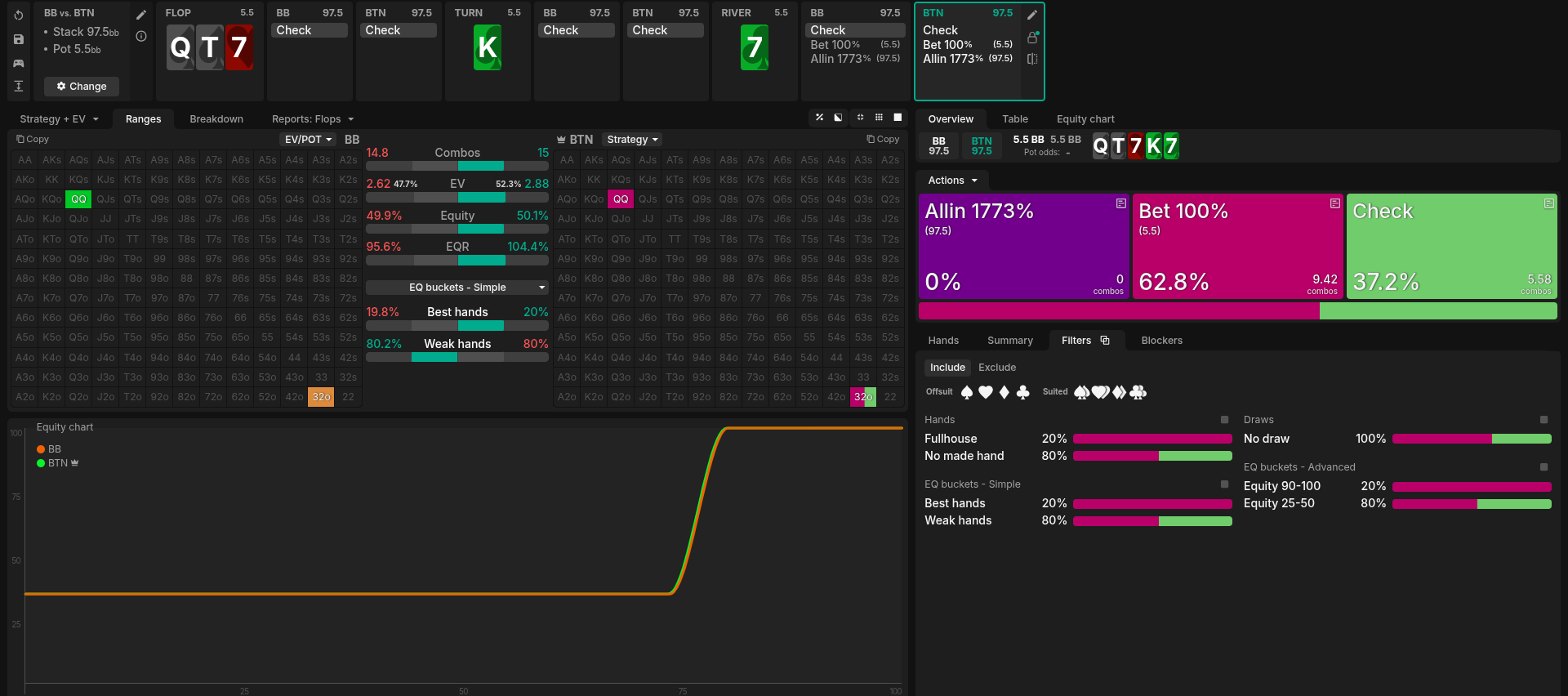
**************************
AKQ toy game:
Spoiler
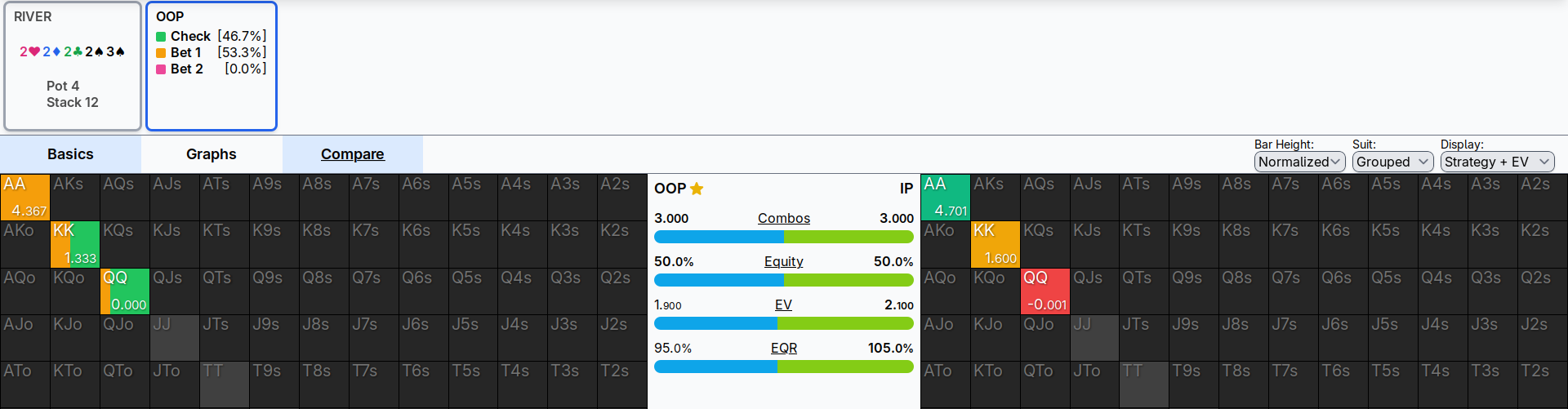
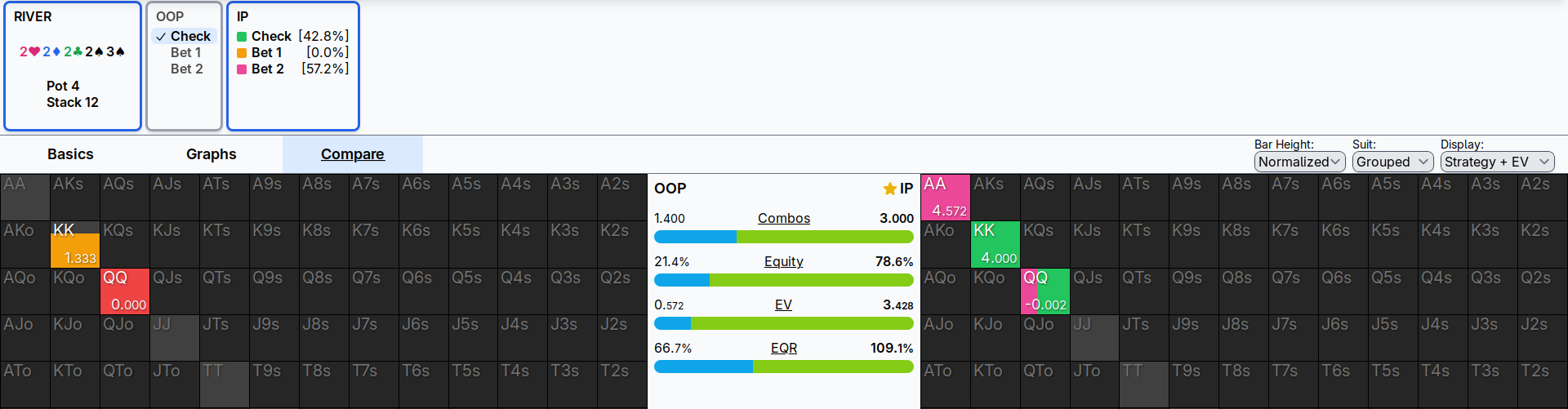
OOP prefers a merged bet with a small size, while IP prefers the larger size with a polarized strategy.
**************************
So why are we seeing differences in EV and strategy in all cases except in the polarized vs bluff-catcher toy game?
What's the mechanism?
How does OOP become exploitable if he uses the same betting strategy as IP?
How does OOP become exploitable if he checks his entire range?
8 Replies

You act with more information in later positions.
So I guess the difference is that IP has 100% certainty that he can check behind and realize all equity in a showdown, while OOP does not have that guarantee when checking.
If OOP were to bet all his value, then it would leave his checking range super weak.
If OOP checks his entire range, then IP gets to easily realize all equity with his marginal hands.

So I guess the difference is that IP has 100% certainty that he can check behind and realize all equity in a showdown, while OOP does not have that guarantee when checking.
If OOP were to bet all his value, then it would leave his checking range super weak.
If OOP checks his entire range, then IP gets to easily realize all equity with his marginal hands.
This is more or less how I would word it.

But in order to mitigate the informational disadvantage, they’ve forgone an opportunity to lead out, which misses an opportunity to extract value from their opponent or deny them equity.

I love these types of questions that get to the heart of poker theory. It comes down to information asymmetry.
Firstly, it's worth noting that if you pacify or polarize either player in a HU pot, then their relative position becomes irrelevant because you make the same EV regardless of position. So it's not just about having more info, you also have to be able to leverage that advantage. But ok that's a triviality.
Let's start with an analogy. If you give some player more bet sizes (2p0s), that can only increase their EV right? Because worst case scenario they just ignore those sizes and have the same EV as before. The extra bet sizes can only benefit them.
Well the same is true with information asymmetry. OOP needs to pre-commit to some plan before seeing IPs action. IP could do the same, just pre-commit to some plan and ignore any range update. e.g. "if they lead I always fold this hand, if they check I always bet." This is the equivalent to getting more bet sizes and not using them. But IP also has the option to update their beliefs based on this new information (now that they've bet, I think my hand is relatively weaker). This can only ever benefit them by the value of information theorem.
The technical term is that IP is acting on a "finer information partition". Oversimplifying a lot here, but:
- OOP knows: (Their hand strength)
- IP knows: (Their hand strength | OOP action)
"But what if OOP range-checks?"
Well, that's a defensive concession. OOP is forfeiting their leads and giving IP a free check in order to minimize the information asymmetry and maximize their realization. They are checking to mitigate IPs threats.
Interesting discussion
The FreeCard advantage
Because the check-raise is a major weapon of the OOP player, checking more seems logical. He will check value at times, unlike IP.
I love these types of questions that get to the heart of poker theory. It comes down to information asymmetry. Firstly, it's worth noting that if you pacify or polarize either player in a HU pot, then their relative position becomes irrelevant because you make the same EV regardless of position. So it's not just about having more info, you also have to be able to leverage that
this is a brilliant explanation!


