Heuristics for starting at a Table of Unknowns
One of the other threads inspired me, but what are your standard heuristics that you start with when you join a table with a bunch of unknowns? Obviously we make adjustments based on how we observe people play.
I only play low stakes, so these are mine for low stakes.
1. I'll always open with a raise
2. I'll rarely limp behind
3. My open raise range is relatively tight
4. My 3 bet range is JJ-AA, AKo, AQs+, even from an LP raise.
5. I won't c-bet Air with 4 or more in hand, and rarely with 3
6. I won't run any big bluffs that don't have good equity if called
7. I won't try to bluff catch
8. I will be incredibly respectful of big turn and river bets, and especially turn or river raises
9. I'll always offer to chop and accept a chop out of the blinds no matter what hand I have
10. I'll not slow play, and when I have a nutted hand, I'll look to get as much money in as early as possible
Again these are all starting going in heuristics, which I will change/adapt as I get new info.
This should be stickied as like the $1/2 starter guide strategy with an amendment describing when to overlimp and how to exploit the various low stakes tendencies that are frequently observed

I can't think of what else to add right now, although you could be a little more specific with (3) your RFI range, but assume you mean standard ranges based on position, with significant difference between UTG and BN. You could maybe add a set strategy for playing from the blinds too.
For me the pressing issue is at what point do you adjust? If you see UTG opening T9o and getting called by 3 players in one orbirt and in the next orbit the same player raises and you're in the SB with ATo what do you do? I'd adjust in this situation and 3bet even though the sample size is small.
#1 isn't a thing.
#2 isn't a thing.
#3 is fine but it should be more of a situational thing.
#4 doesn't make sense because your 3bet range should be situational.
#5 is fine, but you can break #5 if you are good at live reads
#6 isn't a thing because you don't need much actual equity if fold equity is high
#7 isn't a thing because poker is all about bluff catching even against players who usually under bluff
#8 is a good heuristic
#9 is only a good idea if you are chopping two blinds. I don't understand chopping 3-4 blinds.
#10 isn't a thing.
#1 isn't a thing.#2 isn't a thing.#3 is fine but it should be more of a situational thing.#4 doesn't make sense because your 3bet range should be situational.#5 is fine, but you can break #5 if you are good at live reads#6 isn't a thing because you don't need much actual equity if fold equity is high#7 isn't a thing because poker is all about bluff catching even against players
Not sure how to respond to the not a thing piece.
When I say opening range I mean tight for the relative position.
On 3b range, I actually find that default live players don't change their open raise range much so while I might add a few hands to 3b range against an LP raise, Im not adjusting much.
On don't bluff catch. If you have such good reads that you can bluff catch at a low stakes table immediately good on you. I also disagree that bluff catching at low stakes is that important.
I can't think of what else to add right now, although you could be a little more specific with (3) your RFI range, but assume you mean standard ranges based on position, with significant difference between UTG and BN. You could maybe add a set strategy for playing from the blinds too. For me the pressing issue is at what point do you adjust? If you see UTG opening T9o and getti
I think adjusting immediately when you have irrefutable evidence is fine, i.e. when you see a showdown with a hand that you would not have ranged someone on.
As for like aggressiveness where you don't see hands, Ed Miller, has a great piece on Bayesian Inference. The TLDR is that you need a bit more evidence to assume that someone is a LAG at low stakes than most people assume, because the population is so dominated by loose passive that what you might be observing is just someone catching good cards.

I think it's fine to split range and limp behind on BTN/SB, and maybe CO, on the first hand.
I would mostly 3bet 99/AJs/AQo from an LP open, even on the first hand ... of those I'd be more likely to call AJs/AQs/99 but V would need to give off vibes to not 3bet TT and esp. AQo where calling is often going to be worse.
Our position of BB/SB or BTN would also factor into this.
Depends on the definition of air, and also position. If I have AQs on KT4 with BDNFD ... I'd need a good reason to not bet.
9. I'll always offer to chop and accept a chop out of the blinds no matter what hand I have
I always chop. I haven't seen it proven but I assume it's not profitable to play in the SB with 1-2 rake (MGM Springfield rules of no rake unless you hit $10 _maybe_ changes things, if both players are aware). So always chopping is just bowing to math for both players.
10. I'll not slow play, and when I have a nutted hand, I'll look to get as much money in as early as possible
I don't characterize not raising good (or even "the best") hands as "slow playing", just as I don't think about calling with draws as "chasing" ... while the wording is sometimes kind of correct, I think it alters your perspective on what you are doing and why.
But I also would rarely change either of those things based on reads ... much more important would be stack sizes, number of other players, bet sizes, etc.
tl;dr If the first hand I'm in BB with 33 and BTN limps; SB limps and we see K73r ... I might bet out 1.5bb-2.5bb, but I'm basically never piling money in with a x/r to 15bb or something.
#7 isn't a thing because poker is all about bluff catching even against players who usually under bluff.
For once I am going to assume this is not a troll.
This is the biggest difference I know of between theory and practice. Guarding against being bluffed is far, far more important in theory than it is in practice, especially at live low stakes (but in many other contexts as well).
I assume everyone has a rough understanding that a heuristic isn’t meant to be regarded as a rule.
I just did a quick google to double-check:
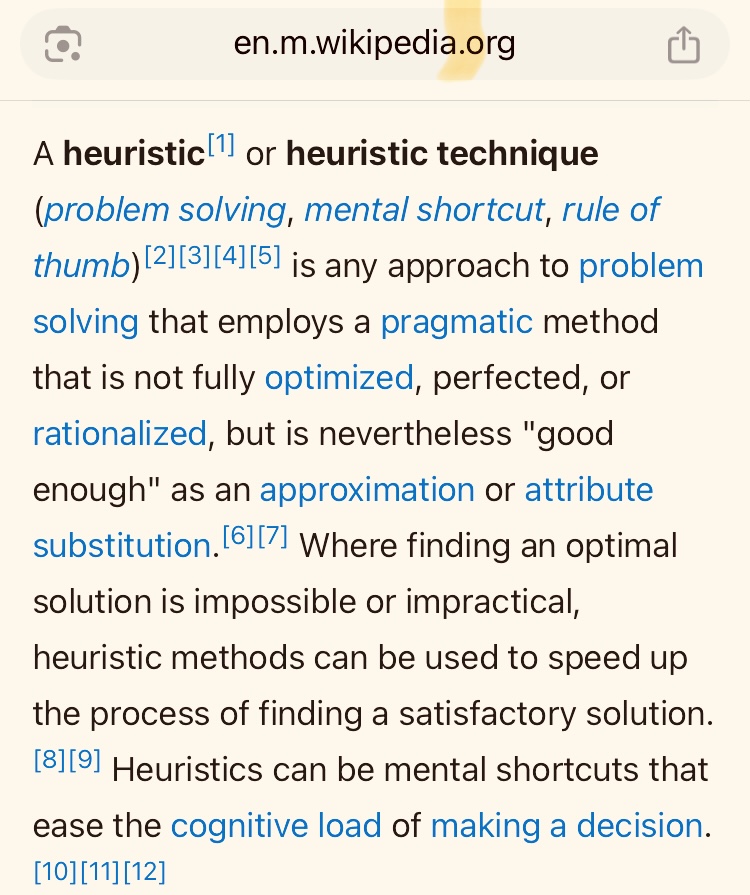
I take the list to be a provisional guide to navigating the early stages of a session until you have reliable info on your opponents.
In this respect, thing 7, for instance, is a working assumption that the player pool at 1/3 underbluffs. I don’t agree with this assumption.
I mean, I’d say the 1/3 pool tends to overbluff spots such as busted draws but underbluffs in others, for example with minor showdown v capped ranges.
In this respect, thing 7, for instance, is a working assumption that the player pool at 1/3 underbluffs. I don’t agree with this assumption.
I mean, I’d say the 1/3 pool tends to overbluff spots such as busted draws but underbluffs in others, for example with minor showdown v capped ranges.
This is spot on. In low stakes live NLHE games, I would expect Villains to over bluff rivers where they have no showdown value in small to medium size pots especially when they sense weakness. And they would under bluff in a lot of other spots.
Well said, DrTJO. We still have to be good at bluff catching against a bunch of low stakes live NLHE randoms.
For once I am going to assume this is not a troll.
This is the biggest difference I know of between theory and practice. Guarding against being bluffed is far, far more important in theory than it is in practice, especially at live low stakes (but in many other contexts as well).
I disagree. I have made a lot of money in my games bluff catching rec players who would probably be profiled as passive by most observant regs.
Even passive players will bluff in 2025.
"bluff" is a very general word.
I see a lot of newer/younger players at 1-2/1-3, and some older ones, who will raise way too wide preflop and/or way overcbet flops if they raised preflop ... not sure they'd classify this as bluffing.
A smaller group of those will bet later streets "with initiative" and some to all draws, and if they get to the river with a busted flush draw some of those will actually bluff with air.
This kind of mindless "just keep betting" bluffs can be common for short periods, but generally is corrected by the rest of the population massively overcalling if it's uncontrolled.
Some of the above average 2-5 players will also be at least slightly over bluffing preflop 3bets and/or anytime H starts checking to them IP postflop, because people fold more and mindless aggression works out enough.
In general though I would heavily agree with CMV and people lose way way more money by calling rivers when they only beat bluffs, or turns with little to no equity vs. value hands etc.
"bluff" is a very general word.I see a lot of newer/younger players at 1-2/1-3, and some older ones, who will raise way too wide preflop and/or way overcbet flops if they raised preflop ... not sure they'd classify this as bluffing.A smaller group of those will bet later streets "with initiative" and some to all draws, and if they get to the river with a busted flush draw some
I'd say there's little doubt about what constitutes a bluff on this forum, so long as we allow for a "semi-bluff" (and I'd call RFIng 74o preflop a semi-bluff in a way because the player still has at least a 25% equity share HU preflop and c-betting is typically a semi for the same reason, as it's rare for a player to have close to zero equity on the flop).
Players at 1/3 will continue to bluff in relatively predictable spots (e.g .on the river with busted draws or sometimes with a barraled A high). I don't see the "rest of the population overcalling" as a strategic response; the vast majority of the pool is risk-averse and find reasons to fold even though logic might say otherwise.
Anyway, I'd also say of the ten heuristics #7 is the least useful and would generally be thrown-away in many games over a shortish sample, although the lowstakes games I play may differ from those in the USA. There comes a point where a heuristic can be replaced by a robust assumption, and, perhaps, for a short time, more precise rule (as with MDA) and I'd place bluff-catching in this category, alongside the execution of multi-street bluffs.
Well Done 97
1. Always open raising, unless I start losing &
go to 2.
2. I hate myself when I limp, it’s usually when
I’m losing, but I’m working on it.
3. Tighter than most opening OOP.
4. Looser than you when 3betting IP.
5. I probably cbet too often.
6. My bluffs are almost always semi-bluffs.
7. There’s an art to bluff-catching based on
villain’s actions, so this is not a good blanket
statement.
8. Big bets are usually value.
9. I chop, but don’t mind if villain doesn’t.
T. Not slowplaying, leads to losing a street of
value.
This was a good exercise: I understand it’s not cut in stone, but a starting point.
11. Probably add that I will play tighter than normal for a couple of orbits until I get to know everyone.
12. My image will be dictated by the cards that I get and I will be aware of how I am perceived.

One of the other threads inspired me, but what are your standard heuristics that you start with when you join a table with a bunch of unknowns? Obviously we make adjustments based on how we observe people play.I only play low stakes, so these are mine for low stakes.1. I'll always open with a raise2. I'll rarely limp behind3. My open raise range is relatively tight4. My 3 bet r
1. I haven't raised a hand in the LJ- in 8 years, and I rarely raise a hand in the HJ (maybe half a dozen times a year), but that's my style.
2. See 1, but I also think we should be overlimping behind in LP a huge percentage of playable hands against a bunch of limpers.
3. The more limpers there are, and especially sitting at my typical shortish stack, yeah, my raising range is quite tight. Exception would be 0 or maybe 1 limper to me in LP.
4. Yeah, more-or-less.
5. Yup.
6. Yup.
7. I'm fine with bluffcatching, especially if I played the hand to induce / draws busted.
8. Yup.
9. Yup. Will obviously *wink wink nudge nudge* if I have a BBJ hand.
10. See 1, but more-or-less postflop against most.
Not a bad starting point, and mostly my difference are just due to my style.
GcluelessheuristicsnoobG
GG, as far as #1 goes, you also play in a game where you can count on people to raise for you if you limp. When I happen to be in such a game I also limp, but otherwise I almost never do. This is a heuristic for an unknown table which makes it OK to me.
I've done two separate tests (10 one hour samples at tables I felt were run-of-the-mill, so not overly aggro nor nitty, just... standard), one in 2017 when tables we're 10 handed, and one earlier this year where tables are now 9 handed. In both cases, about twice as many hands were raised preflop than limped, so I feel a LRR strategy is fine in these conditions.
I'll admit I haven't played in a zillion different rooms, but honestly I'd be very surprised if most LLSNL tables weren't this raisey (and perhaps even moreso).
GcluelessstatcollectingnoobG
1. I haven't raised a hand in the LJ- in 8 years, and I rarely raise a hand in the HJ (maybe half a dozen times a year), but that's my style.2. See 1, but I also think we should be overlimping behind in LP a huge percentage of playable hands against a bunch of limpers.3. The more limpers there are, and especially sitting at my typical shortish stack, yeah, my raising range is q
oh interesting, you'll bluff catch right from the first hand. This may be a leak of mine, but say we get a big river bet after a missed draw, I'll let it slide the first few rounds. Perhaps my reads are just not good enough, but I gotta see how the table and people are working before I attempt to bluff catch.
oh interesting, you'll bluff catch right from the first hand. This may be a leak of mine, but say we get a big river bet after a missed draw, I'll let it slide the first few rounds. Perhaps my reads are just not good enough, but I gotta see how the table and people are working before I attempt to bluff catch.
I mean, it's so dependent on how the hand plays out, and #8 is admittedly still in play, but if my main plan was to get to showdown for relatively cheap (and I've played it that way, i.e. perhaps passively / weakly) and the draws busted then I'm probably not folding even if it is my first hand against an unknown. Although, yeah, against a pool that in general underbluffs then I get the heuristic, but it is so hand dependent.
GcluelessNLnoobG
I blame this thread for me losing 30bb yesterday bluff-catching a relative unknown (less than one orbit/just one showdown).
Brief HH: Hero RFI 3.5x utg w AJcc; 4way to flop Q77xxc Villain in CO b30, H call; HU to Turn Q777, Villain b20 H call; River Q777A Hero B100 Villain raises 2.3x Hero CHANGES PLAN of bet/folding and instead calls, with Villain then showing 75ss.
Obviously Villain needs very few bluffs since we have the effective 2nd nuts (I heavily discounted him overvaluing Qx once he raises river).
Key here is that there isn't a busted draw BUT my decisive and yet misguided thought was that most Villains slow play the "locked-nuts" and wouldn't bet both flop and turn. If we followed heuristic #7 the bet-fold would have been straightforward and perhaps deciding to float OOP to small bets on flop and turn a clear mistake.
I blame this thread for me losing 30bb yesterday bluff-catching a relative unknown (less than one orbit/just one showdown).Brief HH: Hero RFI 3.5x utg w AJcc; 4way to flop Q77xxc Villain in CO b30, H call; HU to Turn Q777, Villain b20 H call; River Q777A Hero B100 Villain raises 2.3x Hero CHANGES PLAN of bet/folding and instead calls, with Villain then showing 75ss.Obviously Vi
Also why are you floating flop (with just a backdoor and 1 over) OOP when he bet into 3 people?
Also why are you floating flop (with just a backdoor and 1 over) OOP when he bet into 3 people?
The small sizing. He bet closet to 20% pot I now realise (3bb into a pot of 14bb). We were around 100bb ef. The other two players folded. I thought it was a marginal float but bdfd plus any T or broadway gives us some extra equity. We have nearly 40% versus a low pp, 30% versus mid pp and around 20% v Qx.
Folding versus a larger bet is straightforward. Generally I'm looking for spots where I can x-c multiway as the PFR in these games, since I'm rarely c-betting 4way+ (I would x-c AQ here too as well as 88+ some of the time).
This is interesting to me because I don’t ever float without being in position.
Bluff catching to me is more about V’s actions. For instance, he barely looked at the river card (which changed the nuts) and it was clear he was predetermined to fire again no matter what. With anything decent I’m calling.
Some people are just not very good at bluffing.
I stumble onto catching a bluffer by simply recognize opportunity. When most of the time nobody is bluffing, they don’t know how to act when they do.
Also why are you floating flop (with just a backdoor and 1 over) OOP when he bet into 3 people?
+1. This would never be my default (i.e. readless) bluffcatching spot, especially with just A high. Heck, even with an overpair I'd seriously consider folding at some point.
A default bluffcatching spot for me would more be something like we raised and then weakly checked / called down OOP HU with an overpair on like a T92hh3r4r runout and the villain wasn't reading a book.
GcluelessbluffcatchingnoobG
+1. This would never be my default (i.e. readless) bluffcatching spot, especially with just A high. Heck, even with an overpair I'd seriously consider folding at some point.A default bluffcatching spot for me would more be something like we raised and then weakly checked / called down OOP HU with an overpair on like a T92hh3r4r runout and the villain wasn't reading a book.Gcl
In my mind this float from OOP is not really a bluff-catching play, although it can become one on a later street. We are facing a small bet with around 30% versus a typical range at 100bb ef. I'm not saying it should be a default play but generally if we are floating we're doing so with significant equity --- and by significant I don't only refer to the amount but also that with nut-draw potential.
In this case, the hand became a bluff-catcher on the river after my bet (with the effective 2nd/actual 4th nuts on a lockdown board) was raised by a relative unknown.
But, yeah, "floating" doesn't equal "bluff-catching"; rather, bluff-catching can often be a component of floating.
Anyway: heuristic #11 No floating OOP with overcards and backdoor draws.
Makes me want to give up poker!

