Omaha rollercoaster
Hey guys, I decided I'm going to start a new blog.
I'm 34 years old, from Belgium but have been living in Budapest, Hung

All the best on your downtime, gl.
Hello guys,It's been fun blogging, but unfortunately I've decided it is time to end the blog.I was originally planning on continuing this blog until I reach PLO2k+, however recently I have gone through huge changes in my life. Me and my fiance have decided to break up. All my plans have changed (mostly outside poker, which also effects poker in some ways), and I need some time
Xptboy,
Have enjoyed reading your blog. Sorry to hear about the turbulence in your private life and wish you the best going forward in poker and life.
Racetrack
Yo friends,
Just wanted to let everyone know, things haven't been going too bad since the break-up. I mean, the first couple weeks was a lot of rage, but things have calmed down a lot and feeling real positive about everything now. Have mostly been taking it easy on the poker side, and really not putting in much volume at all. However even with low volume, last month was very nice, ran above EV for the first time since July 2024.
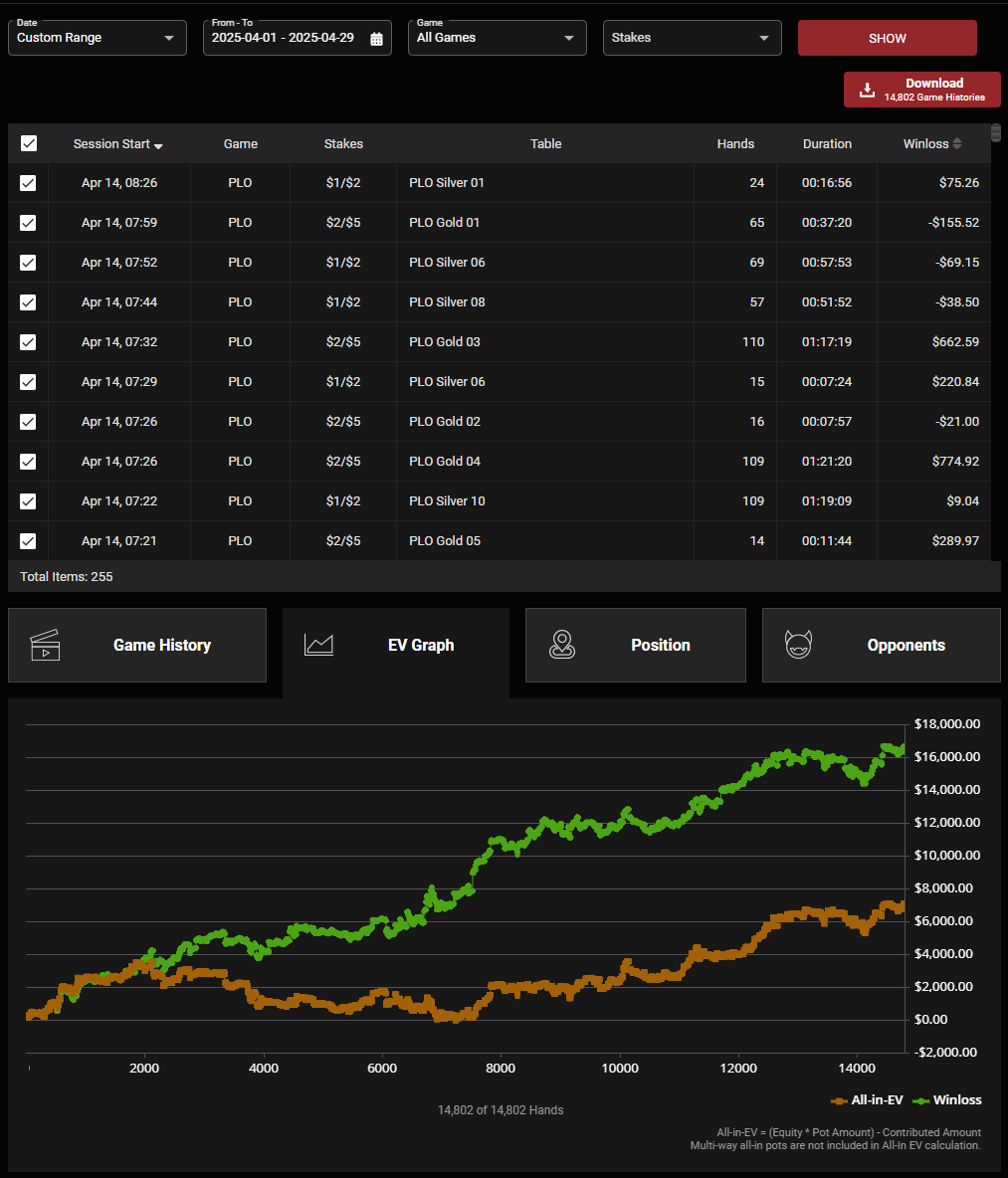
It's about $13.5k post RB
Mostly since the break-up have just been focused on myself, resumed going to the gym instead of just home workouts, picked up MMA, changed my routines and schedule quite a bit. Thought a lot about what I want in life and in my future. And now I'm ready to attack poker again after some deep reflection.
I won't be coming back to post on this blog though. I find 2+2 to be kinda dead, and tbh I like to share more than just poker only. So I made a challenge on my IG to post at least 1 story on IG each day.
Some of it is poker related, but tbh, a lot isn't. I'm trying to crush life, not just poker. I will however prolly post my monthly updates there from now. So if anyone would like to get updates on me, check me out on IG: https://www.instagram.com/pierreyr/
@PierreYR
oh also, in my study group, one of our members is leaving, a new spot has opened up, so if you are interested in studying with 6 other guys who are all playing PLO500 or higher. Feel free to PM me here, or on IG, or on discord: pierre.r

followed, seeing muscles
Hey we played a few hands at 500PLO4, I bluffed you in a big pot!
Gonna be continuing the blog/vlog on my YT channel. Here is my most recent update talking about my May results, as well as YTD results, some life updates, future plans, and starting coaching.
Broken YouTube LinkProlly this'll be my last update here, just wanted to let everyone know I'm moving over to YT/social media for updates. Will be posting monthly updates to share my results, but otherwise not sure what else yet, maybe nothing, maybe a lot. Depends on how much time I have I guess, and how much I really wanna commit to YT/building my social media etc.
Otherwise, still posting daily PLO content/hand analyses on my IG and will keep that up. @pierreyr
https://www.instagram.com/pierreyr/
Yt link doesnt work - what’s the name of your channel? Cheers
I've decided I'm going to resume my blog. A lot of time has passed and I feel like I'm in quite a peaceful state right now, not much pressure, not much outside distractions, and a lot of "extra time" on my hands. So I figured why not, let's get back to blogging.
TBH, at this very moment. It's 1AM in the morning as I start writing this. It's supposed to be the peak grinding times, but hey, it's Thursday night, and there are only 1 or 2 tables running at PLO400-600 off of GG, and so I was just wondering, wtf should I do? I already studied some, there's no action... Ah maybe I should start blogging again!
So just from that re-introduction, you can tell a lot has probably changed. So yes, some things have changed. Here are the main changes.
Moving off GGpoker completely
I was playing on the Natural8 client on the GG network. Well last Summer, around June or July, Natural8 decided they would no longer accept people playing from Hungary, so I had 2 choices. I could either move to the GGpoker client (Or Betkings or some other client), or I could decide to move my action off GG and play on other sites. If I continued to play on GGN, I would still have to restart the loyalty program. I worked really hard on N8 to get my Platinum status or whatever it was called (the top tier of their loyalty program), and so I didn't want to regrind the entire thing again from the start. So I decided I'd finally get off GGpoker, and mix other sites.
Currently, I play on: WPN, ipoker, Chico, and stars . May or may not add other sites later...
Change in sleep schedule and hours I play
Given I have had completely full autonomy recently and didn't have to worry about aligning my schedule with "normal" people at all. I found that games ran more (especially on the non-GG sites mentioned above), much later into the night.
Before I was sleeping and waking early, like a person with a typical circadian rhythm, sleeping some time between 10PM and 1AM and waking you know, in the morning. Now I sleep much later usually around 4 or 5AM and grinding until 3AM provided there is action. This is mostly to align my schedule with the peak hours on the sites I play today, however over time, I have actually found this to feel extremely natural, and maybe even optimal for me somehow. It isn't normal, but us poker pros, we certainly aren't normal humans.
Change in study approach, and general approach towards poker
This year, I'm not even subscribed to any training sites. I mean I got a PLOtrainer membership to check their GTO library. But I basically stopped watching poker content, whether it be free (youtube, streams) or paid (training sites, coaching). I also stopped attending most of my own study groups meetings (however, I remain as the organizer, and it continues to run quite smoothly).
My main goal this year, is to grind more and build more reps through grinding. I found studying can take not only a lot of time, but also a lot of energy, so even if it doesn't take much time, I have less energy to grind later. Especially considering I want to live good too. Basically, I decided this year, I'm going to be less of a consumer, and if I do anything regarding poker now, I want it to be much more active. That generally means much more: grinding, drilling, checking solutions myself. And less wasting time/distractions.
---------------------------------------------------------------------------------------
I mean, those are pretty short synopses, and I'm sure in future posts, I'll elaborate quite heavily on each of the above points and more. But just wanted to quickly show where I'm at right now and the major changes since the last post(s).
Lifewise:
I haven't gotten into any new serious relationships. I've found myself in a few casual ones. But for something serious, I've found I now have extremely "high standards"; not necessarily high standards but I am looking for something very specific. Therefore I've found myself being quite satisfied being alone, if someone is out there for me, then that'll happen. Otherwise I really want to focus on myself for now. I realized that the people you choose to be around, can shape your life in many ways. And so it is very important to choose them wisely. Given my autonomy and drive to be one of the best poker players, only women in alignment with this are allowed into my life now. It's quite hard to find tbh, but as I mentioned, not a problem at this stage in my life.
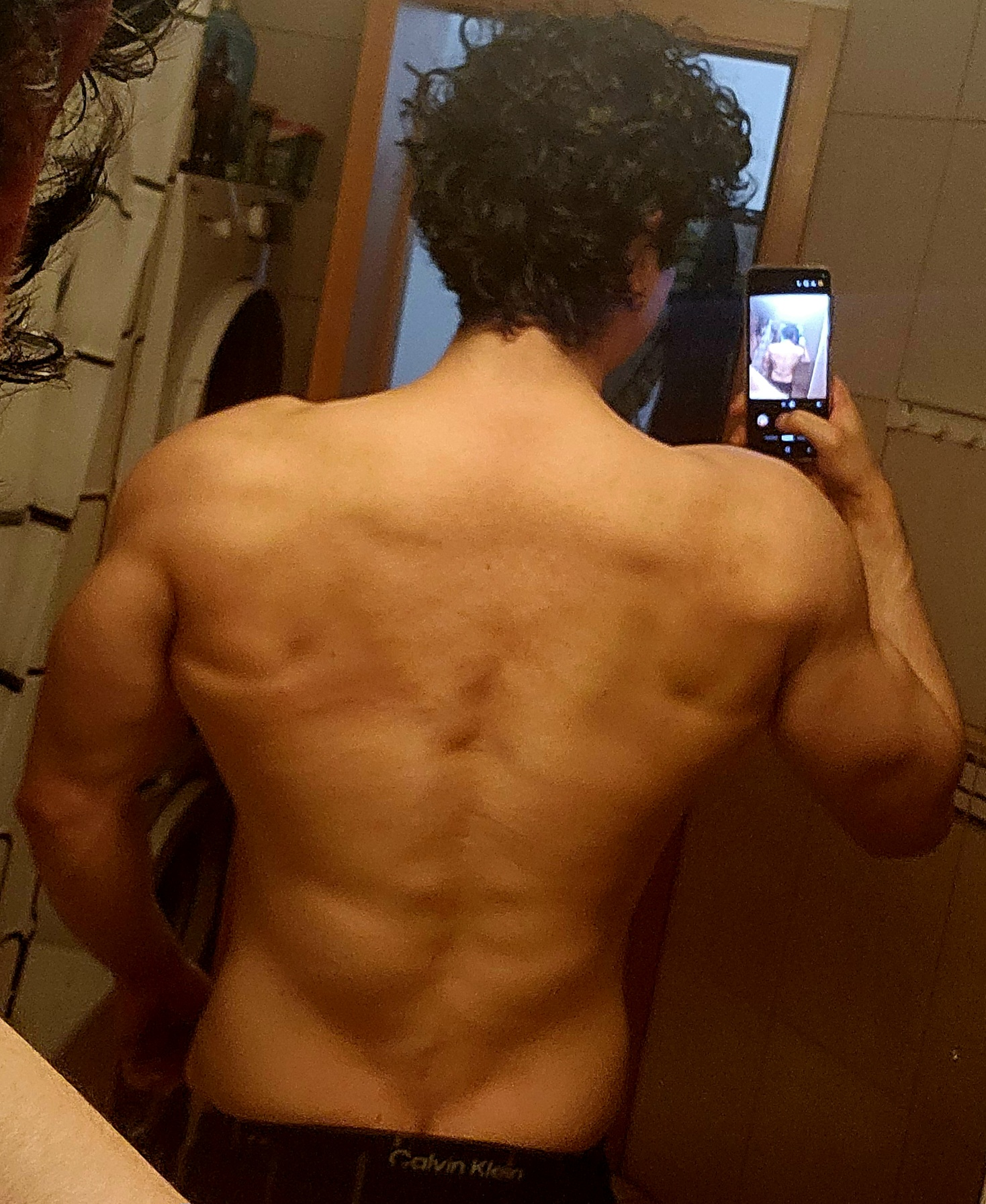
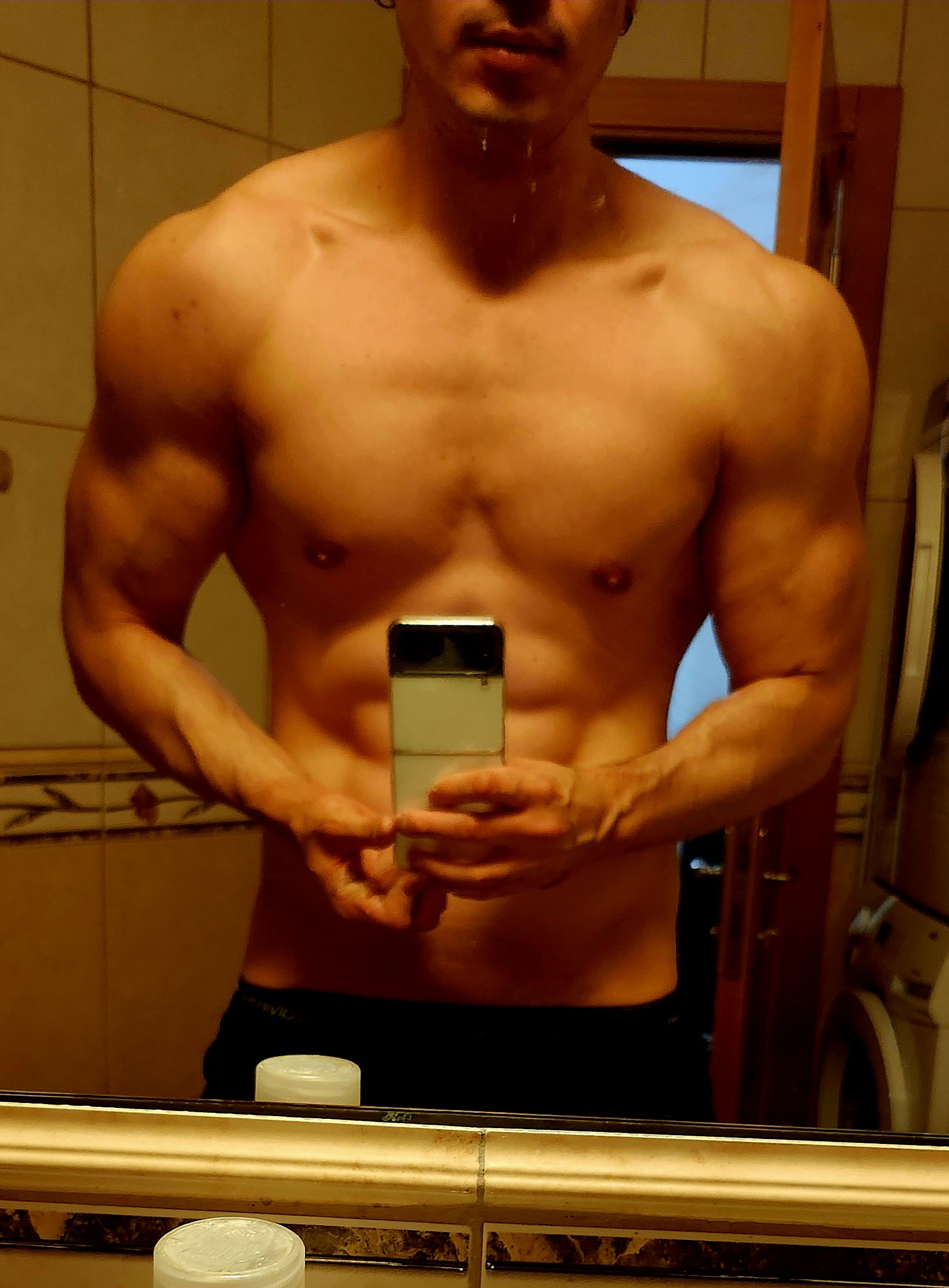
I got a new obsession this year. I have an obsessive personality so when I get into things I put my all into it. This past year I started working out again. And I went hard. I got into the best shape of my life. The good thing about the gym is you can't really burn out on it or spend too much time in it lol. Like if I got obsessed with videogames, or crypto, or IDK some new random hobby like painting, I could theoretically spend forever on it, playing a lot less poker because of this new obsession. But with working out it's not really possible, I'd just end up injured. In fact I'm taking a week off this week from lifting because my joints are literally killing me, I'm pretty sure I overtrained. May as well post a couple pictures (before anyone asks, yes I'm lifetime natural).
------------------------------------------------------------------------------------------
So what you guys have probably been wanting most:
Poker 2025 results
Honestly, 2025 had to have been one of my worst years in poker ever?
I can't track rakeback precisely off GG, so numbers are slightly off, but I should have made about $64,000
So a bit less than 2024 (I think in 2024 I made around $80k?).
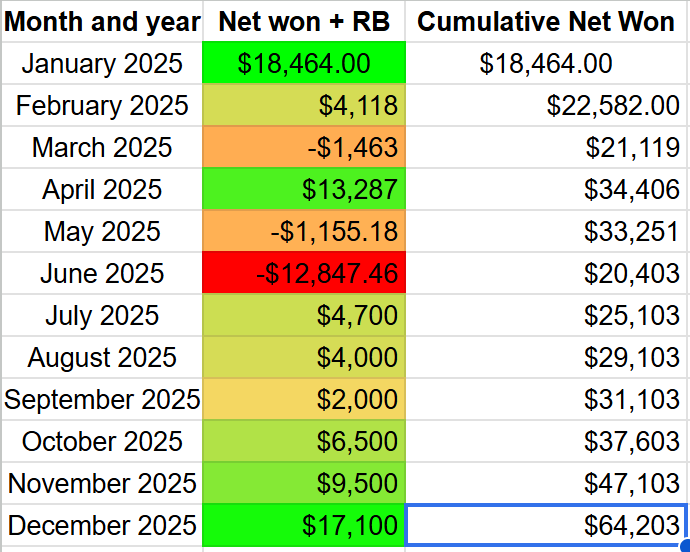
It's actually a bit ****ed up because I had 2 of my best months in PLO ever. It's quite rare for me to have >$15k months. But then I also had my single absolutely worst month ever by far, losing $13k. And in addition I had 2 "slightly losing" months, and several not so great months.
Drivehud graphs don't include rakeback obviously, but I'll share some:
Overall:
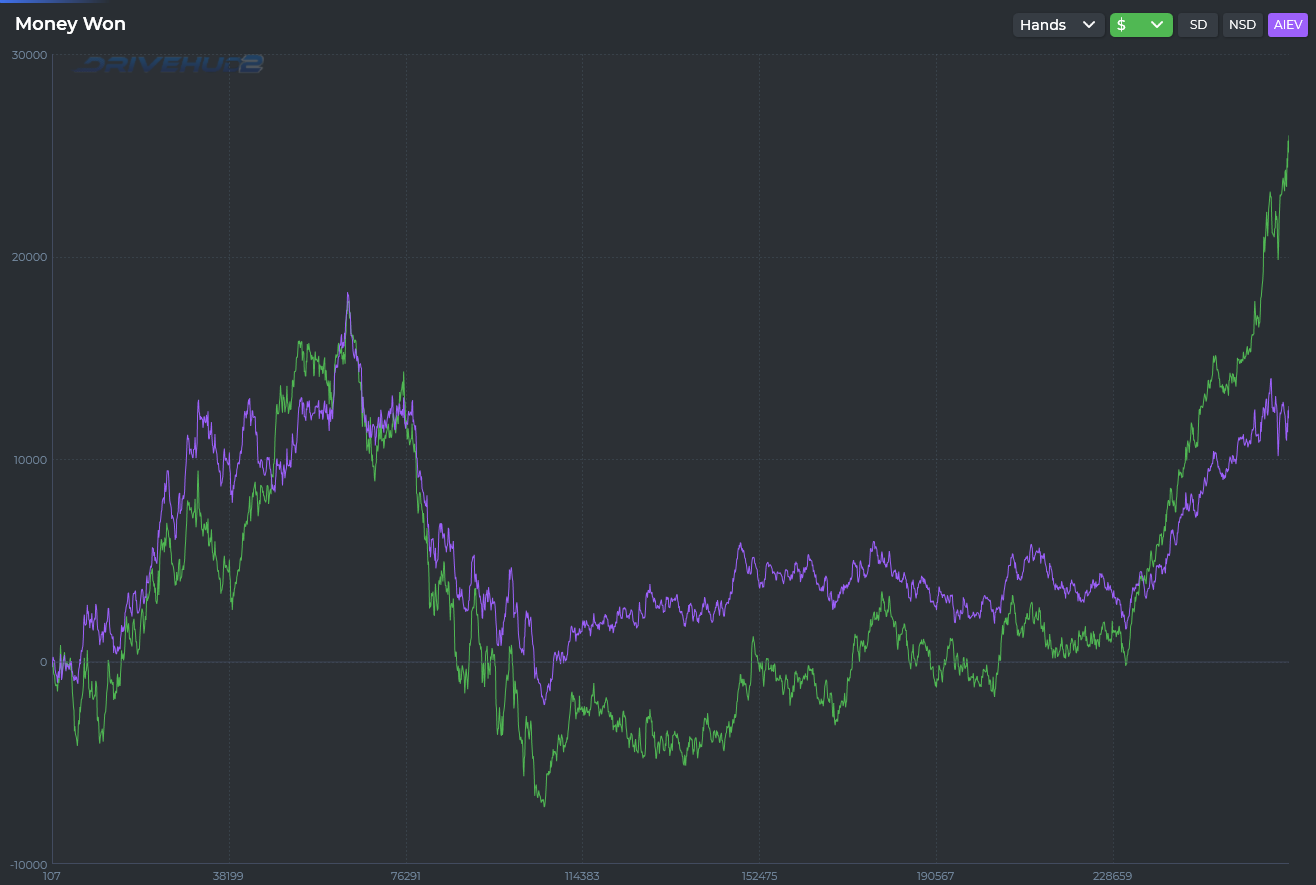
GG:
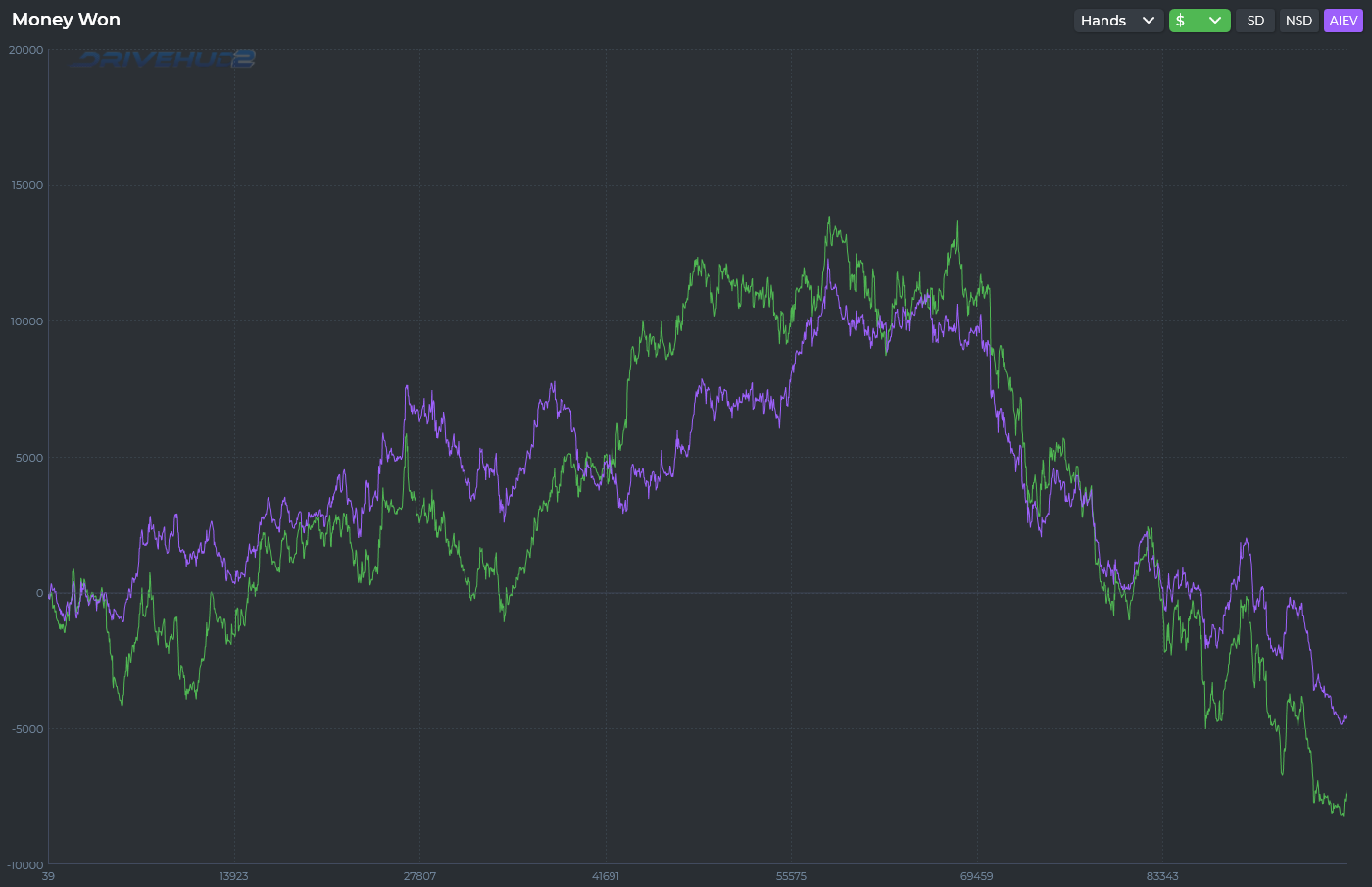
Ipoker/WPN/Chico/Stars mix:
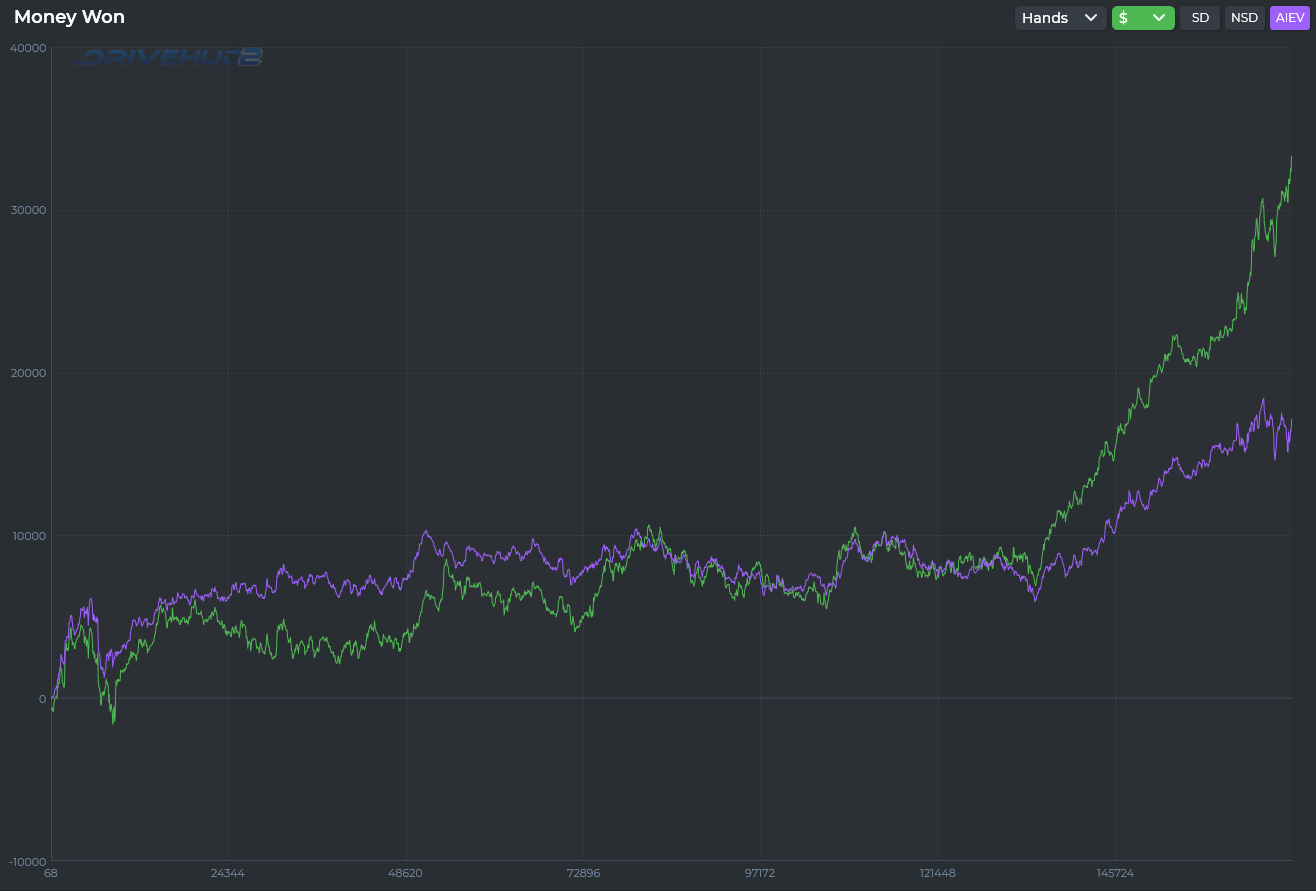
By stakes on GG:
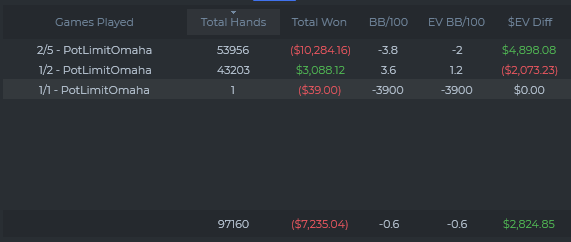
By stakes off GG:
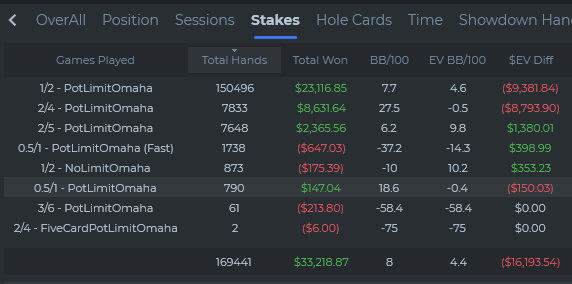
So overall it was a pretty bad year. The volume was also quite low. I only played like 265k hands total.
Basically, last February/March I broke up with my ex-fiance. And that caused a lot of turbulence in my life. And it heavily affected my poker as much as I hate to admit it. I was down, angry, depressed IRL and that seeped into my game. I was playing lower volume than usual, trying to fix a bunch of stuff IRL, fix myself and my emotions and then when I did play, I just made mistakes. There was even some moments of actual tilt, something quite rare for me. So yeah, I realized real life does actually affect your poker game quite a lot!
June was the worst month I ever had in my poker career, losing $13k. June graph:
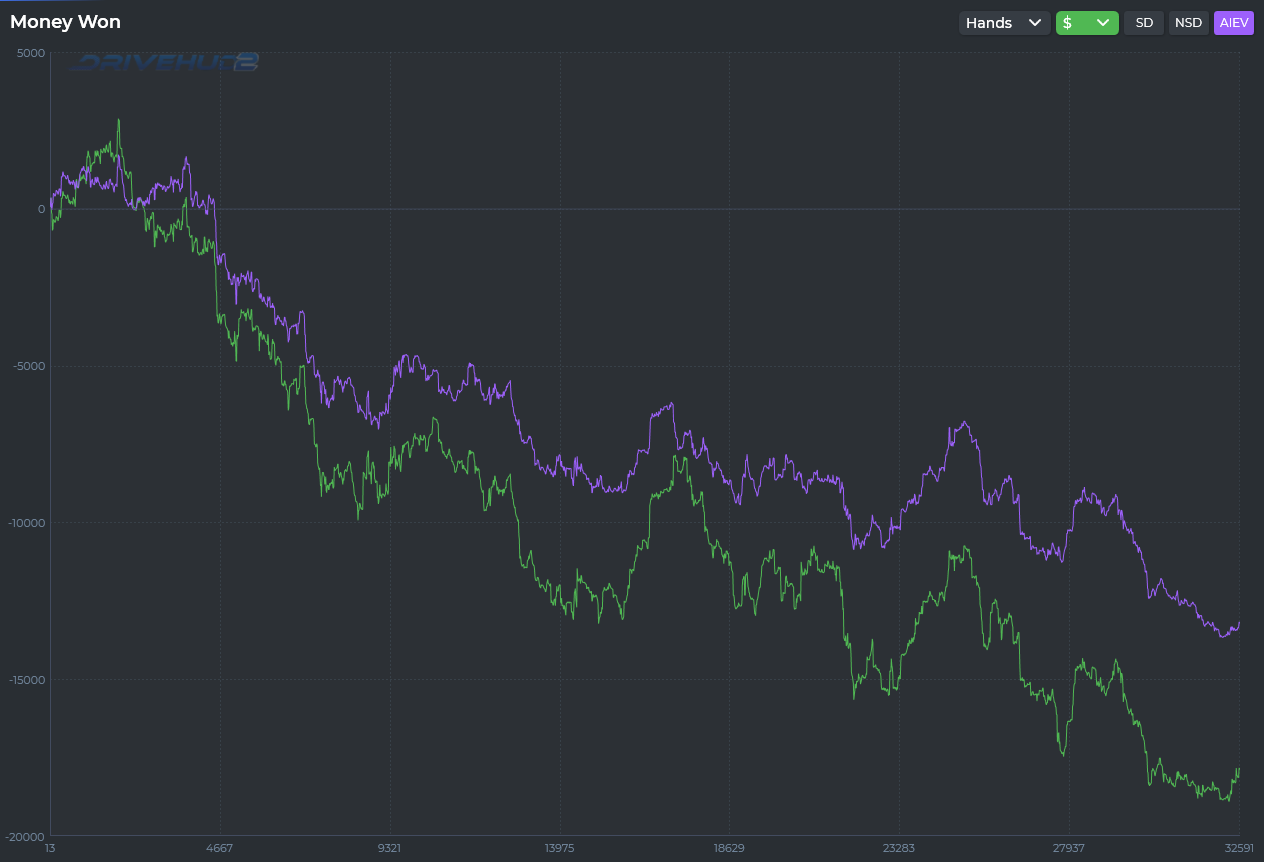
I never had a month like that ever, it was a big shocker. Earlier in the year I had some great months, I thought I was safe at PLO500, but that terrible month was a wake up call. In addition close to June, in May and March, I had 2 slightly losing months. All this together, in addition to spending a lot IRL, changing a lot of things IRL and trying new things out IRL, I had to move down to PLO200 given my bankroll. It's important to remember that before these losing months, I hadn't had a single losing month in PLO for like 3 years or something, so this really came as a massive shock to me and my system!!!
Then in June/July Natural8 pulled out of Hungary and I opted to switch to other sites rather than regrind the loyalty status. So that entire period was really intense and I felt a ton of pressure.
July to September graph only at 200:
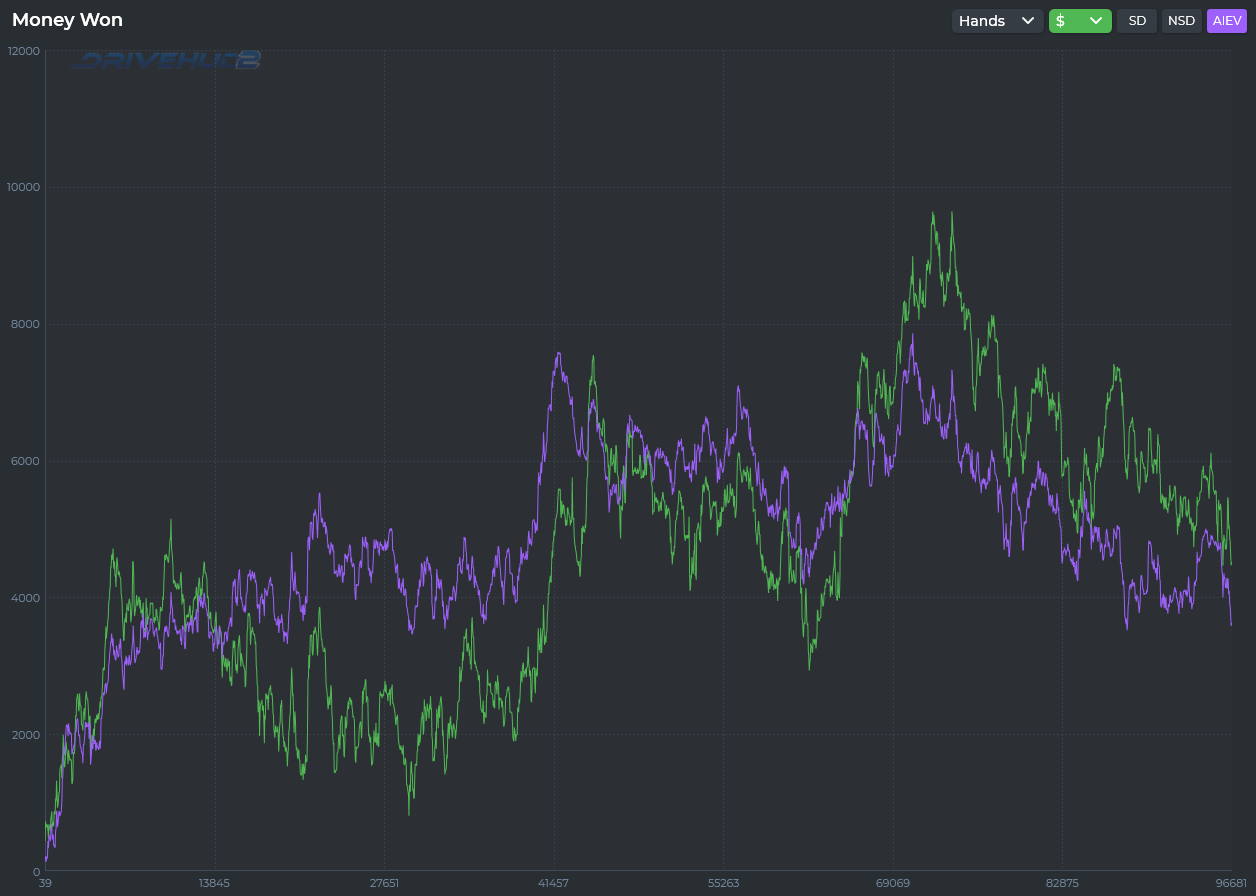
July to September, things felt kinda stable as I was getting used to PLO200 and playing on the new sites in new player pools. But it wasn't really great money to the point where I was actually padding my bankroll and making progress back towards PLO500.
In October I finally started to get a better grasp of the playerpool. It was also right around this period when I finally felt more "peaceful" and less emotionally turbulent from the break up and when I just started to calm down in general and felt like I could just focus on poker more. October was a big turning point and it showed in my results.
October to December graph:
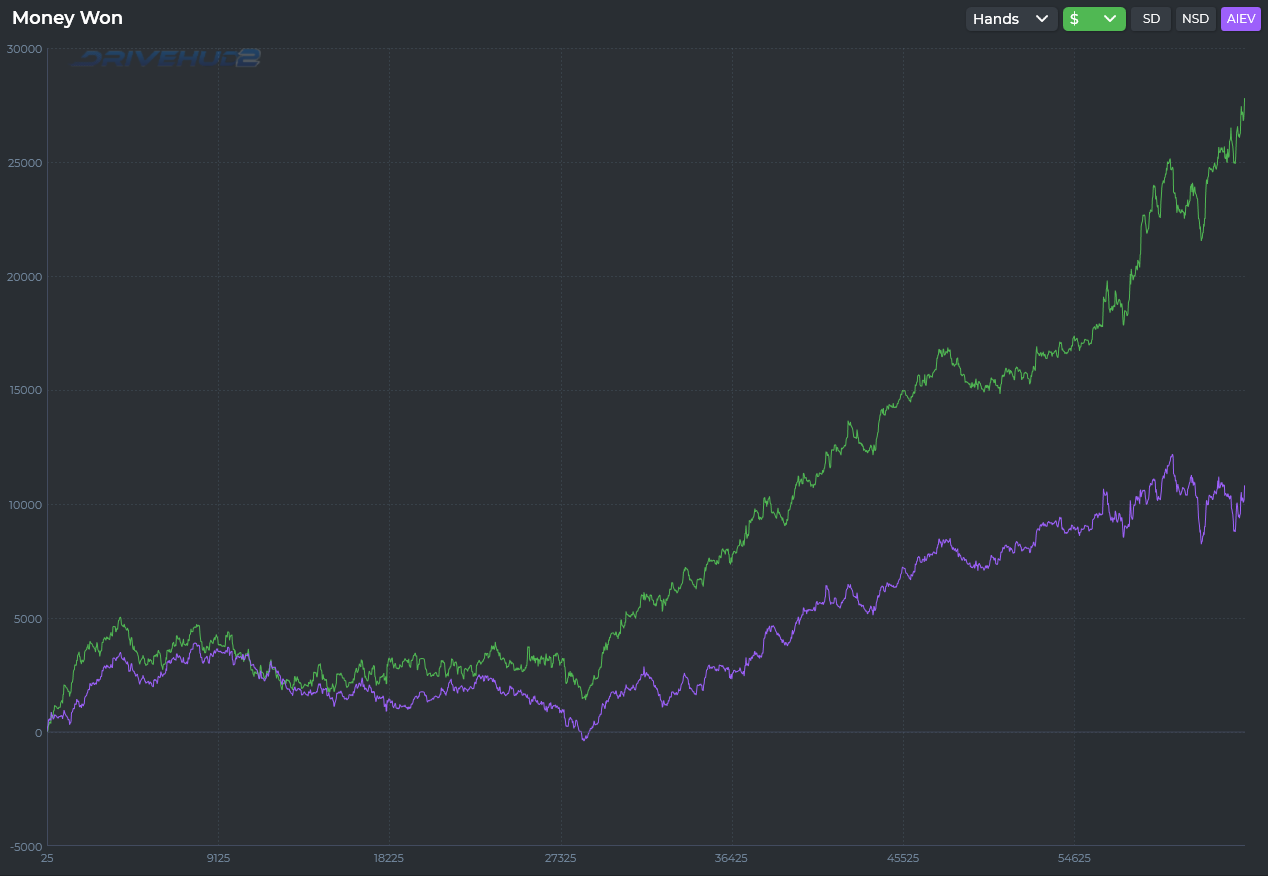
October was decent, November was better and in December I ran way above EV and had one of my best months in PLO. This good run towards the end of the year coincided with me taking shots at PLO400 again, I continued to run good on 400 and play good, and so now at this time, I'm back to playing PLO400, PLO500 and PLO600. I'm barely playing any 200 now but IDK, if there's more days of 0 action at the stakes I want to play I might re-introduce 200, even though I don't want to. Moving down was tough, because honestly at this point in my career, PLO200 feels "too low" for me. But then I'm a poker pro, and I've been a poker pro now for over 10 years. There's a reason for my longevity in this game, it's because I do move down stakes if I need to, even if I struggle, even if I take long breaks, even if I go broke, I'll do whatever it takes to make sure I can keep grinding (in ethical ways of course).
Anyways, despite finally running good at the end of the year, 2025 was objectively one of my worst year ever in poker. I didn't make much money, my overall bankroll from start to end of the year didn't really change much at all (after accounting for spending IRL). I played quite low volume compared to most years. Granted a lot of this was due to the turmoil from the break up and having to get over that and changing a lot of things IRL, but still it was a really tough year.
2025 was truly a year of growth and change, I never felt like I grew so much and made so many changes in my life. In every aspect, poker included. My poker game and approach to the game also changed quite a bit. It was extremely challenging, but I feel like I'm in a decent spot now to finally catapult myself and my PLO career to new levels from a new starting point.
-----------------------------------------------------------------------------------------------------------------------
2026 plans and goals
For the rest of the year, I'd like to finally get back to putting in decent volume. Playing only 265k hands last year, that's just too low for me.
Regarding stakes not much, I'm quite satisfied at 400-600 for now. I just rebuilt my roll after a big collapse so on the immediate time horizon I just want to ensure I stay at these stakes. And if things go well, then maybe towards the end of the year look to play 1k maybe but definitely not something I plan on doing in the near future. I want to just be consistent and take things month by month.
Lifewise, I actually focused on life so much last year, that I don't have too many big goals this year. I wanted to get jacked last year, get more emotionally stable, change my routines to something more specific for me and poker, know who I'm going to allow into my life. I basically achieved all that last year, so now I truly want to focus more on poker... So yeah, same old, keep on going to the gym, stick to my good routines, all that.
Hopefully I can update this more, lots of interesting topics to touch on that I already mentioned here.
January is almost over so expect a January recap in the coming days. FYI, January was another great month.
Peace

Great to see a plo blog. Eager to follow the next year!
January Wrap-up
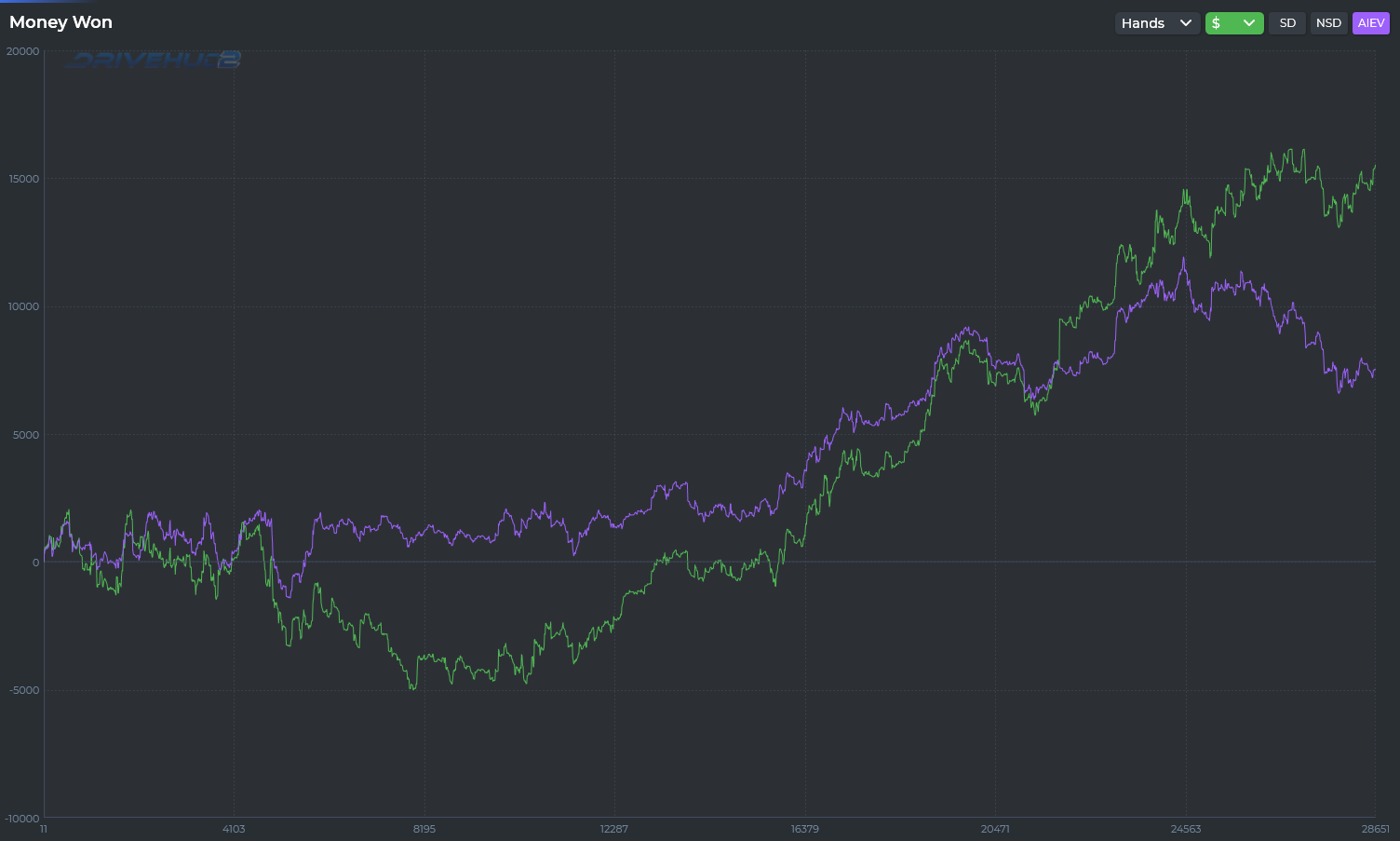
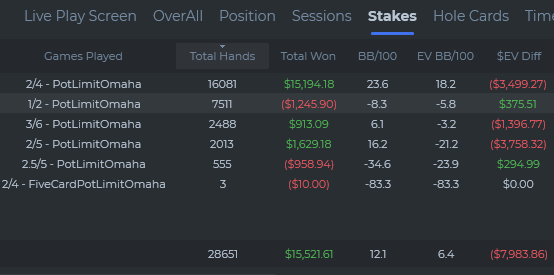
Which results in around $19,000 post rakeback
Overall, a great month results wise, actually this would be my best month in PLO yet. My best month ever is roughly $30k from my spin and go days. I've had a couple of months in spins >$20k. But in PLO I'm yet to have a month >$20k. However, recently since last year, I've been having some months getting very close to that. I'm hoping that sometime this year I can finally break the $20k mark in a month. And I really hope that in 2026 I can have my first $100k+ year from PLO. So far so good, and in many ways, I feel like this could be the start of a break-out year for me. In general I feel extremely confident with my game right now and my methods and routines. Of course, a downswing could change all this, but yeah...
The start of the month was quite rough. I was running 5 or 6k under EV while playing well. I kept my cool and just kept playing A-Game and then went on a sick heater.
I ran quite a bit above EV again this month. It's very nice. For a long time, a period of an entire year, between September 2024 to September 2025, I was running constantly below EV over 350k hands:
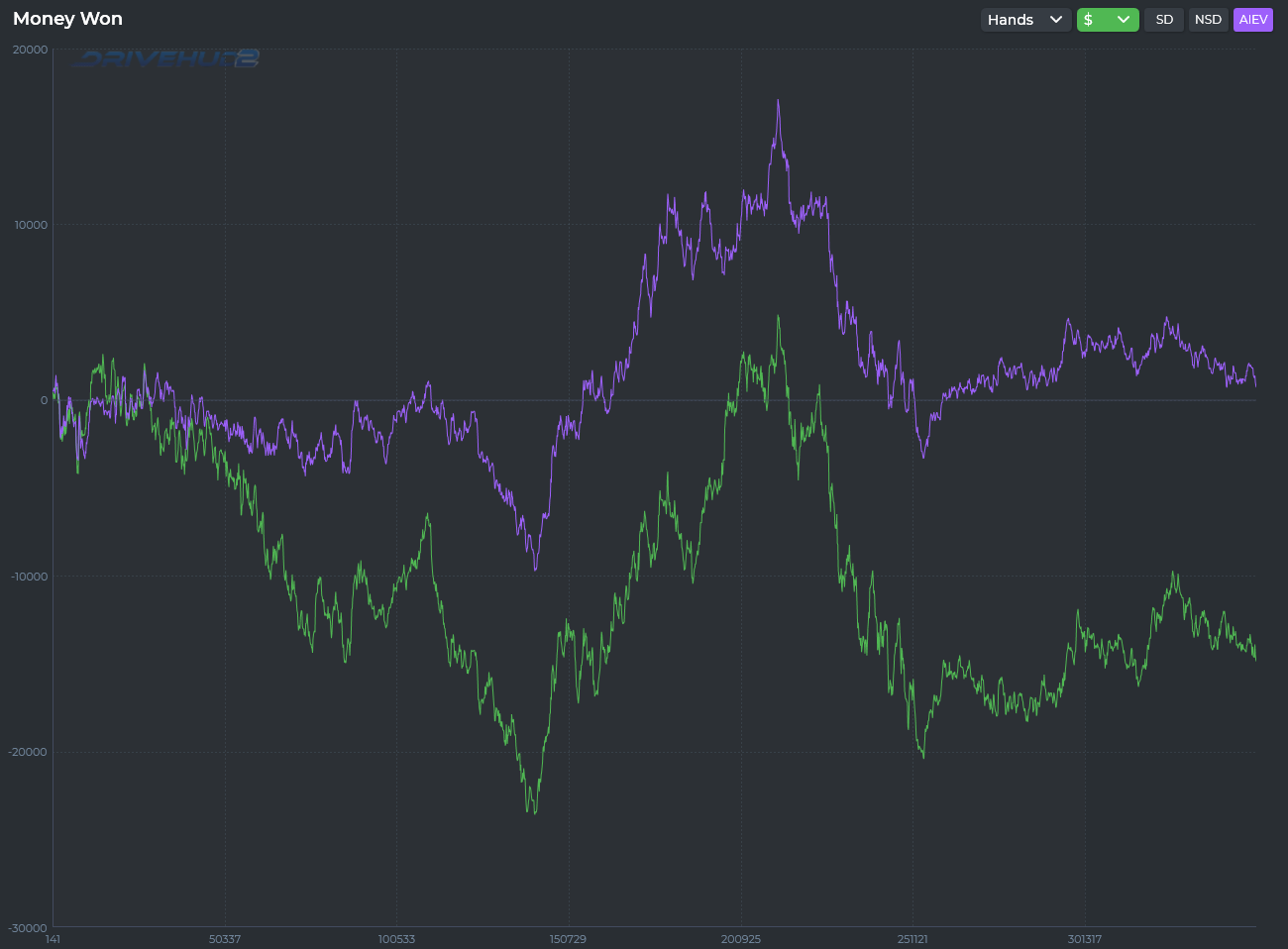
So it's nice to finally get my EV back. This is called being a pro. You stick it out through the downswings, stay disciplined, move down stakes if you have to, study and reinvent your game. Eventually the poker gods will reward you with a sick upswing.
I would have liked to have put in a bit more volume. But I ended up getting distracted planning some travel. Was planning a trip to Iceland and Greek Islands, and I'm not even sure I'll go but creating the itinerary was some huge task. Some days when I wanted to grind there just wasn't much action, which wasn't what I was expecting tbh. Overall, I probably took at least a week off grinding that I didn't have to.
I'm going to be taking more of a "flexible scheduling" approach
What I noticed, moving up to PLO600 and no longer putting in volume at PLO200. Is that, at least on the sites I play now. PLO400-600 simply doesn't run 24/7 unlike PLO200 or maybe on GG.
On GG, games ran around the clock. At PLO200 on these other sites I play now, games run around the clock. But at PLO400-600 on ipoker/WPN/stars/Chico, games are much more sporadic. Sometimes there is no action. In general this means I'll be grinding less on a real schedule but more around the fact that the games are running. It's the only way to keep my volume decent.
I've found the best way to make this work, is to firstly find the times when games run the most.
I live in the CET timezone in central europe. And games run the most at night, peak hours seem to be between 10PM and 2AM. Some days, especially weekends, the peak can last a bit later, and there is also often some action in the afternoon around 4PM or so for a couple hours.
The most important thing I've done is aligning my sleep to work around these hours.
Here's what my sleep looks like:
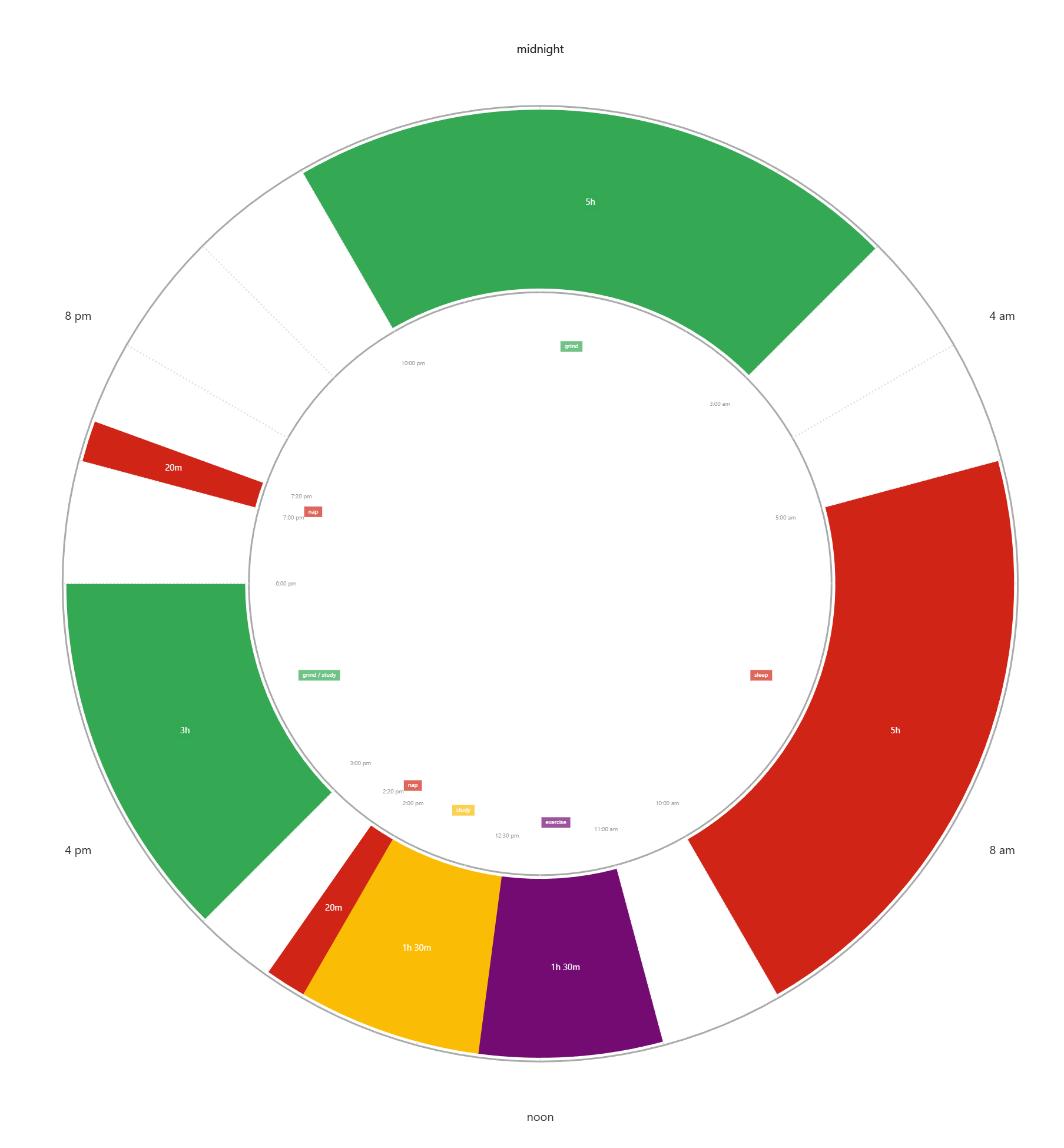
I've basically found myself naturally following some sort of polyphasic sleep schedule. It's not because I want to force myself to sleep like this, it simply happened naturally. I'm unable to sleep longer than 5 hours at night. I pretty much require my 2 naps during the day, or at least the 1st one, occasionally I'll skip the 2nd nap if I find myself in good games. It allows me to get my workouts in during the morning and get some study in most days.
A lot of people think this is crazy. Especially people with 9 to 5s, but even other poker players have told me they think this is crazy. I've had mindset coaches in the past tell me how horrible polyphasic sleep is for the health. But tbh for me, I think it is the healthiest way of sleeping. I feel like instead of recovering only once a day, I recover 3x a day, in less time! This is the best thing about being a poker pro. You're not limited by the constructs of society. You have ultimate freedom. You'll never fit in, and basically no one will understand you, this will cause lots of isolation. But if you know yourself, if you can listen to your body, then you can find what works best for you. It took a long time for me, to accept that I'm not a normal human being. Many poker pros are not normal, if we were, we may have ended up getting normal jobs. Accepting this, has made me realize, the only way to fulfill my potential as a poker pro, is to embrace my weirdness, to embrace my differences. Stop listening to mainstream advice, stop listening to self-help gurus, stop listening to hustle culture, and yes, even stop listening to psychologists or poker mental game / performance coaches whose job is apparently to make specifically our lives better. TBH, I'm at the point I think all those guys are all basically scammers and/or useless. IDK, maybe for some people, paying for services like that can be useful. But in my case, I'm extremely introspective, I think about my life and how I approach things all the time. No one knows myself as well as myself, and I'm very good at analyzing myself. I'm very critical as you can see, not only of others, but also of myself. My approach now is totally my own, everyone is different, and I've had to tinker and experiment a long time to find what works best for me. The way I sleep is only one way I operate in a different way than I used to. I look forward to posting some more of my controversial takes in the future.
great post and you're speaking the truth when you say one should listen to their body
What younger me got wrong about poker
Well, it's been a bit over a decade now since I decided to go fulltime in poker. I made this decision around the end of 2015 when I dropped out of my masters degree. TBH, the entire ride has been a rollercoaster. That's why I wanted to encapsulate my poker career in this blog, not only to journal the results. TBH the results are the last thing I care about sharing, I want to share the experiences. What I've learnt over the past decade of being a pro, what I'm still learning now. It's not many people who can say they've been a pro for 10 years, I may not be the most successful pro, but I'm still in the game and that's saying something. And honestly, probably I took like 1/3 of the past decade off from poker completely roughly xD . I came into poker with many different expectations, I went through lots of trials, and I'm still nowhere near where I'd like to be. From the start, I wanted to be a nosebleed player, one of the very best. That was my aspiration when I began. As time went on, I realized I either don't have the talent for it or I'm not willing to make the sacrifices and put in the work for it. Sometimes I came really close, and then something came up, burnout, or fear, not the fear of failure, no instead it was the fear of success... (fear of success is another topic)
Now I'm thinking, maybe it's time to accept, maybe I'll just be a midstakes grinder for the rest of my career. But at the same time, I got something deep inside me, screaming, I know what I'm capable of. And getting stuck at PLO500 is nowhere near the limit of my capabilities. On the one hand, I've become more at peace with myself, less punishing of not pushing myself, less punishing myself for all the mistakes I've made. On the other hand, I can't help but look at myself and all my unrealized potential. Sometimes I look at my priorities, and I see, poker has not been my main priority for many longer periods of my life. Certainly between the years of 2021 until the end of 2025, it was not a priority. It is only now, at the start of 2026 where I feel like it is once again a priority, maybe the main priority of my life (other than maybe destroying my body in the gym?!?!). As I get older and more experienced, I come to terms with all of this. And I realize, maybe this is just the way life goes. It goes in phases, sometimes you focus on poker, sometimes you focus on yourself, sometimes you focus on other people, sometimes you don't even have a focus and just **** up lol. And these phases can take a long time. We see a 4 year phase where I wasn't focusing on poker primarily, and so it isn't any wonder that I didn't really make a push to highstakes during that period. I think in order to push to highstakes, poker actually needs to be your primary focus for that time period. Well I've decided to dedicate myself to the game again for the next year at least, let's see what happens.
So anyways, what is it that I got wrong about poker when I was younger?
The lifestyle illusion
When I was younger and entering poker. It looked like:
- Freedom, autonomy, no boss, travel, money + time leverage
I didn't understand that the freedom poker gives is extremely conditional. Poker isn't just a game, it's not even a career. Poker is a way of living, and if you want to survive in this game, you have to restructure everything around poker to make it work.
The illusion: "I'll play when I want, live how I want, and the rest will sort itself out."
The reality:
- My schedule is mostly dictated by the games (especially at higher stakes when games don't run all the time). If I can't play autonomously when games run, then I must at least set a schedule based around when the games do run.
- As a result, nights become a default, not the exception. I've found a way to make this work long term now, although in the past I certainly struggled big time with this and my sleep drifted. But now I actually feel like I might actually be a true night owl with the sleep schedule I outlined in my last post.
- Weekends lose meaning: Most of the action is on weekends, so my "weekends" are basically tuesdays and wednesdays... Where-as Friday to Sunday are my most busy days when I'll really force myself to sit in even if I don't feel like it. Thursdays and Mondays I'll tend to try to play too if possible.
- Society runs on a completely different clock and schedule.
Poker doesn't bend around my life, instead my life slowly bends around poker. It took a long time to notice and without noticing this it can cause a lot of stress. Now that I realize this I can create a more balanced life even with these constraints.
This leads to a very isolating lifestyle. We are awake when others sleep, we work hardest on the days when others relax. We can't casually explain what a bad day is to normies and sharing big wins also doesn't make sense to share both because normies wouldn't understand and because like, it would just come accross as bragging or something. You have to either shift your priorities in which case your poker suffers, or you have to accept that poker will be isolating. I've had phases where I focused on both. Right now as I grow older, I find myself more accepting of the isolation and loneliness that comes with poker. In a ways, I've come to enjoy it, for when I had my focus on being more integrated with society and living like a normie, well yeah I fit in more, but I didn't quite feel like myself. Now I feel alive again. IDK, it feels better to be a rebel. When I think of fictional archetypes from famous stories/history, I feel like I associate the most with the Ronin (shadow samurai who left their masters and could play more "dirty"), or for example in Star Wars, I would not really associate with either the jedi nor the sith, but I'd feel more like a "grey Jedi", Darth Revan seems to be a good character fit.
Underestimating the emotional costs
I always understood risk, I always understood what variance meant, in theory. I didn't understand how it would actually affect me, in person, when it happened to me, and how I'd react emotionally.
Poker asks us to:
- Make thousands of irreversible decisions each session
- accept outcomes we cannot control
- sit with uncertainty daily
- absorb losses in silence
- self-regulate without external validation
Younger me didn't see how draining it was to be my own judge, boss and critic. I didn't see how much emotional regulation poker demands both in and out of sessions. How results would bleed into my identity if I'm not careful. These were all things I had to learn to deal with over time. When I was younger, I used to try to be a robot, not realizing it would lead me to burst eventually emotionally. Suppressing my emotions only lead to added stress and burnout. Now I've learnt to accept my emotions, to fully feel them and process them.
The sacrifices outside poker
My most productive poker periods, are also the periods where something outside suffers. Maybe not everything, but something is going to suffer. Right now, it is my social life. At other times, it has been my health or physical fitness. At other times it may simply be my emotional control and regulation. Not much more needs to be said here, but these things often when in the midst of the grind, we don't even realize how much we are sacrificing these, until later when too much has been sacrificed. It's important to keep a minimum of each of these sections. Now the thing is, we get to choose our sacrifices. I realize that over the next year, I'm going to sacrifice my social life and love life, and I've accepted that, it is my choice. For I value my peace and autonomy at this period in my life, because that is what will allow me to push myself harder in poker. TBH I've found peace and autonomy to simply be at the top of my priorities in general, and these 2 things tend to be easier to achieve in solitude.
The Lessons
As a poker pro, you're also going to have to deal with all of these issues. Maybe you'll hire a psychologist or mental game coach to help with these. For me, I hired them, but they were mostly useless. I've probably seen like 10 different people working in these fields since the start of my poker career, some of them were regular licensed psychologists/therapists, some of them were poker specific mental game coaches or poker specific performance coaches, and some were performance coaches but not poker specific. They'll tell you all the common sense stuff (meditate, create a schedule, exercise), they'll tell you to live more like a normie (touch grass, socialize, get some sunlight). But the truth is, I listened to them, and it maybe made me feel more productive, and better or happier for a bit. But it didn't progress me as a player. Maybe for you, this will work, but for me at this point, I'm pretty convinced they're all just wastes of money.
Everyone is different, but I know what works for me now. And it was learnt through trial and error, and lots of introspection. Everyone is different, and I feel like a different case, even from many other poker players, but in general, every human is a different case, with different ambitions and things that make them tick. I've had the most growth when I can be lost in my own thoughts, write in my own journals, and have endless chats with ChatGPT about what is going on in my life, then give myself time to let everything sink in, then come to my own personal conclusions without any outside input. It's funny, but honestly I believe ChatGPT is probably the best psychologist/therapist you could have. Like ChatGPT will remember every single detail you tell them, and ChatGPT will accept everything you say and so you don't have anything to hide, and you can spend as long as you like talking about the various topics. For over a year now, I've been speaking with ChatGPT pretty much daily. There's been some days, where I'm literally having a conversation with ChatGPT for hours and hours on end, going over some of my epiphanies and revelations I've had about my life. All that for €20/month or something, is a much better deal than paying thousands for 10 hours of coaching or something where they won't even have time to get to know you personally and what your specific issues are. Some of the prompt for this blog post came from ChatGPT (but definitely not most of it). Obviously ChatGPT isn't flawless, it's not like I take everything chatGPT says and believe in it immediately. It's much closer to the opposite, I'll take everything it says with a grain of salt. However what ChatGPT does give me, is the opportunity for endless conversation, and the opportunity to endlessly deepdive into my own thoughts in an interesting and engaging way and think about things for myself and be introspective, and then create my own conclusions.
This has been the way for me to learn how to get over these hurdles. I've learnt to be extremely critical, of everything and everyone, for my mind is very sharp and understands myself better than anyone else. There's a lot of common advice out there, lots of trends, everyone out there being sold stuff by the media. Some people will find alignment more with certain ideologies or niches, we see it in society, liberals vs republicans, feminists vs toxic masculinity, introverts vs extraverts, whatever. In poker we can see it too even within the niche; GTO vs feel players, study groups vs lone wolves. IDK, maybe it works for some people to follow the crowd. But I found myself doing best when I search for the answers within myself. Obviously I subscribe to some ideologies more than others, my poker thoughts will be shaped by not only my own experiences but the people I've studied with or coaches I've had. Even then, I'll always try to stay open-minded and not fully subscribe to only one way of thinking. But in the end, right now, I've realized I do best when actually trying to trust what this thing deep inside me is telling me, and it can be quite hard to listen to sometimes. It can be very hard to be in tune with your gut and your feelings. Over time though, the more you try, you get better at it. You get better at cutting out the noise and focusing on what matters, resulting in a life that isn't necessarily more balanced, but is certainly more aligned, more aligned with what you believe in, more aligned with what you stand for and value.
Anyways, kinda ended up rambling. Not sure how much of this made sense...
Action Based Scheduling (ABS): How I structure my poker life around liquidity
Today, I want to talk about this thing I came up with called ABS (Action Based Scheduling). TBH I definitely didn't come up with this concept, and I'm sure a lot of other poker pros as well as professionals in other fields based on liquidity (think traders, sports bettors, creatives) schedule their lives in an ABS fashion. I just kind of had to put a name on it, and give it a few rules, because that's how I operate. I enjoy freedom, but at the same time I'm not the kind of guy to just "do whatever, whenever". Also why did I decide to call this ABS? Because I got ABS obviously:
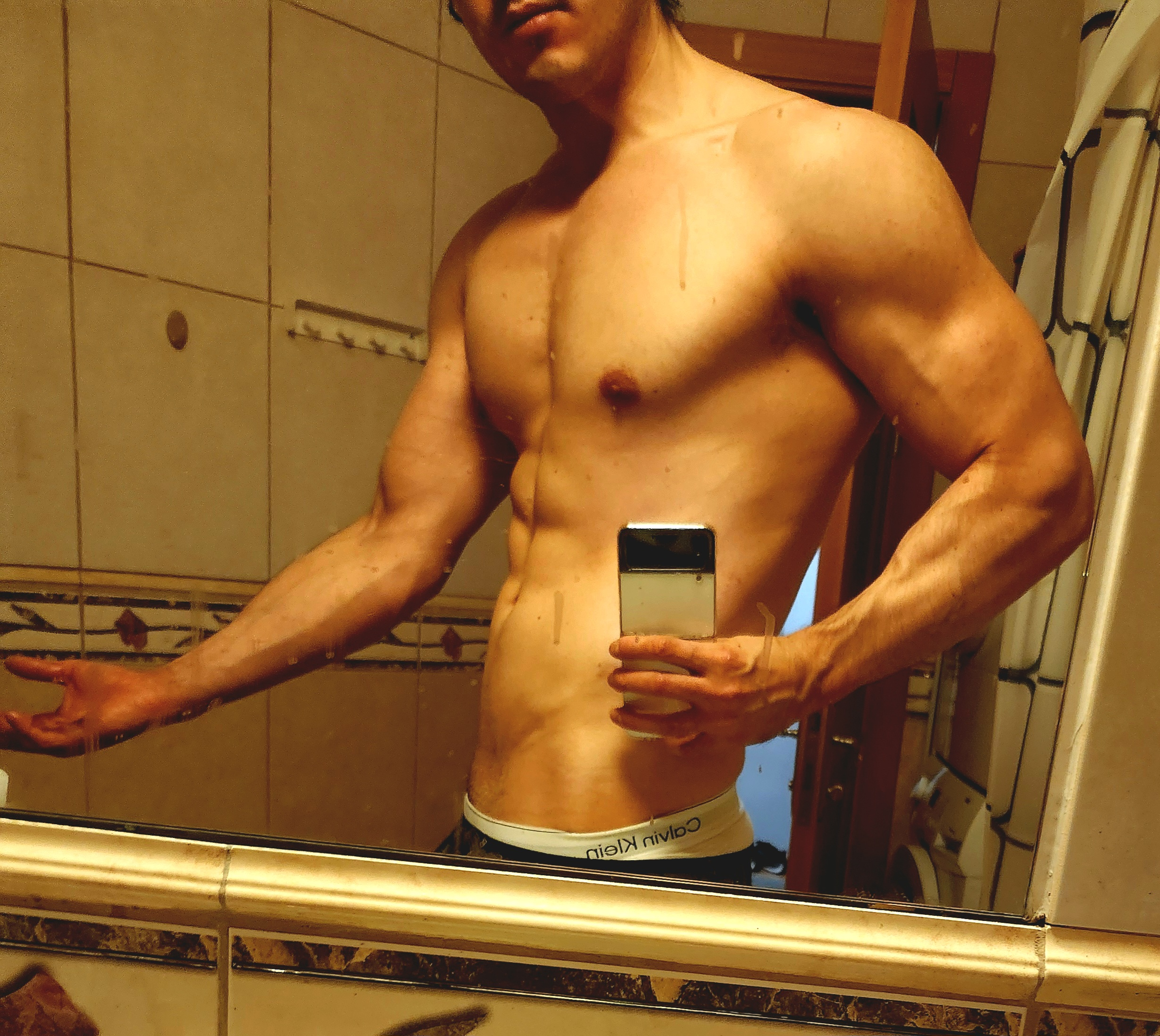
K so enough with the trolling.
The problem with Fixed Schedules in poker (at least cashgames)
The traditional advice you'll hear from these hustle culture dudes, and self-improvement gurus, is that you should set your life up like a robot. Or not necessarily a robot but at least in a very structured way. Have strict windows of time designated for certain activities: Sleep, grinding, studying, leisure time, meals, exercise, etc. Also take a day off on a specific day each week, doesn't matter if there's tons of good action that day, take your day off cuz "you gotta follow your routine bro".
Here's the problem with poker, and especially cashgames (tbh I could also apply this to spins, don't have enough experience with MTTs to comment in that realm though). The problem is that poker is actually a liquid market. What does this mean? Liquidity basically means, how much money is there to be won right now? Where does the money in poker come from? It comes from fish, weak players, action players. If there are no fish at the tables, then there's probably also less action in general, if there's a low table count running and not many or almost no fish, there's not much money to be made. In most jobs, your hourly rate stays the same no matter when you work. In poker your hourly highly depends on the state of the games. If there's 8 tables running with a fish on every table, that's a high liquidity environment. The hourly rate can literally change from close to breakeven to $200+/hour at my stakes depending on the state of liquidity. In poker, the most important skill isn't playing more hours - it's playing when the money is actually on the table.
Following a fixed schedule doesn't work well for online poker. The action isn't constant, sometimes there's legit 0 tables running (can't play even if I wanted to), sometimes there 3-4 tables running but only one of them has a fish and I'll be in a bad position vs him (low volume and not really worth playing in), other times there's 3-4 tables but I can get a great position on 2 of them (low volume but great table dynamics means I can create great hourly, and finally there's the golden times with 8+ tables running with most tables containing 1 recreational player (high liquidity, just need to stay focused). If you follow a fixed schedule in poker, you may play in bad games simply out of obligation, you may opensit the lobby waiting for hours for someone to sit you, you may have to quit your session because "following the schedule" and feel guilty for missing out on good games.
What is ABS? (Action Based Scheduling)
Simply put, ABS means, you don't follow a schedule. You follow the action.
Basic rules:
Good action = play immediately
No action = do something else (study, gym, live life)
No guilt either way
You'll need simple triggers to determine whether the action is good enough for you to join the action. This should, in my opinion be based on your own personal environment. After playing in your games for a bit, you should have a decent understanding of when games generally run and are good, and when they are dead or reg-infested. I guess for lower stakes players this doesn't matter too much as games may as well always run, but I feel like at midstakes and especially from PLO500 and higher, there's very clearly certain days and times with better or worse action. After knowing your own environment, set up some rules you'll follow. Here are my personal rules:
- I have at least 1+ hour to grind before another obligation comes up (usually sleep/nap, but could also be a meeting of some sort)
- There are either 4+ tables running OR 3 tables running AND on at least one of the tables I got good position on a recreational player.
As long as these 2 variables are in for me, I join the action. As I move up the stakes, I'm sure the variables may change slightly, but this is all I need for now. And this ensures that I play when games are high liquidity, while maintaining a good amount of volume.
Why ABS works psychologically
The main benefits for me, is that motivation is very natural. If games are good I truly want to sit in, if games are bad or there's a lack of action, I truly don't have much motivation to grind less than 3 tables. It means I don't have to feel bad about forcing sessions in bad lineups. I don't have to feel bad about studying or resting instead of grinding. It means when I do grind I generate higher EV and because of that I maintain higher focus.
A great example came a couple days ago on Thursday evening. It was 11PM, I came back home after taking a long walk (I enjoy taking walks at night, after my nap and evening meal, before I start the evening grind). But for some reason, there was no action at 11PM, I was like wtf, this isn't normal! Well whatever, no action = I don't sit, I went to the gym instead (god bless 24/7 gyms). I came back at 1AM, and boom there's 12 tables of PLO400-600 running. That's my cue to sit in:
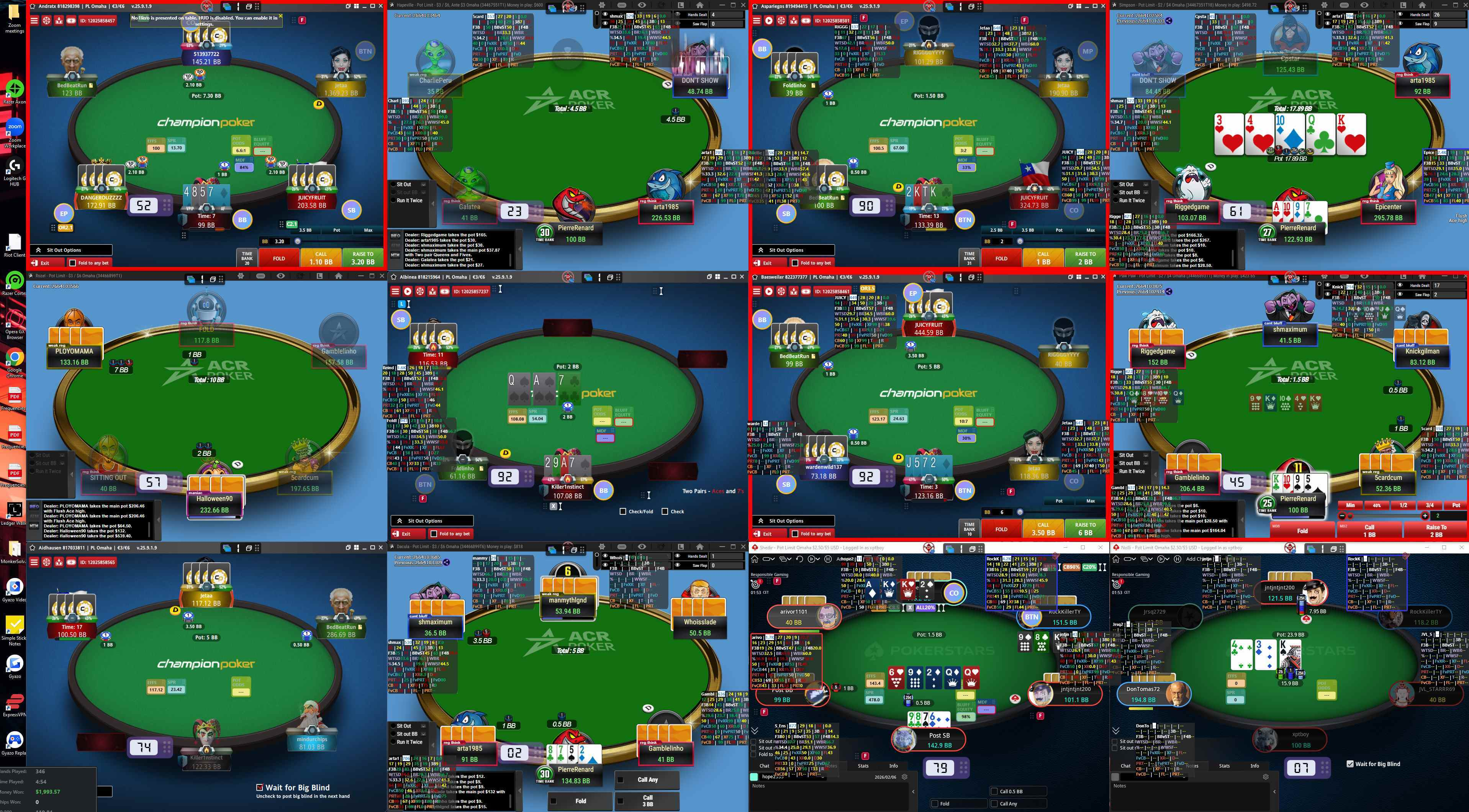
I kept grinding until 3AM, which is when I'll typically quit (K so I still respect my sleep schedule somewhat).
The ABS hierarchy (the Core of my system)
I feel like in order to make this work. I need a hierarchy. I need to prioritize the most important things in order. If I know what my priorities are without needing to think about them, then I can smoothly go through the day in a way that still feels quite structured despite the chaos that the liquidity environment of poker brings. Knowing what the hierarchy looks like, I can quickly determine what action I should take depending on my priorities.
Priority 1: Sleep
Sleep still remains my number one priority. Why does sleep take priority even above grinding in good action games? Because good sleep ensures longevity and consistency. In the past I was sort of following ABS during my spins days (it just wasn't as structured as now). What would end up happening is that many days the games would keep going well into the morning, then I could have days where I simply wouldn't even sleep like basically for 20+ hours. In the end, all this does is ruin the sleep schedule for the next days and you end up missing out on good action the next days just catching up on sleep. I ended up having some weird sleep schedule resembling more of a forced non-genetic N24 (non-24 sleep) schedule, which is extremely unhealthy. If you keep following the action so deep, enough to ruin your sleep, you will pay the long term consequences. For me this resulted in several phases of burnout, taking several months off poker at a time, even taking an entire year off once.
Sleep should stay relatively consistent. That being said, I think there's nothing wrong with structuring your sleep in such a way that you can be awake during good time blocks to increase the likelihood of action. In my situation, I outlined my sleep earlier, I follow a polyphasic sleeping pattern right now quite naturally, it feels weird not to do this at this point. I've been sleeping polyphasically now for years and years, even when I was living with my ex-fiance I had a biphasic sleep schedule, right now at this moment in time my sleep resembles closer to the everyman 2 schedule. I honestly don't notice any negative health effects, and I feel wide awake at all times of wakefulness, and very tired around my sleep and nap times.
As a reminder, this is what my sleep looks like nowadays roughly:
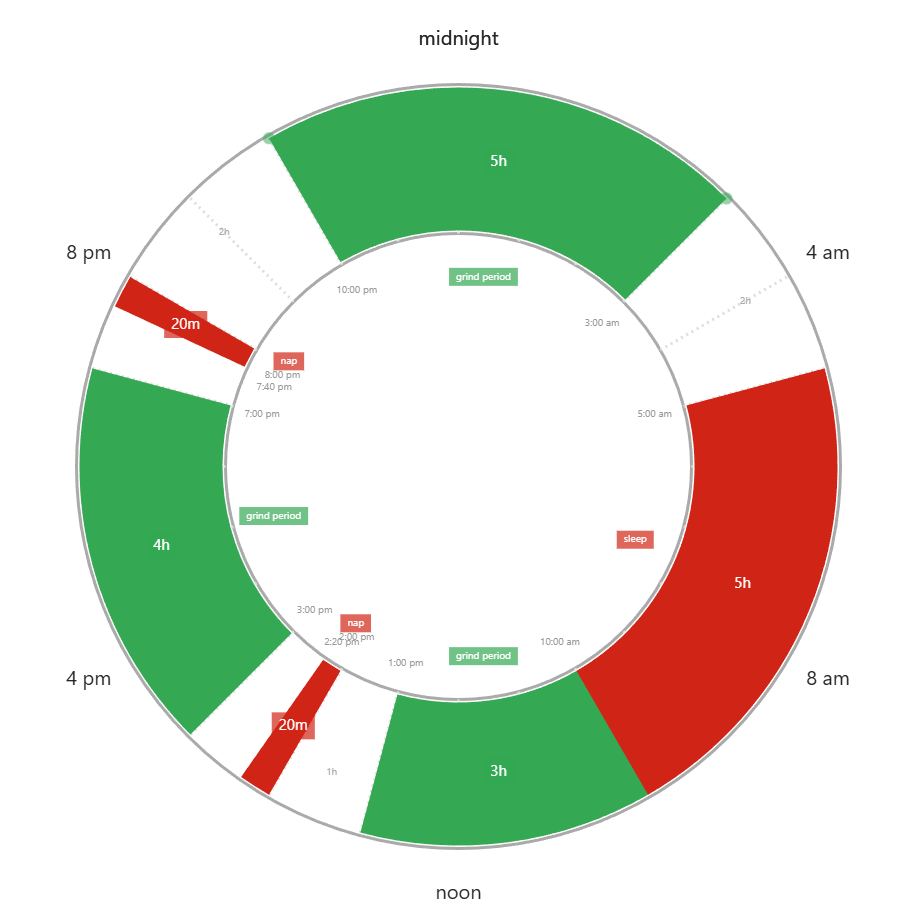
The green periods are the periods of time, when I'll be checking the lobby to see if there's action (usually at night there's always action past 10PM, earlier than that is highly dependent on the day). I'll never be grinding past 3AM to maintain my sleep and allow myself enough wind-down time after a long session.
Priority 2: Grind (Liquidity trigger)
As already stated, my current rules for joining the action are:
- I have at least 1+ hour to grind before another obligation comes up (usually sleep/nap, but could also be a meeting of some sort)
- There are either 4+ tables running OR 3 tables running AND on at least one of the tables I got good position on a recreational player.
Priority 3a: Gym
- I do full body workouts. I simply find them by far the easiest to work into a flexible schedule where I don't have to go do a certain workout on a specific day. I can do my fullbody workouts twice a week, or 6 days a week. Obviously going everyday on fullbody workouts can lead to injury, but tbh, I've found I recover very fast and can do full body workouts almost everyday. In general I'm in the gym 4-5x a week, and I think it works great.
- Minimum 2x a week but preferably 3x a week
Priority 3b: Study
- I'd put gym and study on relatively the same hierarchy of priorities. Both of them I want to do roughly 3-6 times a week. I've found I prefer studying in shorter bursts with clear targets. I'll probably elaborate more on my new method of studying in future posts.
- Minimum 3-5x a week
Priority 4: Life maintenance
- Chores (I got a cleaner coming weekly, but I still do my dishes and laundry)
- Grocery shopping
- IDK if I need to buy something, pay bills, etc
Priority 6: Recovery and Leisure
- Netflix, youtube, social time, massage
- I'd also count blog writing in here
- Mental recovery is part of performance
How a typical ABS day may look like
- I'll wake up at 10, put on my sunscreen cuz I am a decent human being who practices hygiene. Have a quick protein shake for breakfast
- Check the lobby. Less than 3 tables running. This means I'm gonna hit up the gym. This is honestly usually the case at this time of day for me.
- Come back home at noon and eat a big meal. I got a bit of time to chill or study before my first nap.
- Wake up from my nap and check the lobby again
- There's now 4 tables running. I'll sit in.
- I play for an hour, the fish get stacked and leave the tables, it's now 16.30 PM, games died, so I'll proceed to sit out.
- I'll finish any study I didn't do before, otherwise I'll complete any unfinished chores quickly and relax until 19.00PM when I eat a larger meal and prepare for my next nap time.
- Wake up from my nap at 20.00. Take a shower, and then take a nice long walk at night. I find these evening walks very calming and relaxing, I might listen to music or call someone or listen to a podcast. Usually there's a bit of dead time around this period before action truly picks up. I might eat another meal at 21.00-22.00 before I check the lobby and expect there to be plenty of action.
- 22.00 check the lobby and as expected there is good action. I sit in and grind until games die or it's 3AM. If games die at let's say midnight, I'll relax a bit, but then I might check the lobby again at 1AM or 2AM to see if they resume and sit in again.
This is just how a typical day may look, but you can see I always follow my priorities in the hierarchy.
The 3 rules that make ABS work
Rule 1: Sleep > Action
Never chase games into a bad sleep cycle. As already mentioned, this simply leads to messing up the schedule in the coming days, any volume you may miss out on NOW by prioritizing, you will proceed to miss out on even more in the future by simply messing up the sleep schedule. In addition, messing up the sleep schedule, is a trigger for burn out and just feeling bad in general.
Rule 2: Binary mode
Either:
Playing
OR
Fully doing something else.
I don't want to check the lobby, then keep it open to check "what if there's more action soon". I don't want to keep sitting in "just in case" more tables open soon. I'm either fully engaged in grinding, or I'm fully engaged in something completely different and not thinking about the grind at all.
Rule 3: Mechanical entry
When my table threshold is met and I have 1+ hour to dedicate to grinding, I sit in immediately. No negotiation. If I negotiate, then it's easy to start coming up with excuses to not sit in, to avoid volume. Setting up these rules of entry ensures that no matter what, I will put volume in.
Common mistakes with ABS
- Chasing Action late into the night: already elaborated on how it messes up sleep, which continues to mess everything else up
- Constant lobby watching: Don't be too obsessed with this. There'll be action later, put your focus into something else
- Waiting for "perfect games": Set a rule so that you sit in when games are "good enough", not perfect. For me perfect would be 6+ tables, but if I followed a 6+ tables rule, I would really not play often enough to get any meaningful volume in. 3-4 tables is good enough and ensures that I will put in sufficient volume for my liking.
- Using ABS as an excuse to be lazy: Again if your rules are too much on the side of "perfection" and the structure you set up doesn't work. You may find yourself in too many situations to not grind. The whole point of ABS, is to grind in the highest EV liquidity periods, which should naturally raise your motivation and keep volume high. This is also why the rule of mechanical entry is important. If the conditions are met to join the action, you sit in no matter what. If you find yourself having to "always grind" and skip other things such as exercise/study, it probably means the threshold for grinding in your situation is too low. Set something realistic that will allow you to grind consistently, but not "any time I'm awake".
- No weekly minimums for gym/study: Without setting some minimums for these activities, you may end up getting out of shape, which would lead you to feel like trash, which would affect your cognition. Or you may end up barely studying, which would mean you'd fall behind.
Who ABS works best for (and who it doesn't)
ABS works best for:
- professional poker players who can dedicate their time in a flexible manner to the game.
- It works very well, in high liquidity environments. Online poker, and especially cash games, is one such high liquidity environment.
- It works best for grinders who are capable of having flexible schedules and can put in high volumes during these periods.
ABS may be less ideal for:
- MTT players with fixed start times
- People who need rigid structure (Maybe you are a husband and dad with many family responsibilities for example)
- Part-time players who have a 9 to 5
However, I'd argue, if you are a poker pro and playing cashgames, ABS is simply the best way to organize your time. Perhaps your priorities may be a bit different from mine, the rules you follow for joining the action may be a bit different. But something along the lines of ABS should be the highest EV way of scheduling your time. And if for some reason you are a poker pro and you refuse to follow ABS, I'd honestly question why you're a poker pro in the first place.
As a final principle: Your job is not to play a certain number of hours each week/month. Your job is to capture liquidity when it appears.
I no longer care about "how many hands I played in a month, or how many hours I played in a month. Now the only thing I care about is, did I follow the action? Did I set myself up to be able to join in the action when available? This shift in mindset has helped me to not only put in more volume, but in general, helped me feel more motivated to grind while still feeling like I'm living quite a balanced life. This shift in mindset has improved my performance and helped me feel less rigid and like a robot. And the rules and hierarchies I set in place, helped install structure into the chaos so that I still follow some sort of order.
I enjoy blogging. But not to share my results, tbh I want to detach from results as much as possible. And I noticed that posting results even on a monthly basis can sort of put me in more of a "performance mode", even if it's just on a 2+2 blog that not too many people seem too interested in.
The things I enjoy about blogging is more just sharing the journey. Changes in my mindset and game as time goes on. To document my poker career so that I may look back on it one day, and simply to maintain a positive reputation so that in the poker world people will know I am authentic if the need arises. It also serves as a sort of identity reinforcement.
So I'll continue blogging but I'll share results only sometime in the vicinity of once every 3 to 6 months. Any less than once every 3 months and I feel like it's basically just sharing the results of variance, one month in PLO really doesn't mean much at all with its swings.
Otherwise I'll keep posting about my poker thoughts. It's nice to have some sort of journal online. I enjoy sharing these things with people who understand or are interested in the life a poker pro. But wouldn't really want to talk about many of these things with people IRL or post poker content on social media or something tbh.
For now, I've got a ton of topics I want to blog about. Because I took a year long hiatus from blogging, so lots of things have changed and come up in the way I approach poker and PLO. I'll probably post relatively frequent updates for a while as long as I find some time for it. After I exhaust my list of topics, things will probably slow down significantly.
Today's topic:
--------------------------------------------------------------------------------------------
The Silent Edge: Letting Go of Ego in PLO
Lately, something has changed in the way I approach poker. It wasn't a new strategy or technical breakthrough. It's how my mindset shifted.
I'm in the 11th year as a poker pro now. I can finally say, I'm experienced, and I honestly feel like I have nothing prove to anyone anymore. I've definitely crossed the 10,000 hour mark in poker by now and have played many millions of hands. And I've learnt many lessons along the way.
Earlier in my poker career. Poker was about much more than making money. It was about competing, battling the regs, holding the lobby. It was about proving I belonged, proving that I'm a tough reg. Maybe this is why earlier in my career I was quite attracted to the spin and go king of the hill ecosystem. I wasn't just playing poker, I was defending my reputation.
This mindset of "wanting to prove myself", lead to several things:
- Taking too many creative or elaborate lines
- Bluffing in situations where it wasn't necessarily the highest EV, but simply to "apply pressure".
- Making ridiculous hero calls to avoid "being exploited and run over".
- Staying in reg-heavy games long after the recreational player left.
This felt competitive, this felt like what real poker should be. But it wasn't professional.
From Battles to Business:
Recently, I made a quiet decision. Along with the ABS (Action Based Scheduling) protocol I outlined in my last post, my entire mindset has shifted to a more professional one.
No more ego wars.
- If the fish leaves the table, I leave.
- If the table breaks into reg wars, I stand up
- No more battling heads up or 3-handed
My job is to sit in profitable situations consistently and silently print EV.
Obviously as a poker pro, I still have this deep competitive instinct, but now I think of it more like a business. Pride has no place in game selection. All my time in poker should be spent where the edge is highest. I'll still get to experience playing against tough regs even when I game select obviously.
Simplifying the game
This shift has also changed the way I play. I'm not looking to be super fancy anymore. I'm not looking to outplay good regs in marginal spots. I'm not looking for creative hero lines or aggressive bluffs only to prove that I'm a tough reg and "I can take these crazy lines".
I'm simply trying to play solid. That doesn't mean weak. If I have a combo that seems like a good bluff, I'll still bluff it, but I just won't choose the most random bluffs to "pounce on weakness". I'm not going to herocall simply to "avoid getting run over". But I'll still call down my best bluffcatchers. I'll play solid preflop and flop ranges and a fundamentally sound game. To an outside observer, the way I play may even look "boring", nothing special here. But together with solid volume and game selection, this will be my path to making the most EV.
Before, the question was often: Can I outplay him here?
Now the question is: Is this spot necessary and profitable long-term?
If the edge is tiny, and the variance high, and the opponent strong, there's usually no reason to get involved. Professional poker isn't about winning every single battle. It's about avoiding the unnecessary ones.
The Silent Edge
I've started to think about this as a silent edge. The silent edge isn't anything flashy. It doesn't show up in one big hand. It's not about making crazy plays, soulreading or a sicko bluff for 300 big blinds.
The silent edge is simply:
- Game Selection: Following ABS and not playing in games without a clear target.
- Table discipline: Leaving tables early instead of staying to regwar. Avoiding ego battles.
- Emotional Neutrality: Just playing the same boring poker, being unaffected emotionally by results or who you play against.
- Playing solid, repeatable poker: Playing fundamentally sound, no fancy play syndrome.
- Putting in consistent volume: Following ABS, showing up almost everyday.
A lot of players look for their edge in creativity. In finding that one situation where they can outplay their opponents. But I've found my true edge to simply be in discipline. Over time, this compounds more than any fancy line ever will.
The Psychological Difference
The biggest surprise, has been how much calmer poker feels. I have no pressure to try and prove anything. I don't suffer any frustration from reg battles. I have no emotional swings from trying to win tough spots just to show I can. And as a result of all this, I am also far more consistent, and less emotionally attached to the daily variance.
Decisions are clearer. Sessions are cleaner. The focus is simply to find good games, play solid and repeat.
Poker has started to feel like a job again. And that's a good thing because that's what it is for me. It is a way for me to earn my financial independence and freedom. At the same time along with ABS, poker has never felt so motivating to me than right now.
The Long Game
I don't currently have some burning motivation that feels like some intense fire that will get extinguished quickly. Right now, I feel more of a longer term motivation that can carry me through the variance over months and years. A type of motivation that is focused on professionalism and putting in volume regardless of the swings and results. If I win, I keep grinding, if I go through a downswing, I keep grinding. ABS and the Silent Edge have made me feel like I found something much more sustainable. No more burnout cycles, no more months off the grind after putting in heavy effort for a few months. Simply stick to a healthy sustainable lifestyle, follow the liquidity, grind when games are good, and execute your solid strategy.
Battling all the time is exhausting. Playing high-variance ego poker leads to burnout. Trying to dominate every table is mentally exhausting. But quiet professionalism scales.
ABS ensures I put in consistent volume. And it ensures I slowly but gradually improve my game. Not through a burst of studying theory, but rather through consistent volume and slow improvements and review off the table. There are no "aha moments", no epiphanies happening right now, instead there are only slow accumulation of skill and knowledge that compounds over time.
The silent edge works, it works at the stakes I currently play, it works at higher stakes, it protects the bankroll, it prevents me from getting emotionally attached, it protects the mindset, and it allows me to keep showing up. And in this game, consistency and volume over time is everything. Maybe I'll never be the most feared reg, maybe I'll never have the most respect, but that's OK, that's no longer my goal.
The New Identity
I don't need to be the most aggressive reg. I don't need to be feared. I don't need to beat all the other regs. I have nothing to prove.
I simply need to:
- Sit in good games
- Play solid poker
- Avoid uneccessary battles
- Put in volume
- Repeat
The funny thing is. That by following ABS and the silent edge, I found myself improving my game more consistently than ever before. I feel like I've quietly been separating myself from the pack of midstakes regulars since I shifted my mindset. By becoming a "boring solid reg", I've quietly been becoming one of the toughest regs at my stakes.
The edge isn't loud anymore.
It's silent.
And it compounds.
How I study poker in 2026: A volume-First approach:
Over the past year, my study process has changed a lot. Earlier in my career, I spent a huge amount of time studying. I studied more than I grinded for many years. Both in spins and PLO.
In PLO I would watch all the training videos available from PLOMM and RIO. In spins I would join a stable and attend all their coachings and watch all the videos in their library. I would spend hours upon hours in a solver, looking at big picture and small picture stuff. I would get coachings. I would review my database and do some leakbuster profiles of myself. I would watch any new poker content available on youtube, even if it wasn't the game type I play. I would get involved in study groups and be extremely active in them.
I guess in the past, it sort of made sense. Though I'd argue a large part of it was still a gigantic waste of time. Earlier in my career, I was still building fundamentals and trying to understand how GTO works. But where I am now, that kind of studying no longer generates the highest EV. For a long time I've felt like my study has not been efficient, like I have not been making the most of my study time, and that I was studying too much, studying too many different things. In a lot of ways, I feel like it's possible to get lost in a huge rabbit hole of studying. There's always something more to study and learn in this game. It never ends, however I feel like for me at least, that is the big danger. The danger is that you end up spending too much time studying useless stuff that isn't relevant to you, your game, your playerpool, that costs you precious time and energy that could be used making actual money at the tables.
My approach this year has flipped quite a bit. The largest improvements in my game now no longer come from consuming more poker content. It doesn't come from consuming more theory. It comes from playing more hands.
The realization
I've already studied a lot over the years. My fundamentals are strong. At this point, I've accepted that my biggest edge comes from:
- Volume
- Consistency
- Emotional stability
- Decision quality under real pressure
- Pattern recognition and intuition
Because of that, my study process now follows a simple rule:
Volume first. Study second.
In fact, I've made my study process in such a way that basically, if I don't grind, then I don't end up with anything meaningful to study. Let me elaborate.
The Loop I Follow:
My improvement system now is very simple:
Play -> Review -> Adjust -> Repeat
Instead of studying random spots, consuming content or listening to others opinions, I study my own hands.
I feel like this keeps every study session more relevant and practical to me personally. I end up working only on situations that I actually encounter in game. There's much less wasted time.
What My Study Actually Looks Like:
I think it's important to be actively involved in your study. That way studying actually feels more fun. If I'm listening to someone else talk about a spot, via a coaching, or study group, or training video. I tend to simply zone out and lose focus. Nothing they say gets ingrained, in fact oftentimes I'll be scrolling my phone or eating or doing something else. This is one of the reasons I've tuned into my new methods of study, which I find more useful for me. Here are some ways that I study and keep my brain active.
Generally all my methods of study require me to put in some volume. And then I'll simply create some filters within my database and review a bunch of hands.
1. Filtering by pot size
I was reading Matthew Marinelli's blog, and got this idea from him. Basically, after my sessions I can filter for pots larger than a certain pot size, usually I'll focus on losing pots. But sometimes I can focus on winning pots, or just all in general. I have different pot size filters (sometimes 6bb, sometime 10bb, sometimes 20+, etc), because tbh, I don't want to spend hours and hours reviewing all my hands. So I'll try to aim for between 50-100 hands a day to review.
This way I get to see hands that I played recently, usually that I lost. I'll see many reoccurring spots. The point of this study isn't necessarily to understand everything theory wise. It's simply to make sure my thought process and logic is good. If I find that I get lost in my thought process, or if I suspect that my understanding of the spot is poor, I'll often open up the solver or some GTO database and try to gather a better understanding of the spot by quickly looking for some heuristics and seeing what my hand and range wants to do.
2. Filtering by saw showdown and putting myself in villain's shoes
I got this idea from watching a video that GTOlab made about exploits. And it was to try and put yourself in the shoes of villain, and try to understand his thought process and the way he is thinking. This way, by understanding how other players think, I can try to think of the best adjustments vs certain players types as I come across them in game. Again, there will be spots I feel like I don't completely understand and I'll check in a solver or GTOdatabase to get a better understanding of it.
3. Filtering Based on a particular spot.
Sometimes, based on what I've found in my other forms of hand review above, or simply based on in-game play through the volume I put in. I'll notice that I feel quite lost in certain spots. Perhaps it is a particular position. Perhaps it is a certain board texture. Let's say for example I want to filter for BUvBB SRP paired boards. So I might filter for that in my database and just review a bunch of hands. Then as unclear spots come up, I'll check it in the solver or GTO database. Often accompanied with some drilling.
4. Drilling quite often
The above 3 are the main types of filters I use to review my own hands. As I review hands, I'll often tag some hands. And then I'll remind myself to drill the spots in a trainer. The intention of drilling is not to memorize exact strategies. Instead it is to get a good understanding of frequencies, get better at the range intuition and just generally have higher confidence in the spot. Once the pattern seems to make sense, I'll move on. Oftentimes, drilling one spot, leads to drilling more spots, for example, maybe I originally just wanted to drill the flop, then I realize that turn is also interesting so I'll do a bunch of drilling for the turn too, etc.
Drilling is usually the closing part of my study after the hand reviews, but it feels quite active. I enjoy it as it is almost reminiscent of grinding, simply without the cost of any real money. But I get to put in reps in a particular spot over and over again and have my pattern recognition do the work.
5. Preflop training
Finally, I will often do some sort of preflop training. Maybe 200-500 hands. I have a bunch of "important preflop spots" I need to be highly accurate in that I'll repeatedly do. Roughly once a month I'll go through all the spots so my preflop game stays sharp.
What I Don't Do Anymore:
I rarely:
- watch random training videos: I don't even have a mastermind or RIO membership anymore (I just have the PLOtrainer membership to use their trainer).
- Consume poker content for the sake of it: The only poker content I enjoy nowadays are the podcasts. I enjoy the Mechanics of Poker podcast and GTOLab podcasts where they interview different high stakes players. It feels like they all have different approaches. It just goes to show, different approaches work and you can achieve success in poker in many different ways.
- Study spots I don't actually encounter: This is ensured through studying spots through my database from my recent samples of volume.
- Spend hours in theory without a real leak to fix: No more endless hours in the solver just to scratch that itch and find some niche cool move.
This type of study, it made a bit of sense earlier in my poker career. Nowadays it just feels like a waste of time and low EV.
Why This Works For Me:
At this stage my biggest limitations aren't theoretical. After having spent years studying theory and trying to understand GTO. My limitations are:
- Volume
- Consistency
- Staying sharp deep into long sessions
- Making solid decisions everyday
Grinding more hands does more for my game than consuming more content. I feel like it's that thing they say, don't be a consumer, be a creator. And studying often feels like I'm a consuming, while grinding feels like I'm a creator.
When I do study now, it's directly tied to my real mistakes. This is where improvement actually happens now. I'm making small adjustments and improving a bit everyday, rather than trying to study for several days of even weeks in a row without grinding, trying to cover an entire part of the game tree or do some full database review and trying to unlock some new epiphany.
My study now, is based on repetition and consistency and putting in volume. I've found that to be one of my biggest strengths as a poker player in general. My intuition and my pattern recognition. This is built through reps performed by myself, not through listening to endless hours of lectures of training videos from other people.
The Direction I'm Moving Towards:
In the future more and more tools will come out. An AI solver will come out. Better MDA tools will come out. I'll probably be able to import my hands and the tools will be able to identify my largest EV mistakes and then I can filter for the highest impact leaks that way.
I'm currently helping GTO Wizard to create their AI solver for PLO. I feel like it could be a game-changer. With the help of an AI solver, I'll be able to come up with my own personalized strategies much faster than I could ever do with monker. It would actually be something kind of realistic to aim for, to come up with my own strategies and sizing schemes rather than to follow whatever generic strategy a particular GTO database may be using (right now I'm using PLO trainer's mostly). Right now, using monkersolver, it's simply quite unrealistic to create your own strategy in several different spots and over the entire game tree, simply because of how long it takes monker to compute sims. But with an AI solver, this all changes.
A lot of poker players are reluctant of new study tools because "it makes the game tougher". I'm kind of the opposite, I'm always excited for them, because I know I'm not lazy, and I'm open to new methods and testing the new tools. I feel like new tools, just means more edge for me personally, where if the others don't adapt and keep up, it's just another opportunity for myself to separate myself from the pack.
Final Thoughts:
Earlier in your career, it might make sense to study more than you play. But at my stage, improvement looks different. For me now, the formula is:
High volume + targeted review + small continuous adjustments.
I'm not trying to learn more poker. I'm simply trying to minimize mistakes over hundreds of thousands of hands.
I recorded a couple of study sessions to show what it might look like. If you're interested in how I study, feel free to check them out.
In the first video I'm going through filter 2: Filtering by saw showdown and putting myself in villain's shoes
In the second video, I'm drilling a spot I found interesting from the first video. I end up rambling and talking about a bunch of random stuff and more on my PLO study and strategy philosophy lol. But whatever.
The Poker Pro Hierarchy: What actually determines your results
The Reality Most Players Miss
Most players think that poker success depends mostly on your skill. The better your knowledge of theory and strategy, the more you are likely to be "successful" in poker. In reality, once fundamentals are solid, results come from behavior, not theory. After many years of grinding, I've realized there is a clear hierarchy of what actually matters. Most players get the order completely wrong. And if you get the order wrong, then you can work hard but never move up. Poker is a game about lifestyle and execution, and I'm not saying this in some "woowoo mental game way", I just mean that, you gotta have your **** together. You gotta know what the hierarchy is and put yourself to work.
The Poker Pro Hierarchy (most important to least important)
1. Volume consistency
2. Recovery & Energy management
3. Game Selection Discipline
4. Decision Quality
5. Emotional Stability
6. Study & Improvements
7. Results
Most poker players obsess about #6 and #7, while ignoring the other much more important factors.
1. Volume Consistency: The Real Edge
Poker is a high variance game. And especially PLO, it's a high variance format. My standard deviation in 6max PLO is around 135bb/100. This means that my edge only shows over large samples. And I'm not talking 50,000 hands, I'm talking 500,000 hands. TBH, I've realized now that a sample size of 100k hands in PLO means absolutely nothing, you look at your bb/100 in the last 100k hands and assume that's your winrate when in reality your bb/100 could still be off by a solid +-5bb/100!
Volume is by far the number one most important factor for a poker pro. Nothing can change my mind about this anymore. I've read some blogs posts from guys with a high reputation whom I respect (such as Patrick Howard) or watched some videos by JNandez and they talk about how improving winrate and moving up stakes is the number one thing that matters. I can't help but disagree completely now. The longer I play this game, the more I realize, the only guarantee we can make is volume and consistent volume. It's the only way to navigate through the variance that is PLO. If you put in volume, you will inevitably move up stakes and improve winrate, if you don't put in volume, that isn't a guarantee.
TBH I don't understand these coaches who say to lower table count to like max 4 tables, and focus on improving winrate, like wtf, firstly winrate doesn't have to go down as tables go up, and secondly it's just gonna make realizing your EV over a large sample way harder and slower. IDK, I think maybe they're just saying that because they can't grind so many tables themselves, or maybe they just want to sell their products so encourage playing less tables and trying to think about even the most mundane spots deeply, like 90%+ of decisions in poker are automatic, just click the button, you don't need to spend ten seconds on every decision, analyzing villain's stats everywhere on every decision and thinking about all your blockers and future runouts and blahblahblah, like poker's not that tough!
In a former post I talked about my ABS (Action Based Scheduling ) and how that is helping me to put in volume. I plan on grinding 500k+ hands this year at PLO400+. Because I've simply realized, I need to realize my EV. Last year I grinded 250kish hands, and that sample is only starting to get somewhat reliable. It's only at 500k+ hands that you can start to make decent +-2bb/100 assumptions on your true winrate.
Consistency beats motivation. Show up everyday and let volume do the work.
I'd like to elaborate much further on why volume is so important in future posts. But leaving it all here in this post would take up too much space.
2. Recovery and Energy: The Hidden multiplier
Poker is a mental performance. If your energy drops, you make worse decisions. You may start autopiloting, focus drops, you might miss thin value, you might make lazy folds or calls.
Recovery doesn't mean that wishy washy BS like meditation or cold showers or whatever. It just means taking a bit of time off poker for the mind to reset, preferably doing something that recovers you. Sleep is ultra important for everyone without a doubt, and I'm saying that as someone who probably has one of the most ****ed up sleep schedules you've seen xD. The gym has proven to be extremely beneficial to me, releasing those endorphins and whatnot, I feel my brain neurons firing up from my workouts.
High volume only works if your decision quality stays sharp. If you burnout, you will lose months of volume, and that quickly ruins your EV.
3. Game Selection: Where Most Of The Money Comes From
Your winrate depends more on who you play than on how well you play. I wrote about this when I spoke about The Silent Edge. Sit with fish, leave bad games, avoid ego battles with regs. Table discipline is a massive edge at midstakes. When I see another reg insta-leaving a table after a fish busts, I'm not thinking "that guy's a bumhunter, he must be a weak reg". I'm thinking "that guy's smart, he doesn't have a big ego, he's just here to make money, he's a true professional". I hope most other regs think the same about me if I sit out after a fish busts.
I truly see no point in reg battling, the rake will ensure nobody is a big winner. Even if I am truly the best player at the table, it isn't worth it to reg battle for me. Sometimes if there's very little action I might reg battle for a short period just in the hopes that a weak player will join us, but TBH that usually doesn't happen, it isn't worth it. Sometimes I'm trying to start some tables and some reg will try to sit me heads up and I instaquit, like wtf why would I play another reg and why would he expect me to play vs him?! I could only see it being worth it in very niche situations such as during the CoinPoker CGWC where there's zero rake.
Despite the fact that I avoid reg battling, I'm still pushing to be a high volume grinder. And I still like to consider myself a "strong reg". Just because I only sit at tables when there is a clear target, it doesn't mean that I won't have to test myself vs other regs at the tables. In fact, I do enjoy testing my wits vs other regs, but I don't need to sit at a table of regs only where nobody is really beating the rake to do that. TBH I obviously play way more hands vs regs than vs fish, and I think I do quite well vs them, just for obvious reasons, my winrate vs regs will be way lower than vs fish.
4. Decision Quality: Important but Overestimated
Yes, you need solid fundamentals. Yes you need to have a "decent" gameplan over the most important and common spots that occur. But most players playing above PLO200 already have quite decent strategy fundamentals. From my experience, the difference between players often doesn't come from small theory edges, it comes from execution over volume. From putting in a lot of volume consistently, and playing the same quality of game, whether winning or losing and through the stretches.
What's more important than the theory, is the execution. Again this is why recovery is so important. So you're able to execute well, with a clear mind, highly focused. Able to think about your decisions properlly over multiple tables. Being confident in your game so you can put in high volume and execute your plan, to be confident enough to bluff, to value bet thin, to herocall or herofold, to checkback some hands on the flop so your turn and river ranges are more protected, etc.
5. Emotional Stability
Downswings are guaranteed. Flat months of being close to breakeven or just slightly winning are the norm. Go into any variance calculator and you'll see it. If I input some 5bb/100 winrate into a variance calculator over 600k hands with 135 std deviation (assuming 50k hands per months), most most months will be between $-3k to $+7k, then there'll be one or two losing months like -$10k, then there'll be like 1-3 huge months making $+20k which make up for like half the years profit.
You gotta get used to these downswings and flat period. They are the norms. Your quality of play has to stay the same regardless of the run you're in. Your volume should stay consistent regardless of the run you're in. Professionals play the same game regardless of the results.
6. Study: Targeted, Not Endless
Early on in your poker career, when you first become serious about pursuing poker as a job or at least a serious hobby. It makes sense to put in more time into study. At that stage having some sort of 50/50 split between grinding and study makes sense, because at that stage, you don't have all the fundamentals. You still make lots of basic mistakes preflop, you don't understand how different board textures play, you don't understand how ranges interact.
But at some point, you'll know that and studying becomes an excuse. It becomes an excuse to not grind. "I'm not good enough so I need to study more", "I need to study this spot before I grind some volume today", "A new video came out, I gotta watch that first before I grind". Like no, you're saying that **** out of anxiety. Obviously the coaches will tell you "you gotta study x amount, it's crucial to your progress as a player", they make their money by selling their products, what do you expect them to say. Don't listen to them, I'd go so far as to say the opposite: "If you wanna move up, study as little as you can get away with." TBH, I think most coaches, training sites and stables are just all scams at this point that basically do nothing but hold most players back from their potential. Anyways, that's another topic xD. I wrote down the methods I use to study in my previous post, I try to keep it short, no more than 2 hours per day max, but I used to be a "forever paralysis by analysis study type" as well, I say this from experience. Overstudying and trying to consume everything there is out there, it's just an endless and useless rabbit-hole that won't bring you any closer to what you really want.
If you want to get over your anxiety to grind, just grind, focus on your recovery IRL so you got more energy, confidence and focus for your grind. Spend less time in solver theory land, spend more time in reality land at the tables. Review your own hands more than you watch videos or get coachings. This builds your intuition and confidence. Just putting in a ton of volume is one of the best ways to improve your own game, and realize how weak everyone else is and far from GTO that like overstudying really isn't going to be the differentiator between you moving up and staying stuck. Actually overstudying will just contribute to you staying stuck. It's one of the most common traps I see when I speak with other poker players or just listen to them.
7. Results: The last thing you should care about
Results are simply the outcome of the volume you put in over a certain period. Results is not a skill. Short-term results, and by short-term I mean anything less than for example 250k hands (at least in PLO), is purely variance. If you worry or focus on your short-term results, session to session, even month to month, it will affect your emotions. You simply need to focus on the process, the results will follow.
Most players are way too results oriented, myself included. They shoot for a certain amount of money won each month (gotta win $10k per month), their play and volume is affected by their current swing. Once you finally realize, the only thing that guarantees you realize your EV is longterm volume (500k+ hands), you stop caring about the short-term results. This is why I suggest you play over-rolled for any given stake level you play and just guarantee you can get your volume in for a large sample until variance evens itself out, and you focus on just putting in volume as the hierarchy I listed here suggests. I think there is nothing wrong with moving up stakes slowly, follow this model and it will happen, just trust the process.
Closing: What Actually Separates Pros
At mid and high stakes, poker is no longer about who is the smartest. Let's face it, we're all smart, we're all nerds with a talent for strategy games. I'd assume all mid to high stakes poker pros have higher than average IQ. That's not what separates us.
What separates us is:
- who shows up consistently
- who recovers and protects their energy
- who game selects well
- who stays emotionally stable through variance
The players who move up, aren't the most talented. They're the one who execute this hierarchy everyday for a year, for multiple years. And this year, I plan on executing this hierarchy, the results are going to speak for themselves.
Q1 2026 results
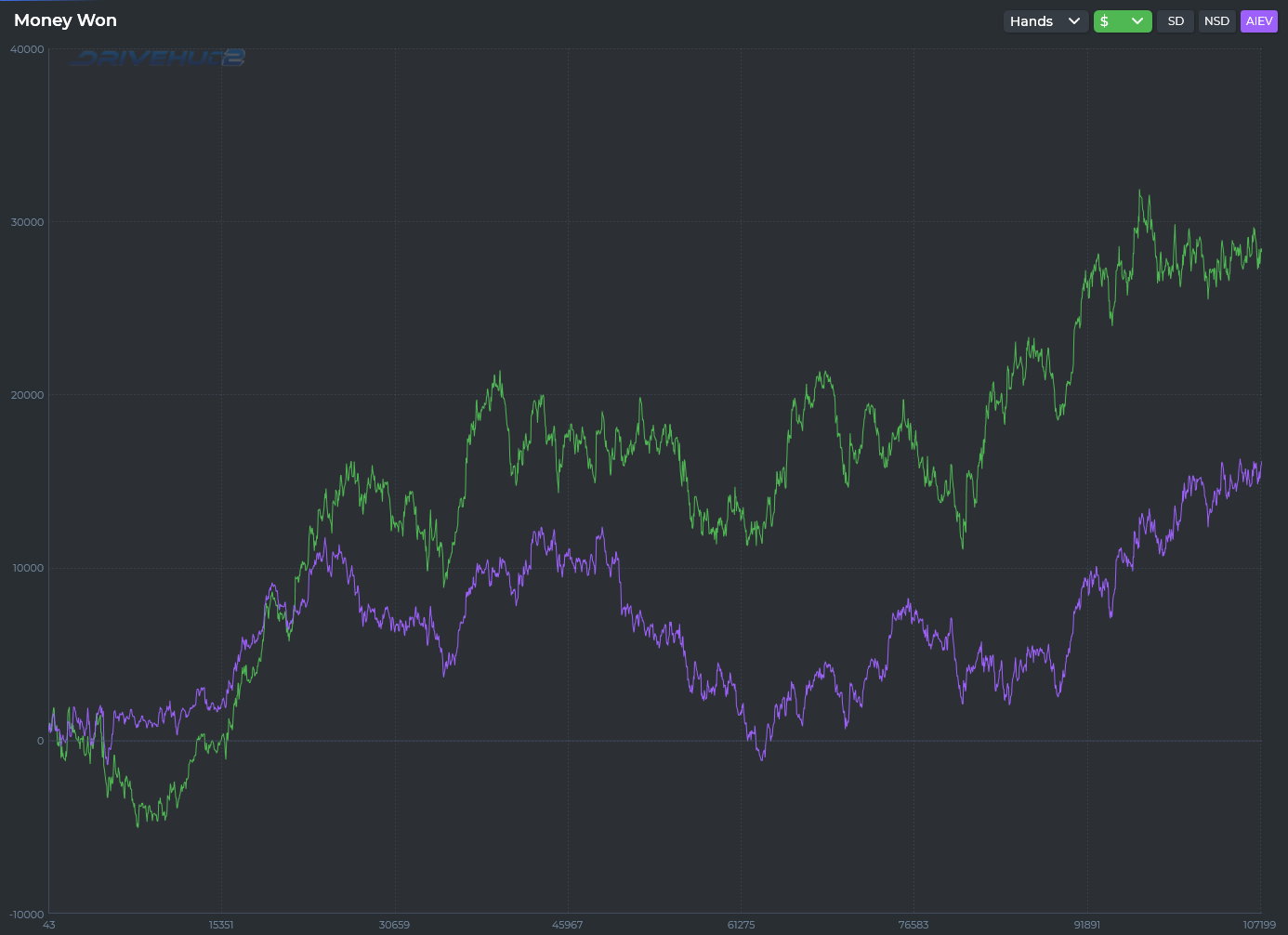
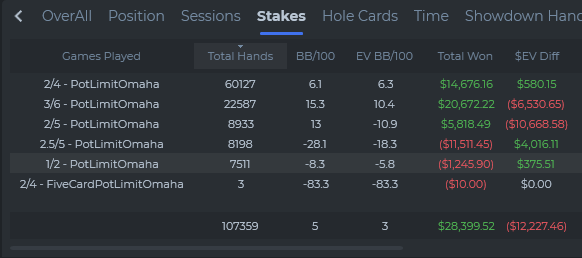
Total results = a bit more than $40k post-RB
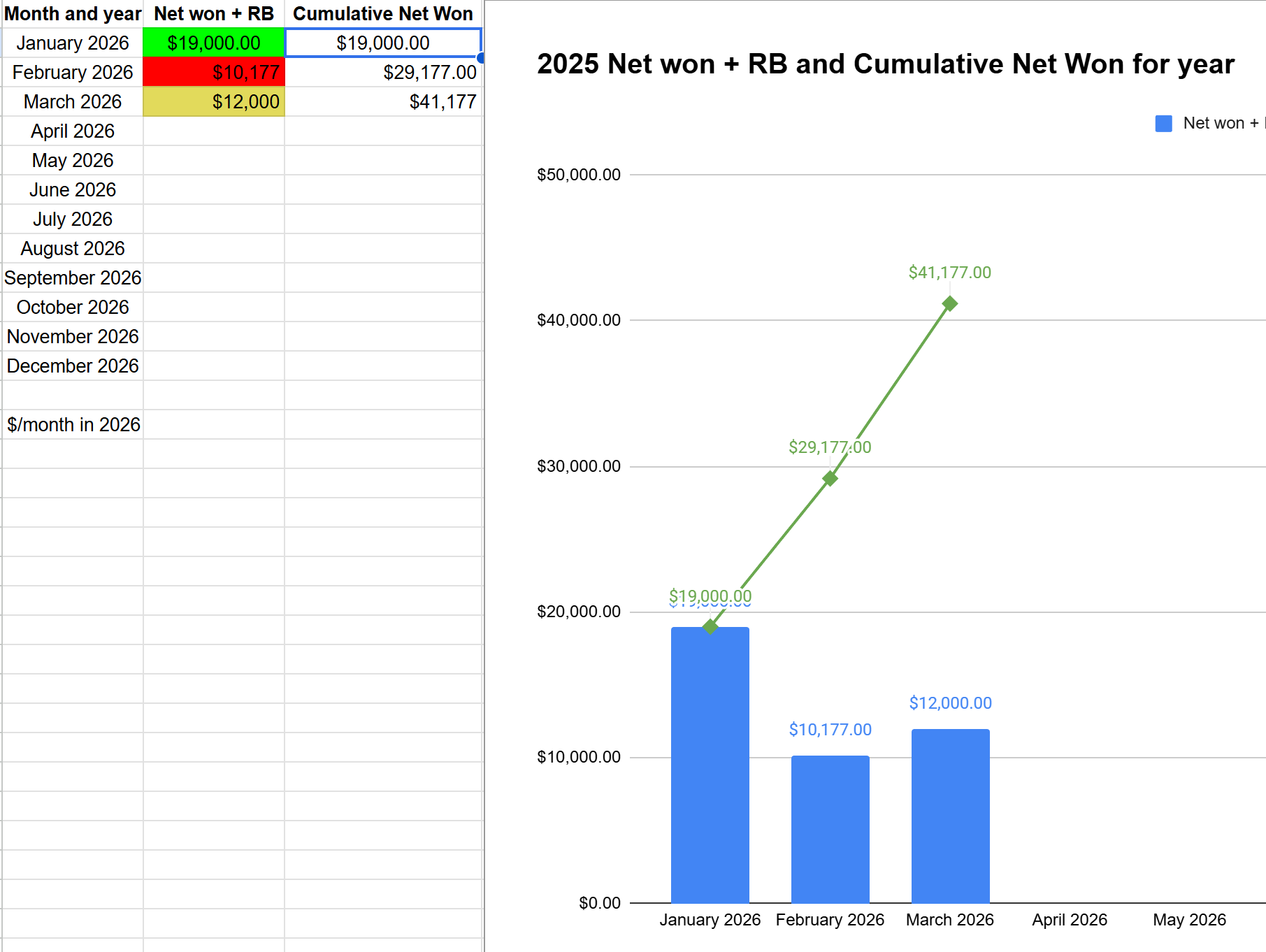
So far this year I played a bit over 100k hands. Originally going into the year I wanted to play 500k+ hands, but this month in March I played way less volume and so probably I'll settle for 400k+ hands this year after realizing a few things.
Volume by month:
January = 32k hands
February = 43k hands
March = 27k hands
So basically, in winter I was super motivated to grind. Optimized my schedule for grinding but a bit less optimized for recovery. January and February I was following ABS and basically grinding all night catching the action. I just moved back to PLO400 and 600 after having my worst year in poker in 2025 and moving down to PLO200. So in December I moved back to PLO500, and I felt motivated to prove I could stay at that stake. Well the heater in Winter allowed me to do just that and now I'm fairly established as one of the top regs at PLO500.
In February I was really motivated to grind because tbh, it was an extremely swingy and flat month the entire time. It felt like every single session I was winning or losing anything between +-5k, just hovering around breakeven. It wasn't until the final few days of February that I went on a bit of a heater to end up having an >$10k month lol. But this flat month was good for me, it got me used to the swings in a big way. Before February, large swings still affected me quite harshly and would get me all emotional off the tables. Now if I win or lose $5k, which still happens quite regularly, I honestly don't give a ****... Just another session. I think I'm finally starting to get good at understanding variance, something that is so hard for humans to do, even us long-timepoker pros.
March was much lower in volume. Firstly I felt a bit burnt out from sleeping later than I was supposed to for the sake of ABS, and I didn't quite enjoy going to the gym at the most random times like 2AM lol. So I got back to sleeping slightly earlier (which is still ridiculously late by normal person standards) and working out soon after waking up. Secondly, March in general just seemed to have a bit less volume than January and February. Winter came to and end, and Spring started and so it makes sense that there was a bit less action than usual. Thirdly, my account on WPN got checked by security to make sure I wasn't cheating, I had to go through some procedure including having to record videos for them of my liveplay from multiple angles. It took about a week for my account to get reinstated again, but I'm glad they are taking care of their game integrity. Although all this together resulted in me taking like a full week off the grind.
In the large scheme of things 100k hands is still a rather small sample. But I think overall, it's pointing towards a good positive trend. The most important thing is I'm putting in decent volume and on schedule to play 400k+ hands. I'm on schedule to have a >$150k year, if I can do that, it'd be great, but would still be very pleased with even >$100k. That alone should allow me to probably start shotting 1k as we approach the tail-end of the year.
Regarding blogging, I haven't posted too much in a while. TBH sometimes I feel compelled to post, like I want to share stuff. Other times I just can't bother / feel too lazy / want some privacy. I think blogging is a nice format, I don't feel forced to make posts at certain times, and can just make posts whenever I feel like. But tbh, recently in my videos I recorded for the WPN security check, they mentioned they enjoyed my commentary. So it's got me thinking about making things more public, posting more on YT or something. Although tbh, that seems like a lot of extra work, which I'm not sure I wanna do. Also not sure what exactly I'd want to post, TBH I don't want to post my own gameplay or strategy much, I still got this paranoia that other regs will watch all my stuff and max exploit me. I quite enjoy talking about these philosophical topics around poker and life and PLO. But not sure how to do that for YT or if it'd get much traction, also not sure what the point is really. Like I don't have any plans to do coaching, I don't think I can make money directly through youtube, so the only point is to try get sponsorship or which seems kinda IDK I'd assume sites would want me to be streaming on their platform or something for that, or just purely for fun/altruistic reasons which is a bit like not my style lol. Yeah anyways, haven't really felt like posting too much recently, just wanna focus on the grind and life, so we'll see when/if I post next I guess.

Really nice start to the year! Keep it up.
My understanding on content creation is that if you aren't in it all the way then it's not worth it as it can take up so much time and energy. That said, you could always make the occasional video (maybe at lower stakes so you aren't giving away too much of your own strat?) in case you're ever interested in getting into make videos for a coaching site. You'd have what would basically be audition videos ready to go.
Great content,helps me a lot,especially "decent" gameplan ,implement,high volume,recovery,Emotional Stability.Thanks.very valuable advice.
Great content,helps me a lot,especially "decent" gameplan ,implement,high volume,recovery,Emotional Stability.Thanks.very valuable advice.
Appreciate the kind words. I'm glad at least one person seems to enjoy my blog xD .
Really nice start to the year! Keep it up.My understanding on content creation is that if you aren't in it all the way then it's not worth it as it can take up so much time and energy. That said, you could always make the occasional video (maybe at lower stakes so you aren't giving away too much of your own strat?) in case you're ever interested in getting into make videos for
Yeah, so the past few days. I have tried recording myself playing some zoom100, explaining my thought process. I recorded on 3 separate occasions. And everytime I was just like "NO!". I realized my thought process is so intuitive, I have this way of thinking about the game that I feel is very much my own. Lots of stuff going on outside the realm of just "theory", and if I made a "mistake" or something I felt could be exploited, I just completely wanted to not put the video out there. It's funny because I look at my own personal stats, and they are very solid, close to GTO, especially compared to the majority of the regs, I'd say I have some of the most solid stats out of all the regs I play against, but then in my head while I grind, I feel like I deviate so hard sometimes and take several factors outside of GTO into consideration. Timing, betsizing tells, gameflow dynamics, trying to read how others are feeling emotionally, etc. It's thoughts like that, that I really don't feel comfortable sharing while grinding. This experience of trying to record some liveplays simply made me realize, I'm NEVER going to want to coach. To me it simply feels like a massive loss of EV.
Perhaps through studying a particular spot or something, then I can isolate situations, and look at spots purely from a theory lense, which I wouldn't mind sharing my thought process on. Because I feel like theory is only the tip of the iceberg. And I can handpick spots where I feel like I'm not giving too much away. But making liveplays of my actual thought process, I just found that to be something I'm really not willing to do. And so there is also absolutely no way I'd be willing to livestream my game to anyone lol.
Sharing my thoughts on the poker lifestyle, poker philosophy and mindset. I don't mind sharing this stuff. Everybody is unique, and I'm just sharing my personal unique perspective, that may or may not work for others, and can be up to others for them to implement for themselves or not. But actual strategy and explaining my thought process of strategy, that's something I'm really not willing to do right now.
------------------------------------------------------------------------------------------------------------------------------------
Switching to the Early Morning Schedule
In other news, I've recently switched my schedule around a bit.
The fact is, previously I was grinding during EU peak hours, let' say mainly between 11PM CET until like 3AM CET. Which lead me to go to sleep after 5AM everyday. It was great action, especially during Winter. I was living like this for 6 months since October. It had lead me to one of the most consistent periods I've had in PLO so far of great steady months. Note that in October and November I was playing PLO200. But overall, over the past 6 months I made around $75,000.
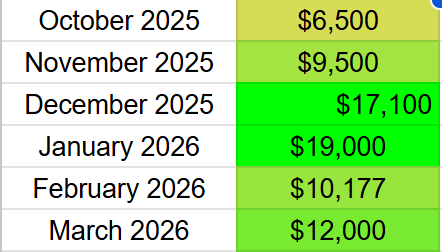
I switched to this schedule in October, because I felt pressure during that period. Earlier last year, I went through one of the toughest periods of my life, a break-up with my ex-fiance that felt like a divorce, having to rebuild my entire life from scratch, and the worst downswing of my entire poker career forcing me to move down to PLO200. I was "almost broke" with a low bankroll, something that has happened too many times in my poker career now, I think 4 times in total lol. And I felt like I needed to do everything in my power to get out of this rut. That's why I grinded the night schedule. But after 6 months of doing that, I feel the wear and tear. I have less energy in general throughout the day. And tbh, the only reasons I play well and make money at these weird times is because poker just spikes my adrenaline and gets me into hyperfocus mode no matter how trash I feel, this has something to do with my nervous system, I definitely have some form of neurodivergence, though it isn't ADHD or autism like a lot of other poker pros (though I do share some of their characteristics). Also obviously because the games are soft at those times with lots of action.
But March came last month, and I rebuilt my bankroll by this point, I successfully established myself back at PLO500, and with winter ending, the action died down a bit. I lost some motivation to grind every night at those night hours and I felt a longing to get more sunlight and touch more grass. Nowadays, the pressure is gone so I feel like I don't NEED to grind. The motivation to grind to get out of a desperate situation is no longer there, instead things are stable now. So what I need to do now is create systems that can last me a lifetime, or at least decades. So while ABS made a lot of sense in Winter during that period when I had a lot of motivation to rebuild my bankroll and move back up to PLO500, right now I'm looking for something more consistent, more of a schedule.
This is why I've decided from now I'm going to be waking up at 4AM instead. Basically rise and grind.
Something similar to this:
I've done this in the past and it felt good, I had good energy and could have a more balanced life. I guess I'm an early morning person, and I also enjoy getting in my hardest cognitive tasks in first thing in the morning. The games between 4 AM and 9 AM generally aren't so terrible tbh:
- a bit less action overall, a few less tables, especially during the week.
- but there's a few more North Americans playing since it's peak hours there, otherwise it's other european regs who either are up late ending their sessions or maybe also early risers like me now.
- In general I find Europeans to be better at PLO than Americans, whether it's a reg or fish. Not quite sure why, but that's just my experience so far. Nothing against the Americans here, love you guys 😃
- So generally the late night Euros will be a bit more tired and not playing their A games. Probably some of the strongest Euro regs I respect the most may not be playing as much at these hours, however perhaps there'll be some new regs I haven't played much against yet who I will gain to respect a lot. But otherwise game composition doesn't change too much, tables are still generally composed of 1 recreational player and filled up with a bunch of other regs.
- Overall, this leads to less action and less hands played, but possibly I might have a higher winrate considering I am playing less tables and able to focus even better, especially if games are on average slightly softer.
I need more of a sample to see how things go, whether winrate holds up and whether action can stay consistent but so far, things have gone quite well. Already up almost $8k post-RB in the first week of this month.
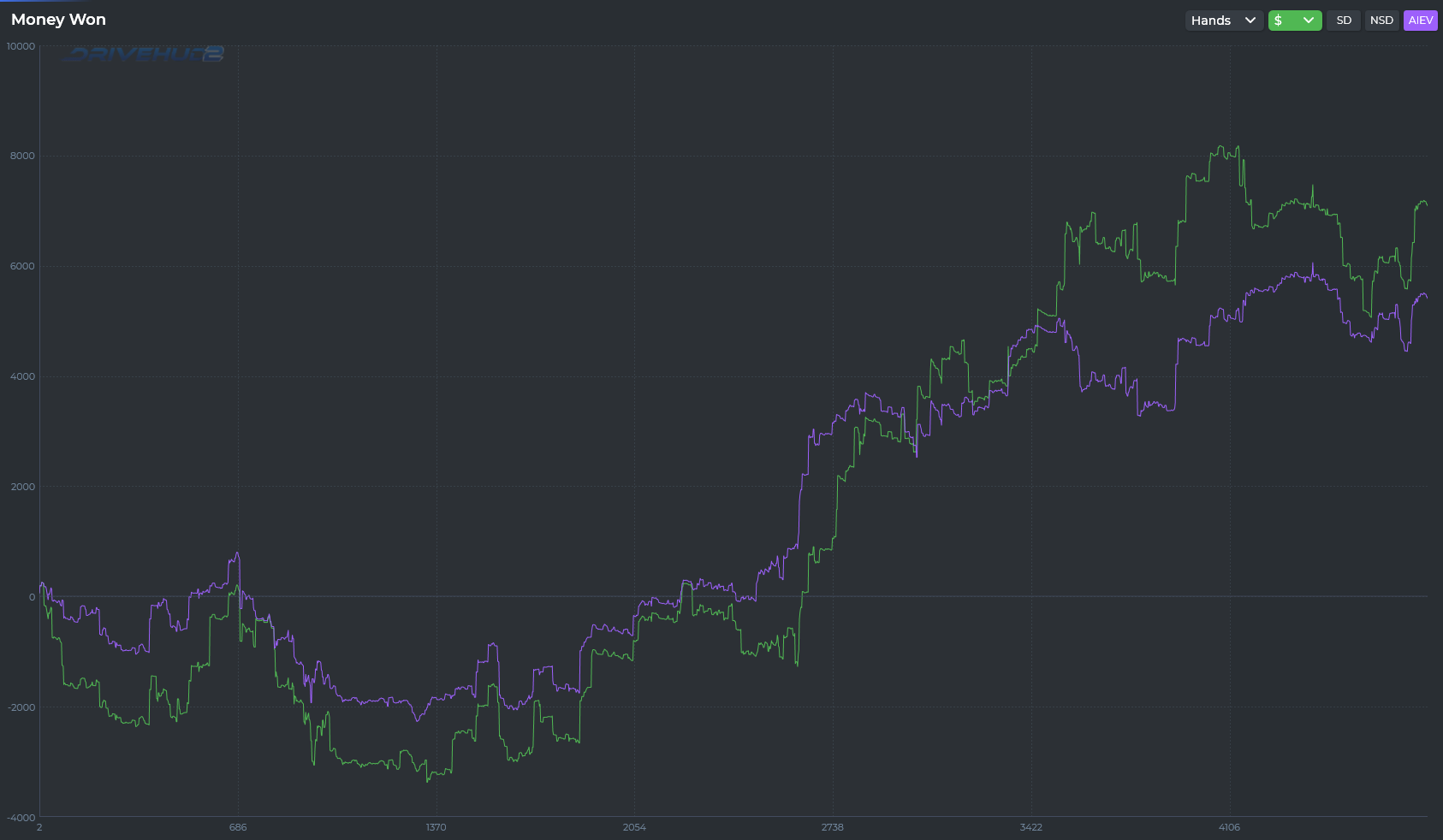
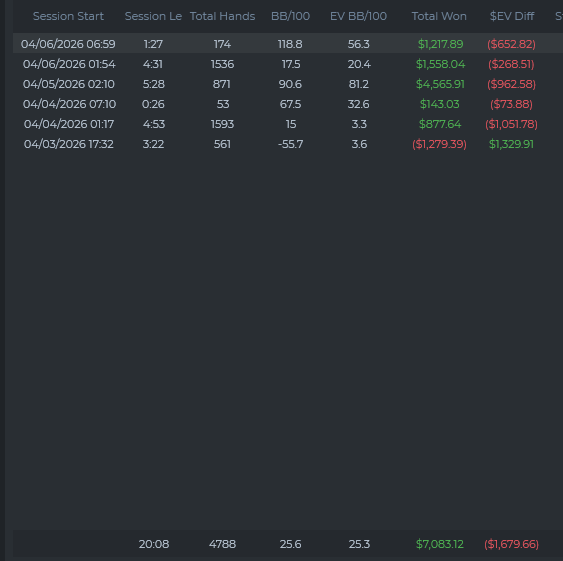
Overall, my schedule would look something like this:
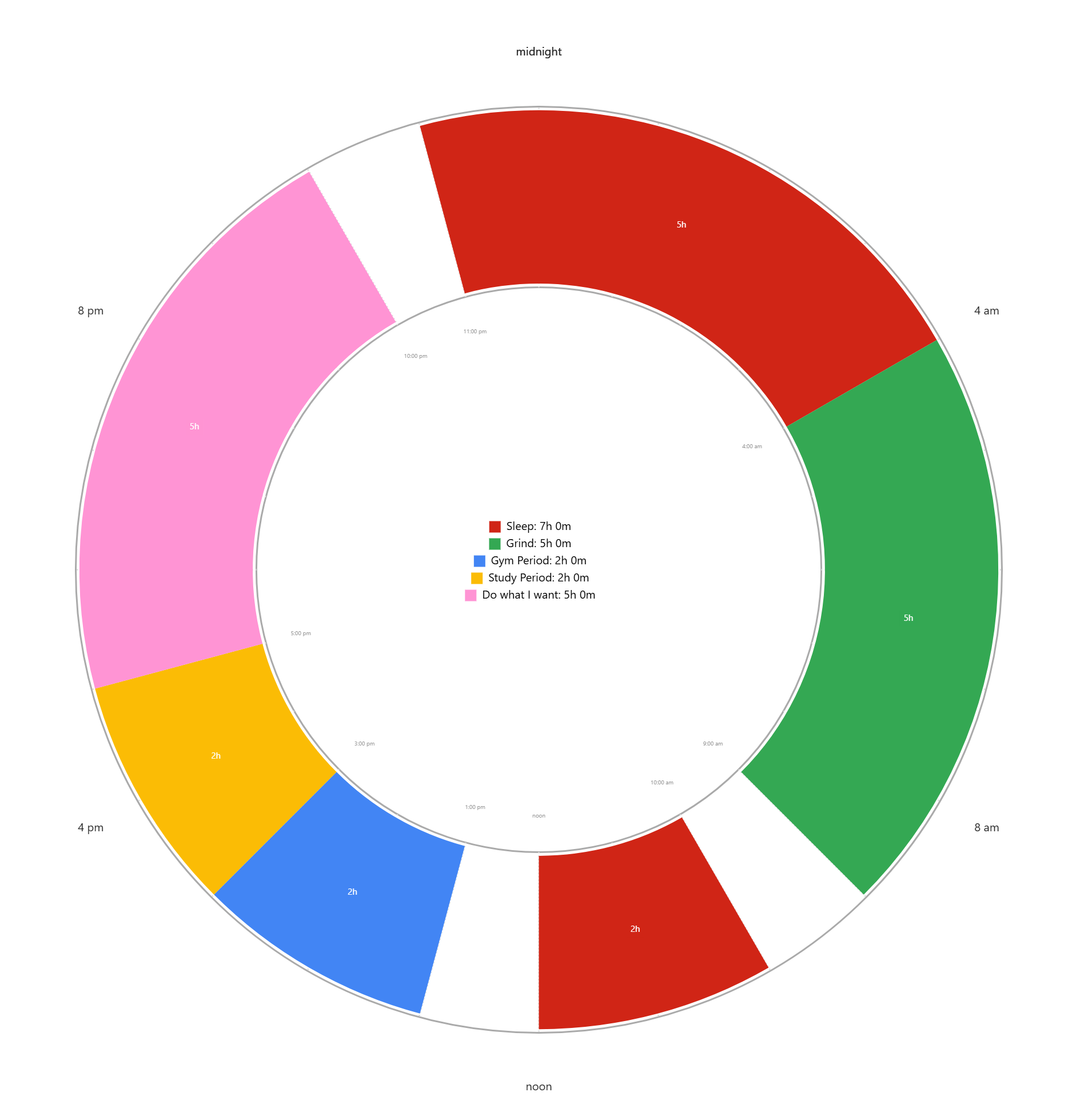
Basically grinding between 4 and 9AM. Taking a nap and then exercising and studying. Then that leaves afternoons and evenings free to do some stuff. I can either play a second session if action seems good, or I could do some other stuff. Been thinking of picking up a few new hobbies. Been thinking of starting Hungarian lessons again (lol at learning the hardest language in the world), and joining a yoga class or something to balance out my strength training, or going to these timeleft dinners, basically try meet a few more people and force myself to be a bit more social.
One thing I'm always a bit surprised by is how easy it is for me to switch sleep schedules and circadian rhythms. IDK, some people seem to not be able to function on anything other than their main sleep schedule. But for me, I've found as long as I know what I want and I have an objective for my sleep and how I want to live my days, my sleep will simply automatically fall into line. Whether that is forced Non-24 sleep disorder, whether it's sleeping like a normal person, whether it's polyphasic sleep, whether it's early mornings, late nights or anything between. I set a goal for my sleep and it doesn't even take me long to adjust, it feels almost instantaneous. It's just about making the decision.
Recently this month, I also decided to open a Coinpoker account. I mean, mainly the new software update and all the hype kinda got me interested. But it is also one of the sites I believe should have some action maybe at my times considering they allow the global pool to play? Unfortunately ipoker and stars have way less action after 4AM so I'm kind of trying to find a bit more action which are mainly on WPN right now, a bit of Chico sometimes, and I'm hoping Coinpoker too can have at least a table or 2 running at the times I play. No idea how great the rake/rakeback changes on coinpoker are, I heard different things, but the overall impression I got is they greatly increased the rake to GG levels, however they offer like 50%+ rakeback at least. Anyways, we'll see. Anyways, given action is kind of inconsistent at 4AM-9AM, I'm thinking of adding some 5C PLO tbh, but probably still want to make a bit more money tbh before I try that. I feel like I'll probably start by spewing some stacks away when I play 5C lol.
Also one of the things I realized. Is this blog gives me some of the best credibility and reputation as a poker pro. Like my account got randomly checked by WPN, and I linked them and showed them this blog. And there's no way they could consider banning me considering I have been blogging here for a long time sharing the entire poker journey. It's one of the reasons I keep this blog going, as I wrote before. I have in fact been banned (then unbanned) from a site in the past (pokerstars due to association to a stabl...) and I really want to ensure that this does not happen again in the future. Sharing my journey and integrity here, basically makes the possibility of getting banned close to impossible IMO.
So in the name of transparency, I'd like to (re)share all my usernames on all sites I play on, so if any regs here play against me at PLO500, you'll know who I am and that I'm not a bot.
Pokerstars: xptboy
WPN: SilentEdge
iPoker: Killer1nstinct
Chico: Sziasztok
Coinpoker: Hottie

haha n1
Hello friends of the blog. Still following ABS and waking up in flow combination. Today is Saturday, for some reason, there has been literally zero action at the tables all day today... Maybe it will start later in the day IDK. Anyways, the month has been going exceptionally well. I've started playing some 1k and I'm on a trajectory to have my best month in PLO yet, perhaps even my best month of my entire poker career if I keep winning for the remainder of the month.
As there has been no action today and I didn't really have many plans other than go to the gym today and study a bit. I find myself with some free time to write a blog post. I put some thought into this one, I hope you enjoy it.
---
The 5 times my Poker Career Collapsed
When people think about poker careers, they usually imagine a smooth climb through the stakes. You start small, you get better, you moved up, you repeat the process until you eventually reach high stakes.
My reality has been quite the opposite, hence the name of this blog Omaha Rollercoaster. I wouldn't be surprised if the reality for many other poker pros is similar.
I think poker careers can often look more like a series of collapses followed by rebuilds. Looking back at my own career, there have been five moments where everything reset - times where I either went broke, went almost broke, or had to start from scratch again.
Each time it felt like the end of the road. Each time, I thought maybe this was where the poker dream ended. Yet somehow, every collapse eventually lead to another rebuild, to coming back stronger, wiser and more experience. Ready to face tougher challenges and break through them.
Reset #1 - Discovering poker instead of a normal life (2016)
Poker wasn't supposed to be my career. If I hadn't been forced to leave college in America, I imagine I'd be living a normal American life with a somewhat much more normal job. Then in Belgium, I got a degree in business. I was getting my masters degree in economics, but I was lost. Poker was just a hobby, something I played online for fun. But the game grabbed me quickly.
I started grinding PLO25 and PLO50. I was studying constantly, I ended up grinding about as much volume as I do now, whilst being a fulltime student. Eventually I saw an opportunity in spin & go's at the time and joined a poker stable to specialize in spins.
Things escalated quickly. Within about one year, I moved from low to high stakes. I climbed from $15 spins to the $100 spins, and all of a sudden I was making over $10k per month!
When I reached $100 spins, I felt like I had figured life out. Looking back now, that confidence was very naive. The rollercoaster had only just begun.
What I learned:
Poker can change your life incredibly quickly. But when success comes fast, it can also disappear fast!
Reset #2 - The Pokerstas Ban (2018)
This was the first moment where everything collapsed. I was living in Malta in a grindhouse with other highstakes regs who were a part of the stable. We didn't call it the grind house, we called it the "drug house". We went out and partied a lot, we smoked a lot of weed, occasionally did some harder stuff, and spent stupid amounts of money at stripclubs. It was fun, but volume and poker performance took a big hit obviously.
Anyways, while all this was happening, the stable I was a part of at the time, became involved in a cheating scandal on pokerstars.it involving a queueing system. Even though I had nothing to do with it personally. Pokerstars banned several other members of the stable even players who did not play on the Italian network, I was one of the members to get banned due to association with the group.
Overnight I lost access to the biggest poker site in the world at the time. For a spins player, that's basically like an NBA player being banned from the league. The career I had spent years building disappeared almost instantly.
My decision to leave the stable was quick. I booked the next flight to Budapest, an impulsive decision, but basically in less than a week after being banned I was setting up my new base in Budapest.
Due to the excessive spending and lack of poker priority and ban, and moving, and everything basically. I was basically totally broke. I owed my stable over €10,000 (which btw I did pay back even though I believe I never had to!), which was basically more than what I had in my bankroll at the time. So I was effectively broke.
That moment taught me a brutal lesson:
Even in poker, sometimes your career can collapse for reasons completely outside your control.
One of the reasons I love poker, is because I feel like I have complete control and autonomy over my life, and I hate administrative ****. I highly value control! But even in poker, things outside our control can still affect us!
What I learned:
Control what you can control.
And never assume the environment around you will always remain stable.
Reset #3 - Burnout and Losing Direction (2019-2020)
After moving to Budapest, I joined a better stable, smaller, more ethical, better coaches and who cared about their students/horses more. I rebuilt my bankroll on Winamax and eventually I got back to highstakes spins.
On paper everything looked good. I became one of the most feared regs on €100 espressos, competing to win the leaderboards there on most days, back to making >€10k/month again. But internally, I was completely burned out.
Spin and Go leaderboards require insane volume, and brutal mental endurance. Endless tables, endless variance, endless reg battling, endless repetition. At some point, I simply lost the fire.
I switched to short deck poker seeing a new opportunity. I hoped something new would bring back motivation. But it wasn't my favorite game and the action wasn't as much as I'd hope it would be. So instead I drifted, I played less poker, I played more video games. I lost direction for a few months.
It wasn't a dramatic crash, it was worse. It was quiet stagnation. After a almost half a year away from poker, getting some challenger accounts in Teamfight Tactics, I realized my bankroll was dwindling again. It was time to get back to the spins.
COVID was now in full effect, a mini poker boom was happening. I came back during this period, and had my best six-month stretch in my poker career to date. I made about $100k in 6 months.
But that success would lead to the next reset.
What I learned
Burnout doesn't happen overnight.
It creeps in slowly until the motivation that made you dangerous disappears.
Reset #4 - The Crypto Crash (2021-2022)
After my big spin run in 2020, I stepped away from poker and went heavily into crypto. Once again, I was burnt out from poker, and I didn't want to battle anymore. The next obvious step was to battle my way into 250s and 500s, but at the time it was too much pressure. Instead I chose to quit poker and put my net worth into crypto.
Initially the crypto went up, my portfolio went up to almost €200k. It felt like I had escaped the grind, like I would never have to work another day in my life. That I could simply play videogames for the rest of my life while passively watching my crypto portfolio go up up up.
But then the market crashed, I didn't cash out. I lost over €150k. Suddenly I had less than €40k in my bankroll. Suddenly I needed to make money again. So I returned to poker - but this time I switched games completely. I realized that if I went back to spins, I would probably be able to get back to 100s quickly, but I wanted to make sure I wouldn't burn out again. I thought more about longevity this time. I switched to PLO cashgames, and I thought about installing healthy routines and habits that would encourage longevity.
After a year of barely playing any poker it felt like my poker career started from scratch all over again. For the first year in PLO I was basically breaking even. I witnessed my roll dwindle to <€15k and was grinding PLO100. But eventually things started to click, and the rebuild began. After 1 year, I was playing PLO200, after 2.5 years I started shotting 500.
What I learned
Unrealized gains are not real money.
And poker, despite its variance, was still the skill that had carried me through everything.
Reset #5 - The Breakup, and the Downswing (2025)
This may have been the hardest reset of all, especially emotionally. Last year, I went through a brutal breakup with my ex-fiancee.
This coincided with going through the worst downswing I'd experienced in my entire poker career. PLO variance is brutal on its own, but when poker variance hits while your personal life is collapsing, the psychological pressure becomes something entirely different.
I had 3 losing months last year, and several flat/almost breakeven months. My bankroll dropped to €15k, I had to move all the way back to PLO200. I remember looking at my bankroll, and realizing that after a decade of grinding the game professionally, my bankroll was back to where it was when I started in my first year.
After over a year of grinding PLO500, sitting at 200 again felt like my career had reversed.
There's a specific kind of pain poker players understand:
When you realize you're suddenly playing lower than you were before. It was in this moment that I promised myself, I would never allow myself to be in this financial position again.
It felt like time has gone backwards, but there was no other option.
So I rebuilt again. Session by session. Over time the emotional pain in life subsided. Over time I got into new routines and started playing my A-Game again. Slowly the bankroll recovered.
Today, I'm still going through one of the sickest upswings. I'm playing PLO500 regularly and starting to take shots at PLO1k, which is quite funny considering that it was only 4.5 months ago that I was grinding 200.
Looking back, it's crazy how close last year was to another complete collapse.
What I learned:
When life variance and poker variance hit at the same time, the only strategy that works is brutal simplicity.
Show up.
Play well.
Survive.
The Pattern I Finally See
Everytime my career collapsed, I thought it was the end. But every collapse eventually forced me to evolve. Like a phoenix from the ashes.
- Spins pushed me into high-level competition. Spins taught me how to multitable and to not fear reg battling. Spins taught me how to push volume.
- The Pokerstars ban forced me to adapt, to move countries and accept playing on new networks. It taught me to deal with things outside your control.
- Burnout forced me to rethink my relationship with poker, and how to play poker while living a more balanced life. It forced me to think more about the long-term.
- The crypto crash reminded me that poker is my money making skill and path to financial success. Together with the lessons from the burnouts, I switched to PLO.
- The breakup and downswing forced me to rebuild discipline, to be more consistent. It reminded me that I never want to be in a similar financial position again.
Here I am now, maybe my bankroll isn't at the highest point of my career, but my game is refined, my confidence is high, and I'm having one of the best stretches of my poker career right now. Funnily enough, this is the most stable I've ever felt in my poker career, and the future looks very bright and calm.
But to get to this point, I need to realize, my poker career hasn't been a straight climb. It's been exactly what this thread is called.
An Omaha Rollercoaster
And if there's one thing poker has taught me after all these years, it's this:
The players who survive long enough don't avoid the collapses.
They just keep rebuilding.
And everytime they come back better, stronger.
Final Thoughts
The longer I play poker, the more I realize something interesting.
Almost every long-term professional I know has a story like this. Not one collapse, but multiple.
Moments where their bankroll almost disappeared. Moments where they questioned whether they should quit. Moments where their life outside poker made the game feel impossible.
But the players who are still around after over 10 years all seem to share one trait. The survived the resets. They came out of downswings unscathed. They survived the exceptional life events. They learnt how to deal with burn out. And eventually they climbed again.
Poker careers don't belong to the people who avoid the downswings. They belong to the ones who refuse to disappear when the graph goes down.
great read and great summary of what multiple of us went through (each in our own way, but in a similar fashion). What you might also have mentionned is the need to love the game; the few people I encountered which had temporary success with poker but did not love the game did not make it in the long run. Without the thrills of the game and the desire to annihilate your opponents, it is quite unlikely to survive in this environment.
Thanks for sharing, A+ read!
great read and great summary of what multiple of us went through (each in our own way, but in a similar fashion). What you might also have mentionned is the need to love the game; the few people I encountered which had temporary success with poker but did not love the game did not make it in the long run. Without the thrills of the game and the desire to annihilate your opponen
I understand your point but kind of disagree in a way. I feel like love for the game is necessary at the start but if it doesn't evolve then it can actually hinder one's progress in the long-run. Let me explain.
-----------------------------------------------------------------------------------------------------------------------------------------
The Evolution of My Motivation in Poker
From love of the game, to control of my life
When I first started playing poker seriously, my motivation was simple.
I loved the game.
It was exciting, competitive, intellectually stimulating, and - most importantly - it felt like an escape from a traditional path that I didn't want. Poker wasn't just a game; it was an opportunity. A way to build a different kind of life.
Looking back now, after more than a decade in the game, I can say this clearly:
My motivation hasn't disappeared - But it has completely transformed
Phase 1: The beginning - Love, Excitement, and Opportunity
When I started my poker career, everything felt fresh.
I was improving quickly. I moved up to high stakes quickly, instantly I recognized that I had a talent for this and that if I simply put in effort then I would get rewarded. Every single session felt meaningful, every decision felt sharp, and every win reinforced the idea that I was on the right path.
In the first say 3 years of my poker career, my motivation was driven by:
- Love for the game
- Curiosity and rapid improvement
- Competition and outplaying others
- The idea of building a life outside the system
Poker felt like freedom. It was fun. It was intense. It was obsessive. It was addictive in the best way.
But that type of motivation doesn't last forever.
This "intensity" and "love for the game" cannot last forever. It always ends, and if you keep chasing it you may end up doing things that actually hinder your progress to try to maintain that love for the game, things such as switching formats constantly, trying too many new things or strategies, forever studying and trying to learn some niche spot that you'll never encounter in game, etc.
Phase 2: Reality Hits - Survival, Control, and Proving Myself
In my former post I highlighted how many times I had to rebuild my poker career. This happens because at some point poker stops being just exciting, it becomes real. You realize this isn't just something you do for fun, it's not something you can just do and then stop for endless amounts of time and then come back to whenever you want. You realize this is your livelihood, this is how you make money, this is your path to money making and financial freedom.
I came to realize all this, because of all the setbacks I had. Burnout periods. Situations where I lost control - whether that be through external circumstances, bad decisions, or just variance catching up.
This is when one of largest lessons of my career arrived. Because in poker it's easy to make good money. But that doesn't mean you'll be rich. I came to learn that money comes and goes quickly. No matter how much money you make, it's just as easy to lose it, whether that be via reckless spending or spewing it away. In my situations it's usually been through excessive spending outside poker, bad investments and simply not grinding enough due to long breaks. I learnt that Poker is not just about winning. It's about surviving.
During this phase, my motivation shifted dramatically. It became less about love, and more about:
- Financial security ("I never want to go broke again")
- Control over my life and career
- Rebuilding after setbacks
- Proving that I could come out of collapse unscathed and succeed long-term
Poker became something different.
It wasn't just a game anymore - it was a way to reclaim stability and independence.
The emotional excitement faded, but something else replaced it:
RESILIENCE
This was the phase where I learnt how to rebuild. This happened not once, but multiple times between 2018 and 2025! I feel like a lot of people get stuck in one of the first 2 phases and never move onto phase 3, to actually reap the rewards of their labor.
Phase 3: Where I am now - Efficiency, Freedom, and Long-Term Design
Today my motivation looks very different from when I started. And this is where many people get confused.
They think:
"If you don't love the game as much anymore, something is wrong."
But this isn't true. Instead, what has actually happened is that my relationship with poker has matured.
In the past I didn't care about money. As mentioned earlier in the blog, I grew up a spoilt brat! . So I had a terrible relationship with money, where I didn't care about it at all. I never started playing poker for money, it was the last thing I cared about, indeed I played for "the love of the game". This has completely changed recently, now I play mainly for money, mainly for the financial freedom. Because I've finally come to realize, that money is actually important. It is only a tool, it is only a means to an end, but nevertheless it is very important. And I am lucky enough to be talented enough to find it easy to beat this game that everyone calls so "complicated". I am lucky enough to have found a way to make good money to provide for the life I want to live. Right now my main drivers are:
- Financial Freedom
- Autonomy and control over my time
- Efficiency and consistency
- Designing a lifestyle I actually want
- Long-term stability instead of short-term highs.
Poker is no longer something I'm emotionally attached to in the same way. It's something I use deliberately. And paradoxically, that makes me better at it.
What happened to the love for the game?
That is the question that comes up the most. Do you need to love poker to play it for a decade?
My answer is:
Yes, but not in the way people think.
When I started, I had a very emotional, almost obsessive love for the game. Now, that kind of love is mostly gone. But it didn't disappear - it evolved.
Today, it shows up as:
- Respect for the game
- Enjoyment of clean, sharp decision-making
- Satisfaction from executing well
- Appreciation for the complexity and edge.
It's quieter. Less emotional. Less intense.
But it's also more stable. I don't wake up everyday, jumping out of bed excited to grind. Instead I sit down and execute, regardless of how I feel.
The biggest Shift: From Passion to Alignment
If I had to summarize the change in one sentence, it would be this:
I didn't stop loving poker - I stopped needing poker to feel exciting.
I thought this was what love meant, I thought it meant feeling the intensity and excitement. In the beginning that's what it was. Poker was the excitement. Now instead, poker simply supports the life I want. It's a fundamental difference.
The Real motivation Stack
Over time, I've realized that long-term success in poker isn't built on one type of motivation - it's built on a combination. For me, it looks like this:
1. Foundation
- Financial Freedom
- Autonomy
2. Structure
- Efficiency
- Discipline
- Volume
3. Spark
- Some level of enjoyment
- Appreciation for the game
That last part - the "spark" - is important. But it doesn't need to be 100%. In fact, if you rely on passion alone, you'll burn out.
The Danger Zone
There is one trap though.
If poker becomes purely transactional. If it's just something you do for money, then motivation becomes fragile.
Downswings hit harder, sessions feel heavier, burnout creeps back in.
That's why it's important to maintain at least some connection to the game itself. Not obsession. Just enough to keep it alive.
Final Thoughts
When I started poker, I played because I loved the game.
Now, I play because poker gives me control over my life. And I've become good enough at it to respect the process. In the long-run this is a much more sustainable foundation.
If you are going through a similar shift. Where the excitement fades and things start to feel more "serious" don't panic. It doesn't mean you've lost anything. It doesn't mean there is anything wrong with you. This "love for the game", this "excitement", this "intensity", this isn't what you should be seeking. This phase simply means you're finally transitioning from a beginner's mindset to a professional one. And that's exactly where you need to be if you want to be in this game for the long run.
Last month I had the best month of my PLO career so far. And the 2nd best month of my entire poker career. I won $26k. Anyways, this month has gotten off to a pretty bad start. But let's see what happens.
Anyways, since GTO Wizard is about to come out with PLO Wizard soon this month apparently. I figured it would be a good time to write a post related to that topic.
---------------------------------------------------------------------------------------------------
GTO Wizard, AI, and the Death of online PLO?
So I've been working with GTO Wizard as a "consultant", basically they've just been asking for my opinions and feedback as they continuously develop their product. They are now in closed early beta testing phase, and a lot of other PLO players now have access to try their product out. Their app is now in a quite advanced stage. And tbh, after having tested their product. I don't think they will have any competitors for a while until some other PLO AI solvers come out, what their product offers is simply too powerful compared to any other tools on the market right now.
In the discord group, there has lately been a lot of discussion about whether real-time AI solver access is going to "kill PLO." Some guys are pretty worried about it.
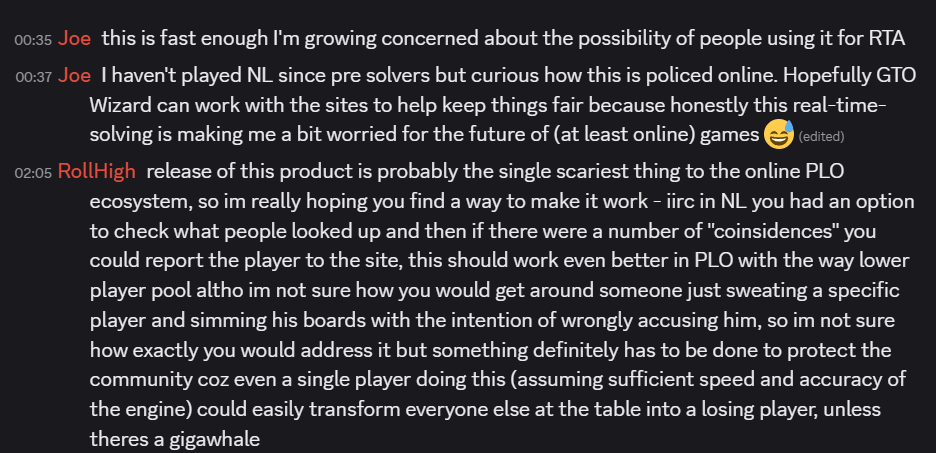
The idea is basically that once everyone can access near-perfect strategy during play, the edge disappears and the games die.
I understand the concern. Poker players have always been paranoid about new technology and the games dying. Even outside poker, people all over the world are complaining that AI is going to ruin the human species. It seems like since as long as I've known about poker (which is like 20 years now?) that people have been calling out the death of poker. We've heard this many times before.
- HUDs are going to kill poker
- Training sites are going to kill poker
- Coaches and Stables will kill poker
- Databases will kill poker
- Solvers will kill poker
- Black Friday will kill poker
Yet here we are in 2026, with poker not dying, if anything I think the state of poker right now is quite healthy compared to when I turned pro in 2016.
The truth is that poker has survived every technological leap so far, and I'm pretty skeptical that GTO Wizard is suddenly going to be the thing that finally ends PLO.
GTO isn't the same as Making Money
One thing that often gets confused in these discussions is the difference between GTO and maximizing EV in real games. GTO is a defensive equilibrium strategy. It's designed so that you cannot be exploited by a perfect opponent.
But the reality of poker is that most of the money doesn't come from playing perfect strategy against strong players. It comes from exploiting weaker players who make big mistakes.
If someone is massively overfolding rivers, the correct adjustment isn't to bluff at solver frequencies. It's to bluff way more. If someone is calling too wide, you just valuebet them relentlessly.
A perfectly balanced bot isn't often the best strategy against weak players. Usually playing "pure GTO" would leave lots of money on the tables.
To put it simply: Poker isn't about playing perfectly. It's about playing perfectly against imperfect opponents.
Real-time solver use comes at a cost.
Another thing people forget is that real-time AI solver use isn't free. Even if you have a fast tool, you as a human still have to input:
- positions
- stack sizes
- bet sizes
- board texture
All this takes time.
If someone wants to consult GTO Wizard in the middle of their play, they're probably not playing many tables anymore. I doubt it's really possible to play more than 1 or 2 tables while having GTO wizard open and checking every hand in it real time.
Most regs want to play at least 4 tables from what I know, reducing table count that much probably decreases their hourly, not increases it.
And this is another topic people forget: good online pros make a lot of their money through volume.
You don't need to play every hand perfectly to win. You need to play solid poker across a large sample.
In addition GTO Wizard has a fairplay check that works with poker sites to help sites detect malicious users:
Reg vs Reg EV is Tiny Anyways
Another reality of modern poker is that the EV difference between decent regs is already pretty small.
Most competent regs aren't making catastrophic mistakes every orbit. They might pick slightly wrong lines sometimes, but compared to GTO they're usually only losing small fractions of EV in most spots.
Meanwhile recreational players are often losing huge bb/100. This is where most of the money comes from, and the tables of regs will usually share this.
Basically, as long as there are weaker players in the ecosystem, there will always be money to be made. Even if some players are using advanced tools, they're mostly just trading small edges with each other while the fish fund the table.
And the dumbest thing is, if you are a reg who chooses to check up GTO Wizard in the middle of your play, you risk getting your account banned for this tiny edge, while playing less tables, and not focusing on the things that really matter. It honestly seems like one of the dumbest things to do to me.
PLO is a Different Beast!
Another reason I'm not too worried is that PLO is simply a very messy game. 4 hole cards create an enormous game tree. Board interactions are complicated. Equities run close together. Multiway pots happen all the time. Even today's PLO solvers rely heavily on simplifications and abstractions.
In practice, PLO is chaotic enough that even very strong players often rely on intuition and pattern recognition rather than strict theoretical calculations.
And honestly, that's one of the reasons the game is still so fun.
Poker is an Ecosystem
At the end of the day, poker isn't like chess. Chess is a pure skill contest where both players try to play perfectly. Poker is an ecosystem.
Games exist because recreational players enjoy the action, the swings, and the occasional big win. PLO in particular is great at creating that experience. Equities run closer, pots get big, and wild runouts happen constantly.
From the perspective of a recreational player, that feels exciting. From the perspective of the ecosystem, that's exactly what keeps the games alive.
The Real Threats to Poker
If anything, the bigger long-term threats to poker probably are not solvers. Solvers only help hard working poker players to study and improve at the game.
The real threats to poker are:
- Excessive rake
- Fragmented Player Pools
- Regulatory restrictions
- Housebots or bot networks to the point where it's impossible to find games with fish because there's too many bots playing (but one bot at a table, or one guy using GTO Wizard, isn't a big threat).
These are the main factors affecting ecosystems far more than theoretical improvements in strategy. We saw how Black Friday affected poker, that was one of the worst events in poker history, and yet it still survived. And now actually regulations are actually loosening up slightly and more players globally from new markets are coming in (think Asia and LATAM).
Poker Has Always Adapted
Technology will keep improving. Tools will get better. Strategy knowledge will spread. But poker has always evolved alongside those changes. Strong players adjust, new players enter the ecosystem. Recreational players keep chasing the thrill of big pots.
So while GTO Wizard will certainly change some aspects of the game, I'm not convinced it's going to "kill PLO." If anything, PLO's complexity and variance might make it one of the formats that survives the longest. Especially if we consider the 5C and 6C variants of the game, alongside all the other niches in this framework such as ante's, bomb pots, double board, etc, etc.
After all:
As long as people like gambling, there will always be PLO.
A Few Final Thoughts
A couple things I've learned after years grinding the game:
The biggest edge in poker has never been knowing the perfect strategy. It's knowing how your opponents deviate from it.
And also:
if poker ever dies because everyone plays perfectly... It means the fish finally studied...
In other words, we probably have nothing to worry about.


