MTT Low Stakes Grind Journal
Hey everyone!
I've been grinding low stakes MTTs recently, trying to improve on my game, and I thought it would be a goo
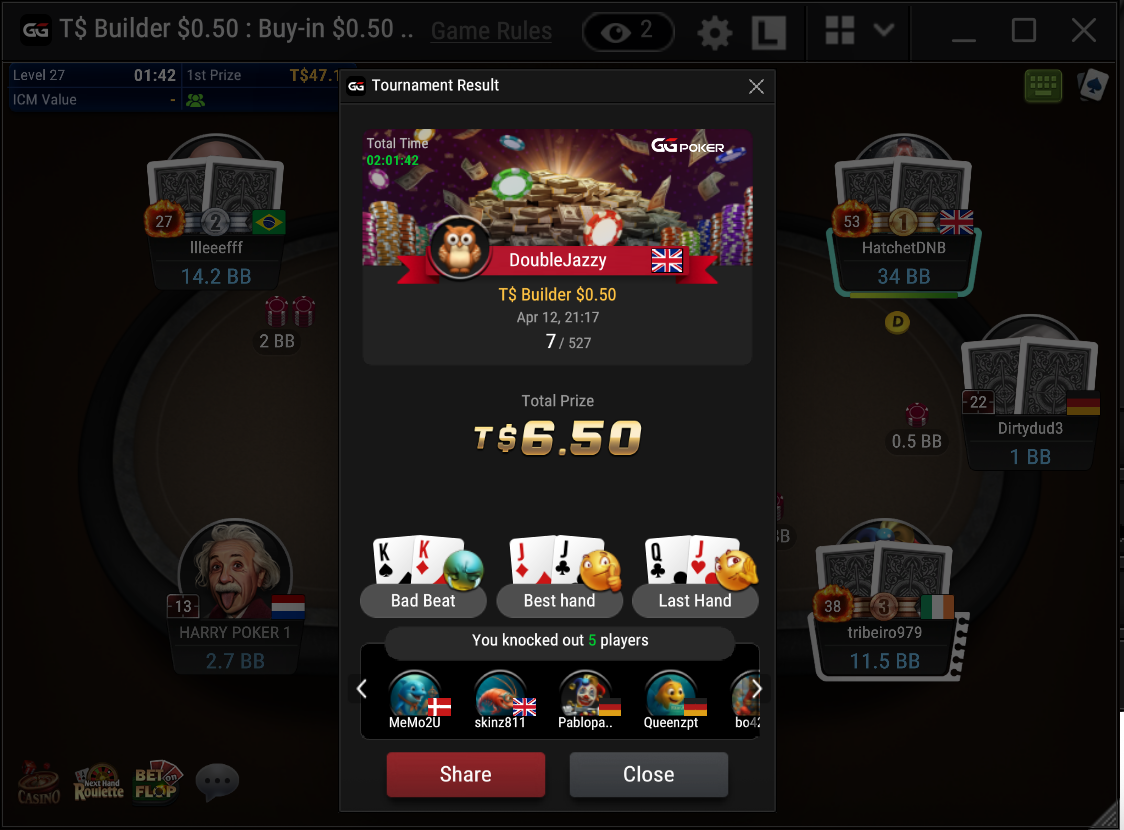
Very small win but something to end the night on. Shoved with 4bb with QJo and although there were a few other shorter stacks on the table, the pay jumps weren't too drastic, so I put more value in trying to build up my stack a bit as opposed to nitting it up. Ran into QQ and that's how the stroy goes.
BR standing: $240.78
Daily change: -$64.38
I've started playing a bit more exploitatively, especially against nits. As tempting as it may be to shove with AJo in the button for 12bb when the nit raises to 3.5bb off of a 12bb stack, I've realised it's honestly better to fold in these scenarios because 9 times out of 10, I'm dominated. I'm not becoming way too tight myself and overfolding, but I've realised against these specific player types, they've usually got the goods.
I've fully stepped away from $5 buy in tourneys for the moment whilst my bankroll is quite minimal. I'm sometimes playing a $3 one if the player pool isn't too large.
In general, pleased with how I played today. Real shame to not qualify for the Weekender again, but the grind continues.
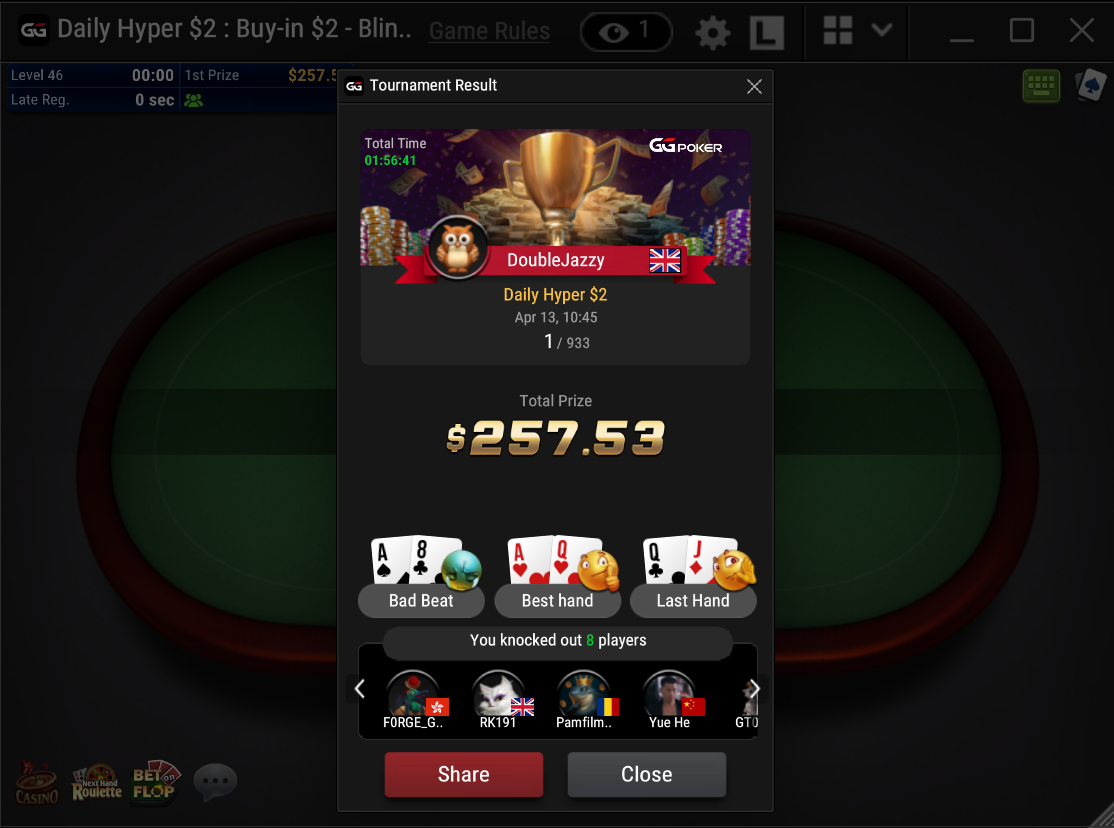
BANG!
What a start to the day, fluctuated between being big and short stack whilst on the final table, and made some great decisions when calling off all ins. Payed off big time, super chuffed, and a much needed boost to both the BR and also my mental.

Another nice win! Got unlucky with my flips on the final table, notably when the SB shoved into me with A4ss and I snapped him off in the BB with 88, and he flopped an A.
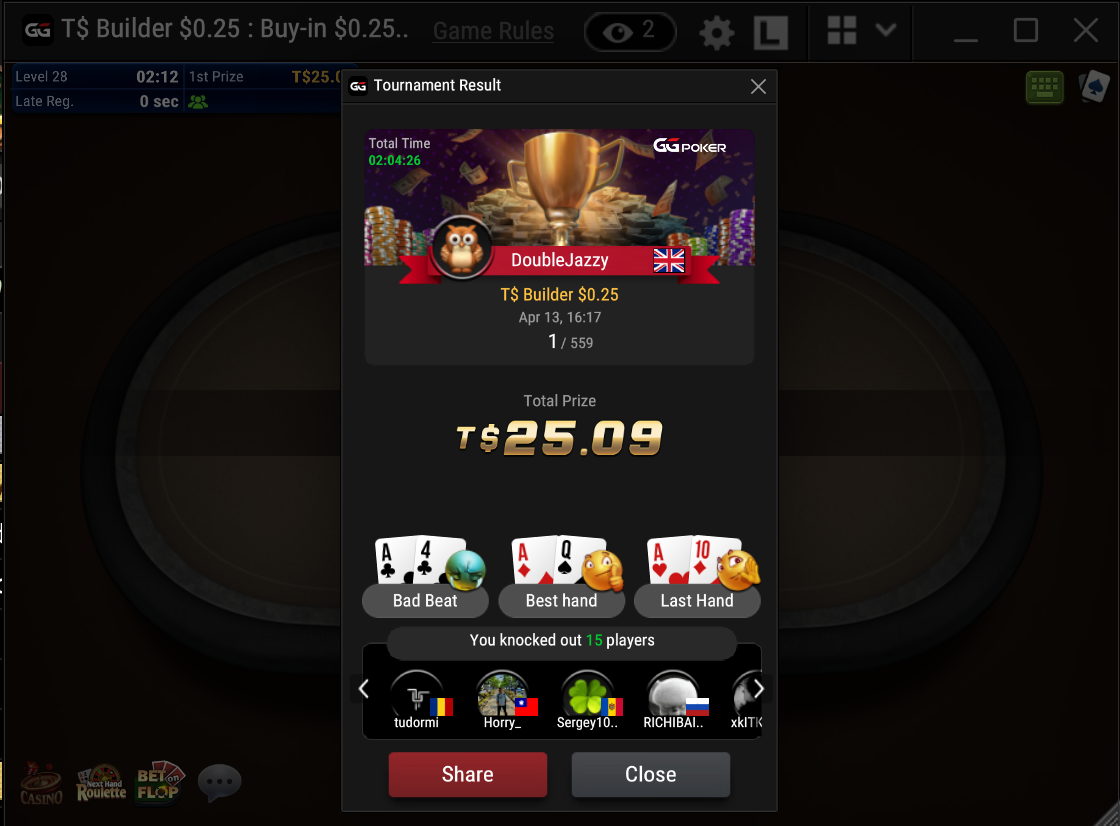
Volume cures variance!
Another 1st place victory bagged today, and although it's a small one, it's one that will progressively add up if I keep on putting in the good work and really help build the BR.
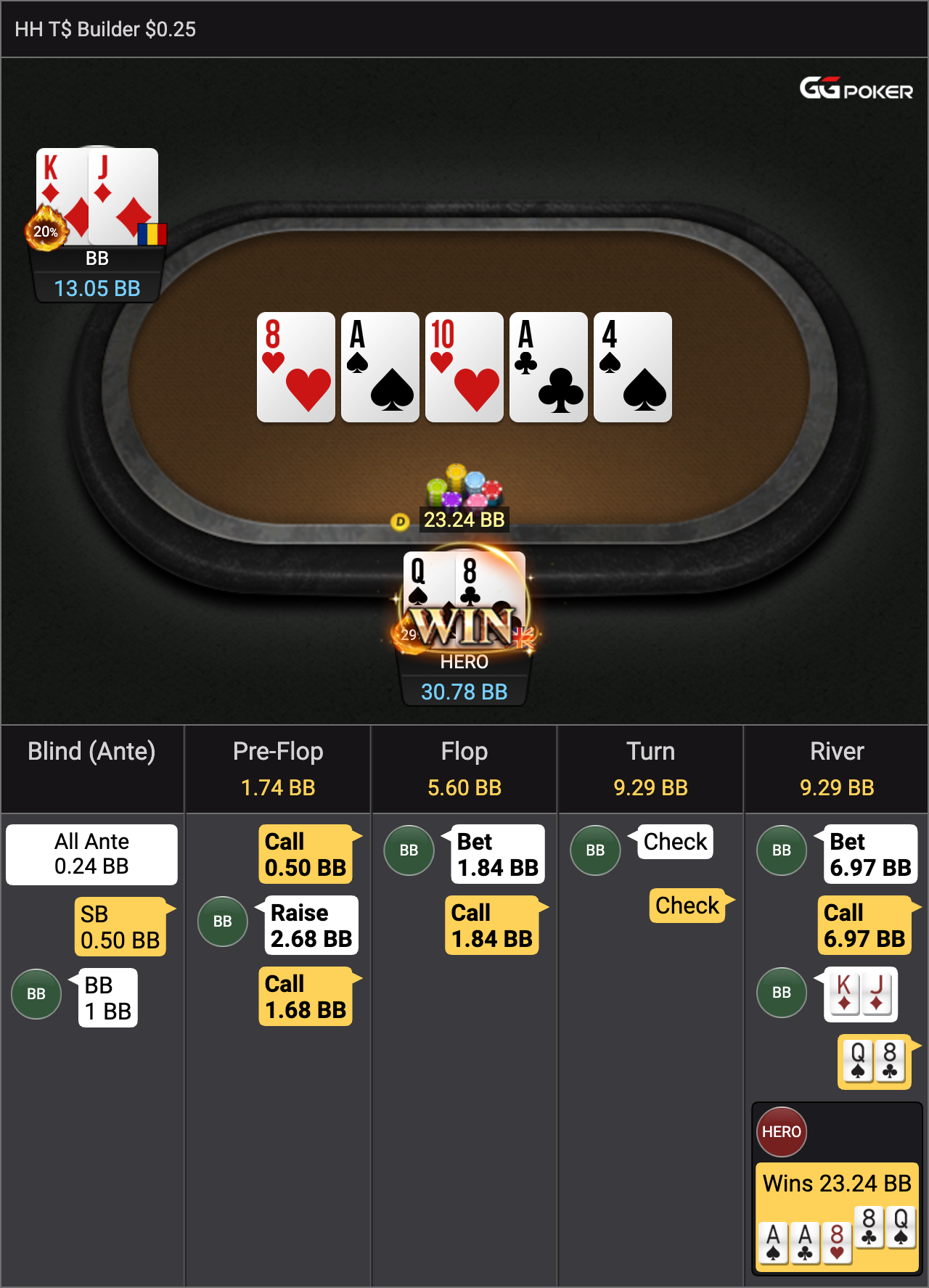
A hand I want to highlight is when I was heads up and made a good call. I find such calls somewhat tricky, but having studied I find such calls a lot easier as I mentally go through what value hands he has (essentially an A or a strong T) and what bluffs he has (a plethora of missed straight and flush draws, plus complete air). I think this hand was crucial in giving me a lead against my opponent, and ultimately to secure the victory:
Time to wrap up today!
BR standing: $507.53
Daily change: +$266.75
An absolutely killer day, more than doubling my bankroll. Multiple final tables and multiple 1st place finishes, very happy!
Finishing a bit early today as I'll be going to an in-person £10 buy in tourney, which has an insanely fast blind structure and is very soft.
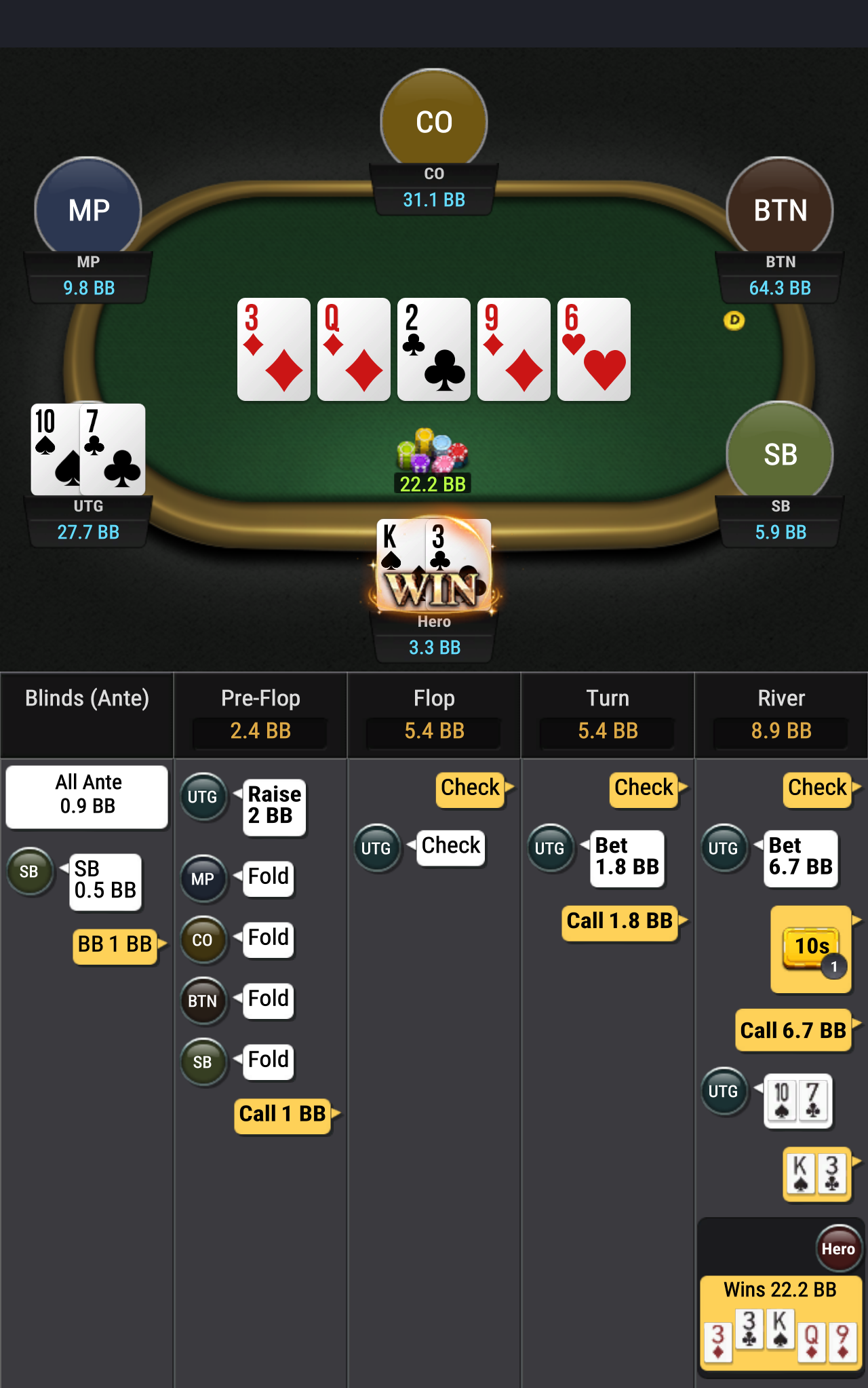
A hand I want to highlight as I'm playing right now.
I'm super proud of this call - the guy had a 45% vpip and so I was already under the impression he was quite loose.
What was my reasoning behind the river call? Immediately, the check back on the flop showed weakness - even a flopped set of QQ would contemplate a tiny bet such as 25% given the 2 diamonds.
When leading out on the turn, he can be leading out with quite a few draws, notably if he was holding a diamond.
Finally, the river bet sizing didn't make much sense to me - what could he have for value here? Potentially a slow played pair of queens, but given that I was holding a K, I was blocking a few of his KQ combos that would've made the most sense to slow play. Additionally, I wasn't holding a diamond myself, so I was unblocking missed flush draws (which is seen to be irrelevant here)
BR standing: $417.13
Daily change: -$90.40
Not much to report from today, played quite a few tourneys, min cashed a few, and was unlucky in the others. Generally pleased with how I played today. Bubbled from an in person £12 tourney which was a shame but we move - I think I need to play even tighter than I already do when ICM implications are at play, but I don't think it needs to be a drastic change. Anyway, until tomorrow!
BR standing: $589.34 (all time high!)
Daily change: +$172.21
Today had a very unexpected ending!
So I was grinding throughout today, couple min cashes, but nothing substantial. I'm leaving for an in person £12 buy-in tourney at 8pm and still had a game going on my laptop with around 80 entrants left. I continue playing the game on my phone during the tourney.
So as awkward as it was, I was playing both a tournament both live and on my phone. Lo and behold, I bag myself a juicy little 2nd place on my phone, just as we move to the final table!

Managed to come 3rd in the in person tourney as well, cashing for £55. Overall, a very successful day!
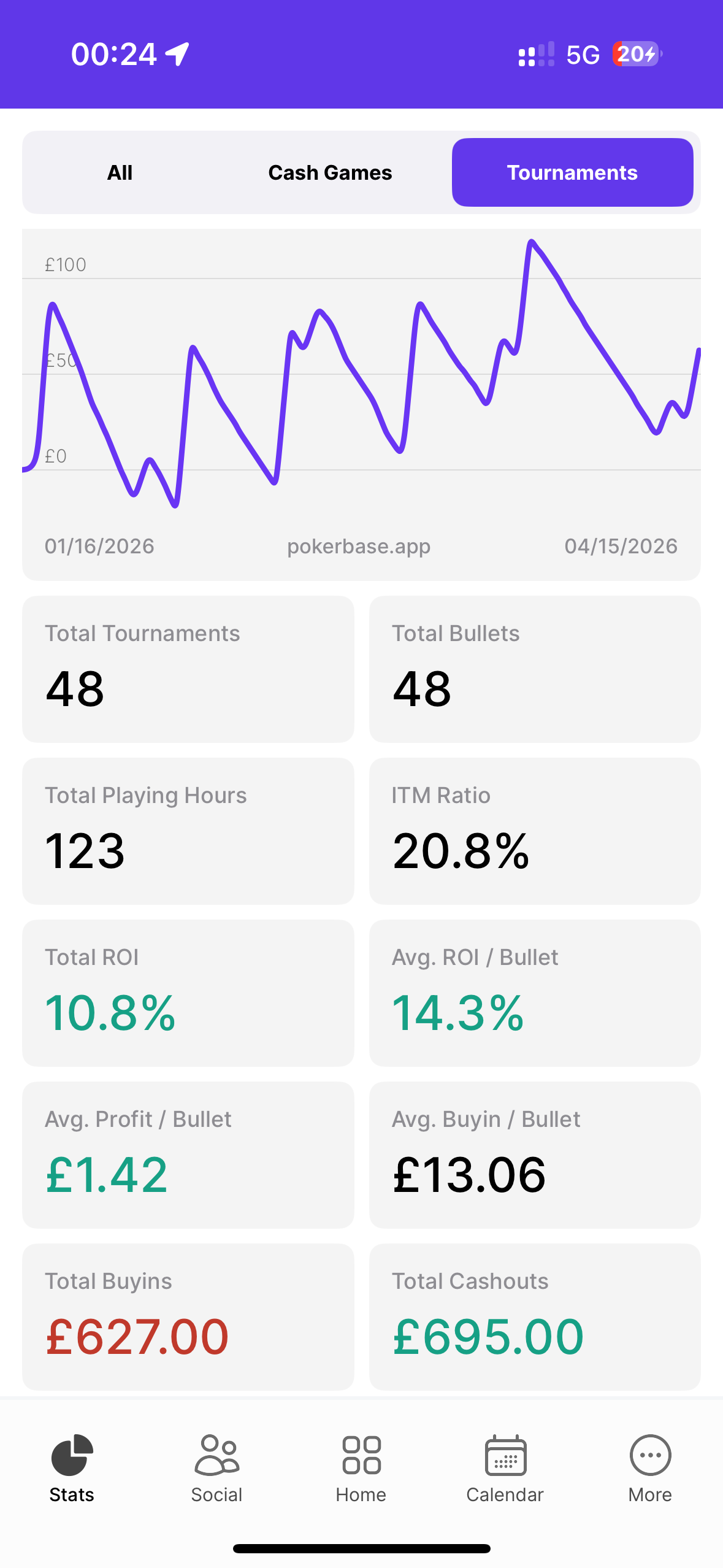
Whilst I'm at it - I've been keeping track of my 'in person' poker playing on Pokerbase, so here's a photo of my current stats. Every so often, I'll put another image of it here to remind myself of how I'm doing. I don't have a dedicated bankroll to these small in person tournaments, but since I'm profitable it's not a big deal 😀 I'm currently up £68.
Closing remarks before bed - just managed to win 2x $10 WSOP Step 3 express tickets through today's daily freebies, will go to sleep now and see if I can satty into the GG Masters tomorrow zzz
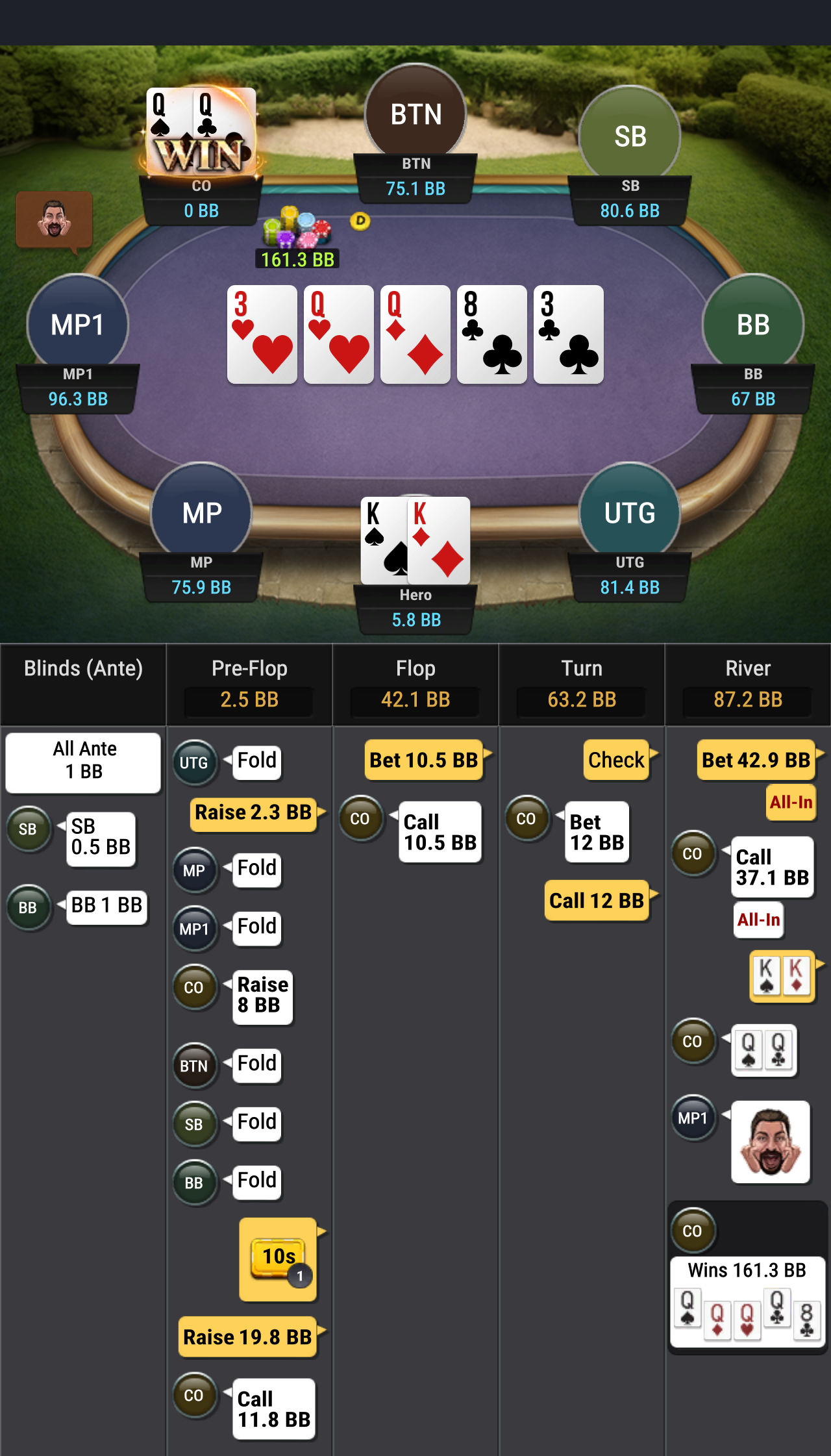
I don't think I'm ever going to be able to qualify for the Weekender again
Edit: looking back I realise this was a stupid play on my end. What am I getting value called by?
BR standing: $540.85
Daily change: -$48.49
Put some decent volume in today, made a few deep runs but no final tables, except for a $0.50 T$ builder which I think I busted 8th. Generally happy with how I played, and was able to minimise how much I lost today.
I'm getting quite frustrated with trying to satellite into the Weekender, and I feel like that frustration is leaking into my play. Yesterday I ordered a book called 'Poker Satellite Strategy' by Dara O'Kearney given it has amazing reviews, and so I'm going to spend quite a bit of time reading over it in order to maximise my satellite strategy.
Satellites seem to be quite a soft field, given that people are not very well versed with the theory behind them. I'm hoping I can use this to my advantage after some thorough studying.
BR standing: $559.86
Daily change: +$18.01
Very low volume day today, wasn't particularly in the mood to play much to be honest.
Managed to come 5th in the Daily Big $2 for $56.86 at the end of today which managed to put me into profit.
My book on satellite strategy arrived today, so tomorrow I'm going to get up early and spend most of the day studying it tomorrow. I'll likely make a post here with main points I pick up from it to help with my studying, and so that I can look back on it for future reference.
Pages to review:
- pg38+ on COC calcs
- pg79 highlighting how a short stack still needs to call tight facing a shove on the bubble
- pg92/93 on advanced COC calcs in mega satellites
- pg139 on unusual satellite formats (should I come across one of them again)
- pg161+ on common satellite spots, good to revisit
- pg195+ on milestone satellites
Poker Satellite Strategy Notes:
- when facing a shove, reduce what you would call with in comparison to an MTT by a factor of 3. E.g. 99+ and ATo+ become QQ+ and AKo.
- target people who are inside the bubble by more places than there are left after the bubble.
- do not target those with massive stacks, as they may call all ins for the fun of it. Instead target those who if they call and all in and lose, it would put them in a bad spot.
- you can start to slow down once you get to avg stack on the bubble.
- target stack = no. of buy ins that make up a package x starting chips
- target stack is the stack you want at the bubble
- at 70% target stack, you should slow down and not take major risks
- distance from inside the bubble > players outside the bubble = usually guaranteed a seat, can fold every hand. STALL IN THIS SCENARIO.
- often need a larger target stack if there are fewer people in the satellite
- stall when locked up
- if 90th in a 120 field with 100 payed, still play tight and fold strong hands, but look to take spots when you can chip up a little bit
- in general, avoid calling all ins
- fold equity is the most imp form of equity
- COC = chance of cashing calc
- COB = chance of bubbling calc
- equity needed to call a shove (3x players, 2x seats) = the old COC / new COC if we won the flip
- 3way, 2seats: if big stack folds, SB shoves, you're supposed to call wide as the BB. Big stack has basically locked up a seat, and so there isn't much of an ICM consideration anymore, it's like playing a chipEV spot for 1 prize
- anytime a small stack shoves, the last to act should be calling wider, whether they are too a short stack or a big stack
- when open shoving in satellites for 20-30bb, we do so with a wider range than we would normally open shove in an MTT, but overall we do it with less hands. E.g. 66 may be a raise call and so may 55, but we might open shove 66 and fold 55 pre.
- can be correct to open shove 20/30/40bb
- general shifts from chipEV to ICM on a final table: low PP are worse to open rip, as are off suit A and suited connecters. You can shove more suited Ax + Kx to balance out. Don't be afraid to jam with hands like K5s.
- big cards + suitedness becomes more important when ICM is at play.
- when on the bubble of a satellite and someone has shoved, assuming all 10bb, you need to have an equity equal to your COC% in order to be able to call. If 9 people remain, and 8 seats are on play, UTG should shove any two. Everyone has a 89% COC, so you should fold AA on the BB (which have an equity of 85%).
- fold equity is immensely important. In a scenario of 9 20bb stacked players for 6 seats, if UTG shoves, everyone can only call with KK+, with the BB also being able to call with AKs. OVERFOLDING IS IMPERATIVE.
- when adjusting for nits, shoving UTG for 10bb with any 2 cards can become profitable
- very imp to not go overboard with this 'nit' concept though. If there is even 1 player who is calling the correct range, or calling wider than they should, then widening our shoving range can become severely unprofitable. Also be careful because people will take notes that you shove 'any two' and potentially be more willing to call / spite call.
- only need to make a play 1/2 an orbit in the end game, don't go overboard. Pick your spots carefully
- if you are the shortest stack, be super aggro. You want to still have fold equity before people are able to call you for the sake of it.
- if we think a villain's calling range has slightly increased, we need to drastically decrease our shoving range in comparison. Cut out a lot of the junky suited connectors and value having an A/Kx more.
- even if just one person is calling too wide, we need to drastically tighten our shoving range
- nits = call 1/2 as much
- maniacs = call 2x as much
- most of the time, any 2 cards are good to shove against a table of nits
- against maniacs, we should tighten our range by about 1/2th
- It's a bigger mistake to NOT widen against nits than to not tighten against maniacs
- The effect of having a maniac at the table is > than the effect of having a nit
- 1x maniac is roughly ~=~ 2x nits
- 1x bigger stack is roughly ~=~ 2x shorter stacks
- Your read on whether a person is a nit or maniac is the most important read. Otherwise, use stack sizes as a read. Treat shorter stack sizes than yours as nits, and larger stack sizes than yours as maniacs.
- even when short stacked (5bb) on the bubble of a satellite, you should not call wide. E.g. if UTG+1 shoves, you should only really call with 99+ as an e.g. Calling with hands like KQo is massively -ev. Even AK is a bad call, you should only call with a strong pocket pair.
- reshoving = 3bet jamming
- our reshoving range should be strong hands that have good equity when called.
- Small/medium PP do POORLY as reshoving hands as they're never in good shape when called
- when near the bubble, big pairs (QQ+) and suited / big A are much more effective
- even though A5ss is crushed by AK / JJ+, it has card removal - i.e a blocker hand
- often better to shove with A5ss than JJ as we get called less often.
- A shove with A5ss should get called 20% less than with JJ as there are 27 combos of AA/KK/QQ/AK in comparison to 34
- from a GTO perspective, you can't really go wrong reshoving with a suited A from any position, even when facing an UTG rfi for 20bb
- generally, the calling range for reshoves will be QQ+ and big Aces
- as a rule of thumb, you should treat a limper as someone who has min raised if you have no reads on them, and shove over them with a similar range of hands
- if I suspect that someone is trapping with a limp, my shoving range should be AA only.
- Against a limper, shoving with an A is usually the play as it blocks their AA combos they could be trapping with
- In a scenario with 1x limper 20bb CO, button 12bb fold, SB 20bb and BB 20bb, SB and BB should be shoving any two because of the strong ICM pressure on CO. Even if they were 'trapping' with AA, they should fold them given the 12bb short stack
- If you think the limper understands ICM pressure, you should shove wider when you cover them. If they call too wide, you should tighten up. If you are short stacked yourself, you should tighten up since the chance of being called by another large stack is greater.
- For simplicity, don't limp in satellites.
- Key takeaway: suited Ax hands perform better at reshoving than mid pocket pairs due to blocking effects. Small PP are terrible because they unblock the calling hands
- Key takeaway: treat limpers as open raises when deciding to reshove or not
- In a 99 seat tournament with 100 people left, and if facing an all in, you would need to be a 99% favourite to call. I.e. it's impossible to call
- We can tighten up a lot earlier in mega satellites.
- Sometimes the best strategy as a micro stack in a mega satellite is to literally blind out and stall as much as possible, as someone on a different table with a slightly larger stack than you might spazz out and punt before you
- In smaller tourney with 1x final table, you can start to slow down at around 70% target stack. In mega satellites, you can stall at around 50-40% of target stack size.
- Rule of thumb for unfamiliar sattys, use 50%.
- Another 'gorilla maths' way of calculating COC in mega satellites - look at stack size of the person on the exact bubble. Assume they are 50/50 to cash. Compare your stack size to theirs. E.g. if I'm 200, 000 and they're 100, 000 then I am 75% to cash. The equity you need to call a shove therefore is this calculated COC.
- If I have 120, 000 and bubble has 100, 000 then I have 20% more chance to cash than them. 50% x 0.2 = 60% COC for me, which is the equity I'd need to call a shove.
- The above method is very approximate.
- Interesting stalling spot, even when hand for hand: I have 1.5bb on the button, person on another table has 2.5bb. Stall as long as possible to get the blind level to increase so that they are all in before me, when otherwise they would've survived the orbit.
- Contrastingly, you should speed up when it'll be your turn to post the blinds in order to avoid the blinds going up and you having to post more.
- when you have a micro stack, the range of hands you can profitably shove widens significantly
- when we have a micro stack, we have very little fold equity (maybe against other short stacks). Therefore, when we shove, we want the big stack to be in the BB. Best because they're more likely to call wide + others would be afraid of calling before them in fear of getting reshoved. You're effectively trying to get called only heads up against the chip leader.
- when short stacked, with like 35, 000 chips and a 10, 000 BB, bet 30, 000 preflop. This means that people can only call, or if they want to raise, have to raise to 60, 000 which further disincentivises people to call against you. Also, if they want to put you all in after the flop, they have to risk 10, 000 chips as the min bet as opposed to 5, 000 when you x. Also gives another opportunity to stall.
- on the stone bubble, if I have a comfortable stack and there is a micro stack at the table, i should limp call with others and 'collude' to try and eliminate them. The more people in the pot, the better.
- in general, if you're uncertain in a situation, it is better to just fold and move out of the way. A bad fold is better than a bad call.
- When you no longer have fold equity, leave a tiny amount of chips behind instead of shoving. This forces other players to commit more money to bust you, which will get a few of them to fold
- When you have a micro stack, it's best to battle with the biggest stack on the table
- 'Late' stage of a satellite begins when a 1/3rd left are going to get a seat
- Default strat in opening stages of super sattys is to play TIGHT and reduce variance
- In early stages, blinds aren't usually worth stealing yet
- Useful to build up a 'tight' image in early stages so we get more folds in late stages. This is most imp in a live satty
- ACS = avg cash stack = 1/x players win a seat * starting stack size
- However, ACS changes depending on if there is an overlay
- You can tighten up once you reach 70% ACS
- Early in a tournament, you can use the following to work out your COC: COC = stack size / ACS (capped at 1, i.e. you can't be more than 100%)
- Anytime that your COC is > 0.5 or 50%, you are risking more than you can win by entering a flip. This highlights the significance of avoiding flips + calling all-ins when our COC is already high
- How to reduce variance in early / mid levels: open tighter, call tighter (even from the BB, get rid of the small pairs + suited connectors, DEFEND THE BB LESS FACING RFI), avoid bluffing in general, take a low variance line pre i.e. FLAT CALLING instead of 3betting, cbet less
- General principle of lowering variance is to put less chips in the pot, don't play like a nit though. Still limp in as SB / call as BB when others have called behind you.
- If you hit the flop w/ a combo draw, play AGGRO. Fold equity is the most imp.
- In middle stages, A5ss is often a better hand to open than 88.
- The flatter the payouts and the more prizes to be won relative to the field, the more damaging it is to get your money in the middle of the table w/o strong equity.
- Late regging is goated.
- Early regging can still be good however, especially against extremely soft fields.
- If a decision is close, take the lower variance option
- You should avoid playing postflop late in satties unless you have some sort of read
- Postflop play is highly dependent on who has the bigger stack. Even if you have a big range advantage, and have raised UTG and faced a BB call, if you're a shorter stack you should check back 100% of flops essentially.
- If you have the range adv, just look to check call the streets if you are covered.
- If you are a big stack, DONK betting is super GTO approved. Even when you don't have the range adv, you should donk bet 60% of the time.
- If you have the range adv, and are BIGGER stacked, you should donk bet 100% of the time. Reason being is that the other person is at risk of elmination, and you are not.
- Small cbets, such as 15%, are optimal in tight bubble situations.
- ICM always trumps range advantage when near on on the bubble of a satty
- It is more practical and effective to not play postflop at all near the bubble.
- When all the players yet to act have a low 3bet percentage, we can raise wider
- Use HUD stats moreso for early stages of the satty, and not so much late stage.
- Don't "buy chips for the table" and play splashy in re-entry sattys as there is no point, you don't want to come 1st, just get into the money
- With centrolls, try to rebuy immediately. If you bust, do not buy back in.
- Whether it is shoving or calling, the more I expect a showdown to happen as a big stack against the only other big stack, the more inclined I should be to fold every hand
- even in strong ICM pressure scenarios (i.e. stone bubble) when we're the short stack facing a shove, we still fold hands like pocket 22 even up until ~4bb because at best we're flipping, we need better scenarios than that. Big Ax + big Kx + big pocket pairs are more valuable
- If a surplus prize is worth roughly ~50% of the actual prize, then include it in ICM considerations. Otherwise, essentially ignore it.
- American version of milestone satellites - chips not redistributed, big incentive to stall if you're big stack
- Pokerstars version of milestone satellites - chips redistributed, you want to be on a table with big stacks because when they get through, you get their excess chips
- Myths about milestone satellites which are NOT true: there is no ICM in them, there is no reason to late reg, there is no reason to stall.
- In milestone satties: if a player is covered, calling a shove is seen from a chipEV point of view. However, lets ay someone's gone all in for 10, 000 when I have 98, 000 and the milestone is 100, 000. I'm effectively risking 10, 000 chips to win 12, 000 chips (2, 000 + 10, 000), and so I'd need an equity of 83.3% to call. Lets say I had 98, 000 and I'm facing a 70, 000 shove (so risking 70, 000 to win 72, 000). I would need 97% equity to call, so even AA is a fold. There is ICM pressure when you are close to the target stack.
- In milestone satellites, the potential upside is capped, which brings about the ICM pressure.
- REALLY IMPORTANT POINT - In milestone satellites, short stacks have no ICM pressure on them as they're playing chipEV, but BIG STACKS have IMMENSE ICM PRESSURE
- COC calcs in milestone satellites is easier: Stack size / cashing stack size. It's essentially just your % of the starting stack. If target is 100, 000 and I have 70, 000, my COC is 70% and I need 70% equity to call an all in. Anything below 50, 000 chips in this example, I face no ICM pressure and essentially play a chipEV strat.
- As the opponent stacks get larger, the more ICM pressure a big stack has on them
- Therefore short stacks should exert a lot of ICM pressure on big stacks
- Big stacks get the most out of stalling in milestone satellites as opposed to short stacks, which is a flip on the traditional satellite strategy
- Tip as a big stack close to the target: change your opening bet size to one where if called and you win, gets your over the threshold
- The first thing to probably evaluate with my play is calls rather than shoves. More likely that I'm making bad calls as opposed to bad shoves.
Finished!
I've just withdrawn $37 from my bankroll and purchased a 3 month subscription to ICMizer's basic plan.
I think this is a pretty reasonable purchase, and will help supplement my learning regarding satellites very well.
Managed to come 2nd tonight at my local £12 buy in tourney for £70 so although I didn't play online at all today, I managed to make some money!
Very happy with how I played, especially on the final table. I feel like I'm understanding ICM implications better now and starting to implement them into my play well.
Have been slacking a bit in recent days, gonna get back to studying my book today and get back into the grind.
Whilst eating I watched this video by Jonathan Little
where he utilises the coach from ICMizer. Very useful to watch and play along with, this is a reminder to myself to watch part 2 of this.
Just finished reading Poker Satellite Strategy!
Really good book with lots of valuable pieces of information! Especially at the end there is a section dedicated to 'Milestone Satellites' which is the majority of what I've been playing up until now.
I'm now going to focus playing satellites, and really try to analyse my play in them afterwards using ICMizer.
Nice update sounds like you’ve gone from “random satty clicking” to actually building a framework for them, which is where the edge is.
The point about bad calls being a bigger leak than bad shoves is especially good. Feels like that’s where a lot of low-stakes satellite punts come from, because people still think in normal MTT terms when the ICM pressure is completely different.
Also like that you’re planning to review spots right after playing instead of just consuming more theory. That study -> play -> review loop is probably where most of the progress comes from.
Curious what your process is going to look like in practice:
- mark every close call-off spot?
- review only bubble / near-bubble hands?
- or also look at reshove spots and spots where you passed on a jam?
Makes sense. One thing that helped me a lot with study actually sticking was mixing review tools with spot drilling, just to force faster recognition in-game instead of only doing post-session analysis.
Gl with the grind.
Nice update sounds like you’ve gone from “random satty clicking” to actually building a framework for them, which is where the edge is.
Thanks @Myriam!
So now that I've gone through the content, I'm playing a lot of the low stakes $0.50-$1 satellites on GGPoker, essentially those for The Weekender and the GGMasters.
After each of these satellites, I'm copying the hands into ICMizer and quizzing myself by doing the following: seeing what I did in the moment, evaluating if what I did was good or not and trying to reason with myself, and then looking at the solver answer. This is my equivalent to 'drilling', as I don't have access to the MTT Coach on ICMizer or other similar software.
I'm also trying to think critically - for example, a solver might recommend me shoving a wide range given my opponents should be calling tight in some spots, however some of my opponents have 50-60% VPIPS, and so I'm evaluating what an ICM approach should be, what my adjusted approach should be, and adjusting ranges within the solver to see both.
Since these satellites are very fast, I'm analysing roughly 3-5 key hands in each of them, and I'll skim over the majority of the final table ones.
I'm playing a few low stakes MTTs on the side as well just to keep going in between the gaps of satties, and my plan will be to review bubble + final table spots in depth in a similar manner.
So essentially at the moment I'm making mental notes of important hands, prioritising review of them, and then going over the rest of the hands around those in order to make sure I'm not missing anything that I might've otherwise neglected.
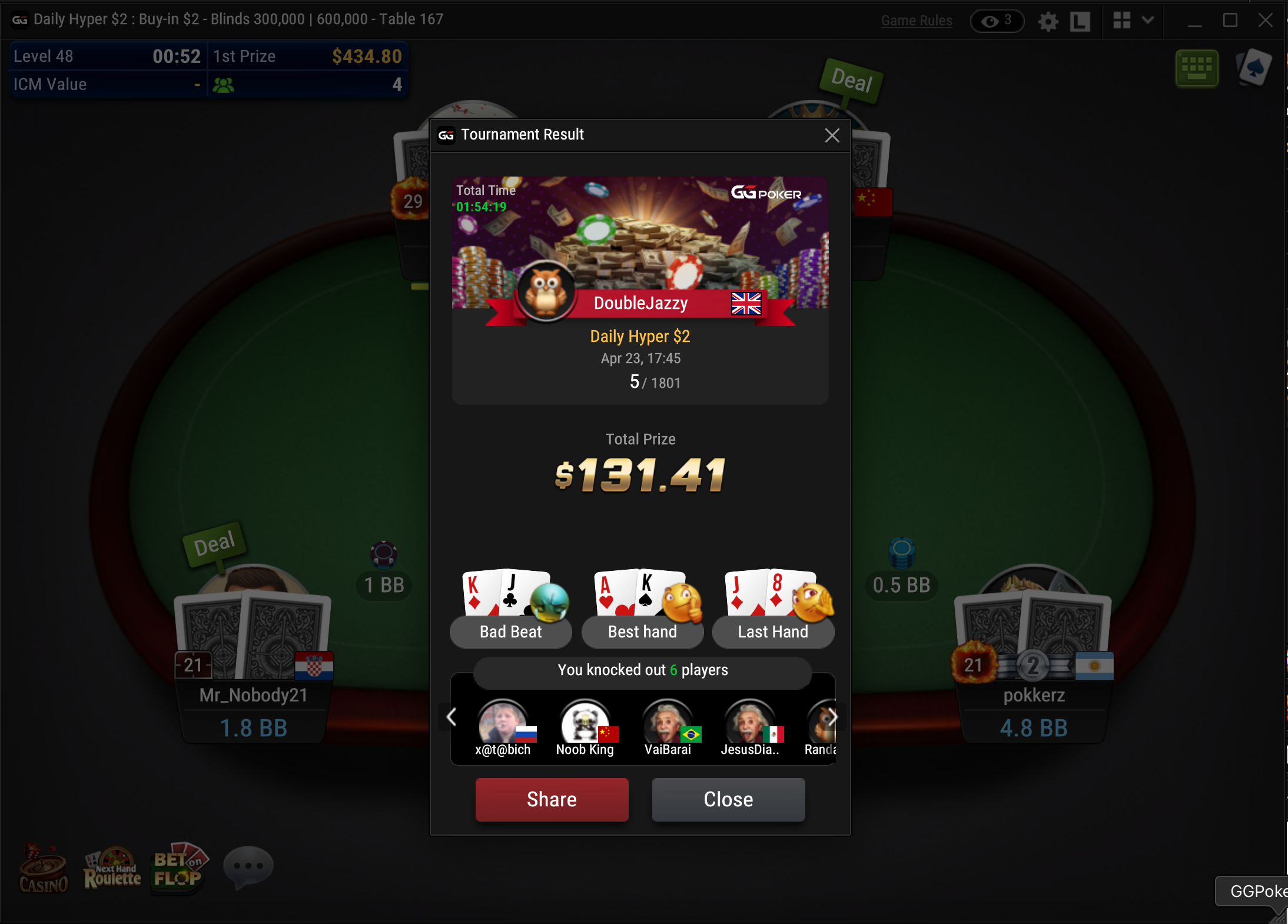
Great victory! Really tried to implement my new found knowledge on ICM and apply pressure to everyone on the final table.
Since we were all so short stacked on the FT, this led to a lot of interesting ICM positions so I'm gonna spend a while studying this FT and see what decisions I made and whether they were correct.
After doing some analysis using ICMizer, I'm generally quite pleased with how I played.
One thing I need to now do is not be too enthusiastic with my shoves. Here is an example of a mistake I made:
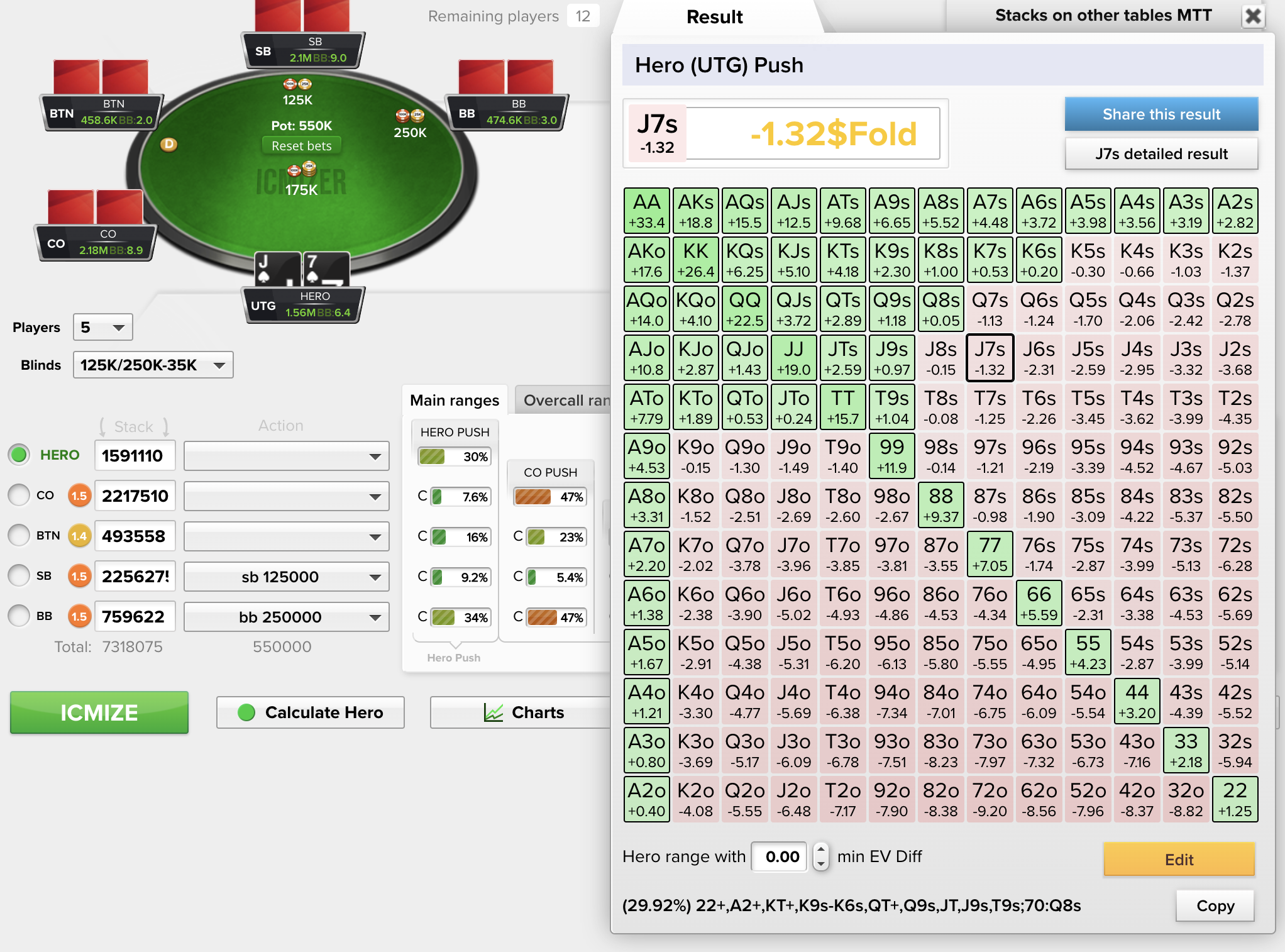
Looking back, I realise this is a mistake because frankly I don't have much fold equity in this scenario. Both the button and BB are severely short stack and with 12 people left, they're going to want to try and get their chips in and double up with a good enough hand. J7s does not fare well enough in order to justify shoving into these individuals, given that it is likely I will get called.
On the whole, I didn't make any massive mistakes which is reassuring to see - it's now about refining my strategy. I already felt like people were overfolding to my shoves and I could exploit that, but anyway.
BR standing: $582.69
Daily change: +$59.83
A good day! Feels refreshing to be back playing some MTTs after having a pause and studying up a bit. I'm going to keep on with the same strategy for the next few days - anytime I make a final table / an interesting ICM position, I'm going to analyse and review it.
Hence, I imagine the number of tournaments I play will be a bit lower, but I think it'll be worth it, given how I already feel a lot more confident in ICM scenarios.
BR standing: $759.72
Daily change: +$177.03
What a day! A new bankroll all-time high.

Didn't manage to get much volume in today as I had other commitments during the morning / afternoon, but still managed to pull through a great victory! I'm going to spend a while tomorrow analysing the game because there were lots of interesting final table spots ICM wise.
Additionally, I managed to come 1st in a £12 buy in in-person tourney today for £125! Super happy with how I played, especially on the final table / near the bubble since I was the chip leader, and found some really aggressive shoves due to the strong ICM pressure on the others. One hand I was really pleased with was when I shoved 54hh UTG as if I hadn't been doing my ICM studying as of late, I would've never have found such a move. I double checked after the game in ICMizer and this was a +EV move 😀
I'm not going to play much tomorrow but as I said, I'm going to at least try to go over the Daily Big $3 FT spots and see what mistakes I made / what I did well.
One particular hand from the above FT that I was really proud of:
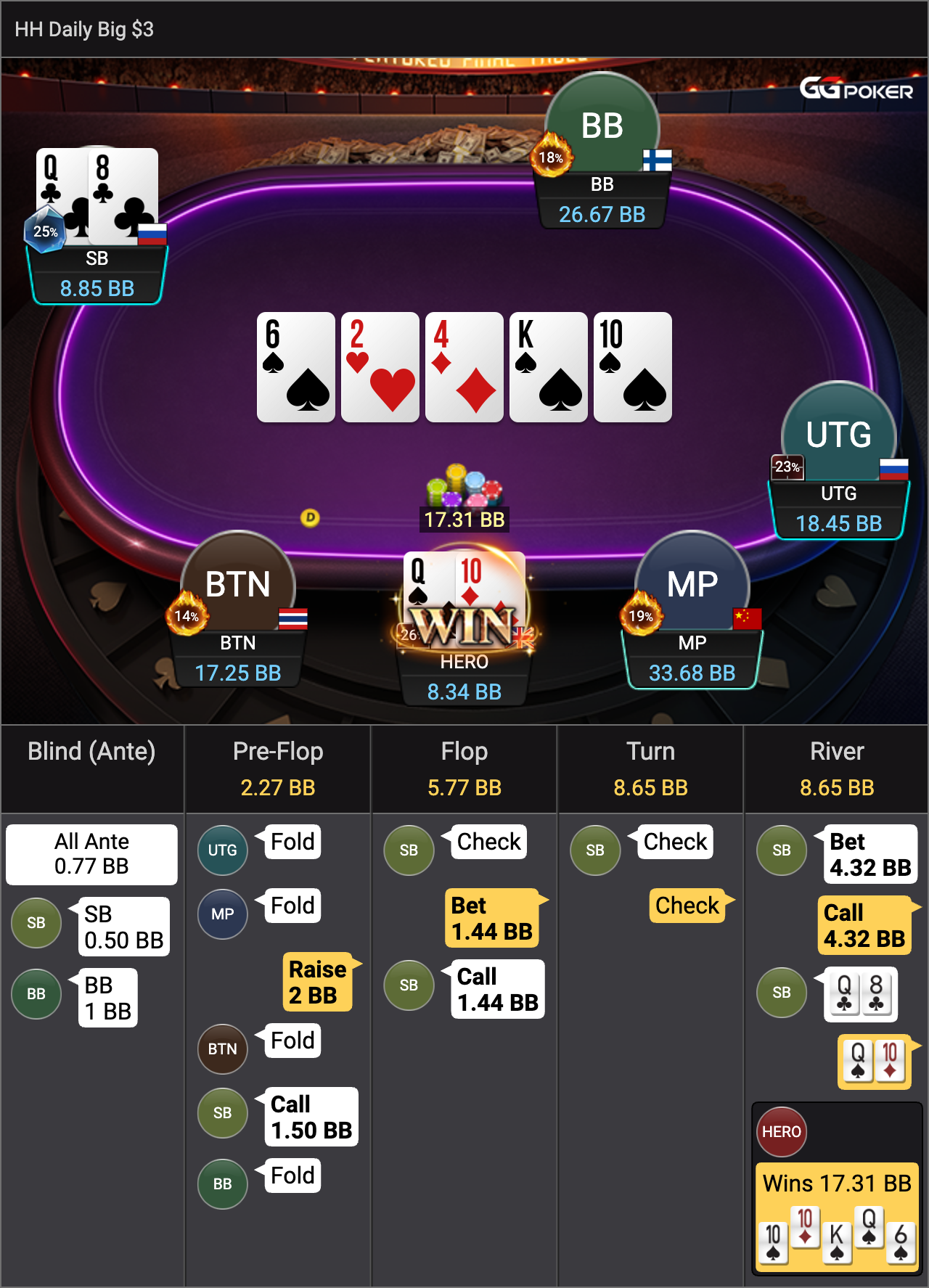
Ordinarily, I'd be on the side of folding this hand, however after witnessing a prior hand to my opponent I had made the following note on him: "mildly LAG? ability to spazz out OOP on river all in".
This swayed me towards calling, and turned out to be a good decision.

