Bodybuilding Classic Physique Division Offseason log
You know you who it is already. Can't recall my old password or even what email I used so here we are. I promised I'd st
Yugo,
This may also be surprising! But I didn't really hit it off with the lady folk until I realized what I wanted and who I wanted to be (and by extension became that person). I spent so much time in this weird SE nepo baby culture with tons of hot sorostitutes that is kind of deluded me. Granted if I had wanted to go into law or medicine I'd prob have my 2.3 kids and a super hot wife and probably be pretty happy. I have a bunch of friends that are like that (some have JDs, some are nepo babies). But I instead decided to be a weird rebel and move to Yurop and pursue online gambling an semi-retire in my 30s. So it goes. Instead of kids of kids I have a mostly stupid dog who is exceedingly bright when it suits him. Then I get coached by frens to have a kid. But I have more important goals. There is a field that needs a loving touch along with way too much house I want to build and then maintain. We make our lives for us. And I hope I do the best with the hand that I'm dealt. And one day my mostly loser BiL stops being a loser and his kids will benefit from the things I have crafted. And if he is sterile or his future bride is barren... woe be unto any stray dog... cause we gonna snatch you up and put you in a loving home. Or just pay for your care until you die a happy old person death which will likely be soon upon you.
One thing that has solidified in me as I've gotten older is leash laws and pet handling. I had to pull a lab out from under a table the other day. He was a nice boi and really scared when I dragged him out from the under the table. But I was about a single snap away from giving him a solid throat stomp. If he had been anything other than insanely submissive, I might've just crushed his windpipe and called it a day. My dog does not have to suffer your "friendly" boi. I know one large mixed breed pit that killed a GS off leash who kept pawing me when I was with its owner asking about some dumb **** (I think we were talking about his amateur brick work). I was petting her and stopped. And she started pawing me to keep petting her. Terrifying but it is what it is.
Emoken,
Good share. I agree with Yugo.
Toby Keith is super MGTOW:


guy -
everyone i knew in a serious relationship with someone from sea always ended in extreme drama
as much as the woman loved the man (which i'm sure was often the case), she was never able to sort out the difference between having a partner and having a partner who can also make the world move for her extended family
all of them get shaken down regularly to help out cousins and aunties and nephews and parents - now for some it's not an issue because they view them as their extended family - but i think it's hard to have a healthy relationship with your spouse if her entire family sees you as the solution to all their financial problems and she's onboard with facilitating that
and those who never moved quickly to marry were usually facing regular fake pregnancies in order to get them to move the needle to a proposal and even know some who found the woman lied about being on birth control or tried sabotaging the condoms or even retrieving the used condom from the trash and inserting after the guy goes to the bathroom to take a leak
i'm forever on team rawdog - can't possibly imagine being in a relationship with someone and using condoms
even was in a lengthy one where she wanted off birth control and didn't want an iud or anything so i just successfully did the pull out for years (don't understand how people have accidents, i mean you always know a few seconds before everything that the train is leaving the station)
so yeah, i'm onboard with no thais - much better for your mental health, and man, chinese are just so much better looking as well
i know you're going to grunch this n1 style, but i think you're being very foolish not exploring beijing or shanghai schools - there's no harm in visiting - at the very least it'll be a good travel opportunity and i don't care how many times you've been, there's assuredly really dope stuff there you haven't done
which btw, when you go to beijing next, bring some camping gear, go to any wall section not named badaling and hike up there in the late afternoon, find a dope tower and camp out - it's amazing, i did it a bunch of times and loved it
yugo - dunyain is an elite poster
thremp - isn't being married in fact a direct revolt against the mgtow philosophy?
strong disagree on your university stuff - i went to the "almost ivy" tier of schools and while i don't think there was a noticeable gap between my school and the tier below in terms of education - it was in terms of student body - i'd be classmates with waltons and vanderbilts and now when i go visit my friends from college they are all living in palatial estates - not so much from the education they received at college but more so their family wealth and the connections it gave them - they are obviously talented people, but when your aunt is on the board at amazon it shouldn't surprise you when you show yourself to be an intelligent and driven individual that you are the one who rises to the top to manage a team of 250 engineers etc etc
visiting friends at the tier below mine was world's apart where giving you a ride somewhere or offering you some of their pizza came with expectations to then chip in - something unheard of in my circles
and without a doubt i applied to many jobs where the recruiter had never heard of my school, but they obviously would have heard of harvard
as far as "learn what they want" i remember in a film studies class that i enjoyed but never did well at, i was asked to analyze a scene as part of the take home final - i opted to choose a scene that he'd taught in a class i took with him the year prior and basically regurgitated everything he told us last time - i was expecting him to hate me for it, but it was the only A i ever got from that prof - i still don't know if he put 2 & 2 together or not or thinks i was just magically on the same page but it felt very sickening to do that
guy - everyone i knew in a serious relationship with someone from sea always ended in extreme dramaas much as the woman loved the man (which i'm sure was often the case), she was never able to sort out the difference between having a partner and having a partner who can also make the world move for her extended familyall of them get shaken down regularly to help out cousins and
Yeah that was my experience over the course of 9 months or whatever. For her it was a jobless 36 year old loser brother needing to be bailed out of jail for failing a drug test and her mom's trips to some remote temple 7 hour drive away. I didn't mind paying some of her son's expenses because we frequently interacted face to face and he was a sweet kid and liked me a lot. She really kinda ****ed him over by ending things with me, but I ended up far better off without her. Saved from a lifetime of indentured servitude to a SEA woman's economically unproductive extended family. I'd date Thais already living in China, especially if parts of their family were there or they were super rich or something idk. But I'm guessing this profile basically means Thailand born Chinese anyway.
Just finished a posing session with one of the judges for the federation I compete in. Hong Kong born white British guy raised in Hong Kong now living in Thailand since pandemic. 5 kids by 2 moms. 46 years old, retired from competing, still trains regularly and looks good on trt. Perpetually surrounded by Thai bikini/wellness girl athlete training partners/friends in the gym. Frankly, alpha AF (he's no deadbeat, supports his kids). Didn't charge me a cent.
Anyway, he was extremely helpful unlike that other loser who just berated me all day long and said I have no hope of getting first callouts in a regional show unless I hire a coach and completely change the way I do everything in bbing (??? I've gotten first callouts every show I've done you ****ing moron). He's still married, no kids, and deposits every cent of his income into a bank account controlled by his wife from which she allocates him an allowance. This is a common practice in China, by the way. Probably around 30-40% of couples have this arrangement depending on the region. 0 interest or hobbies outside of bodybuilding. Not very alpha in my subjective worldview. $150 usd to get yelled at for an hour and have some of my posing corrected, but 80% of the advice was unhelpful.
Anyway, main takeaways:
1. "Sit down" and have more knee bend in side chest and side tricep poses to make lower body appear larger.
2. "Chest up" in side relaxed poses
3. Don't 'shrup up" in front and rear relaxed poses, internally rotate the shoulders to spread the lats wider
4. chest up a bit more in side chest pose
5. Make sure front hand doesn't block midsection in side relaxed poses.
Regarding Beijing/Shanghai. I'd like Shanghai and it has by far the best dating market nationwide (maybe even in all of Asia, literally better than BKK on the apps at least), but salaries are dogshit b/c everyone wants to live there. Basically same salary or even lower than Suzhou but much higher COL. Beijing I can't live in because of the pollution. I get physically sick from pollution, it's just a non-starter. I'm in BKK now and sick from pollution; I always do get sick from it unless I come during october holiday when it's rainy season, then no issues. Next Thailand trip I will need to probably pick a different spot because I'm perpetually breathing heavy, congested, coughing, and full body inflammation. I can't imagine Beijing is any better than BKK, but I suppose I should visit during the most polluted time of the year to find out first hand at least.
There's a lot of posting in my log and I already found a job at a HK school in Shenzhen. That means HK only students and some half mainland half HK, no pure mainlanders and afaik no/few foreign students (Thank ****ing god, I will never teach a western female tiktok brained student ever again if possible), but the school is physically in Shenzhen and people either commute or are HK citizens who live in Shenzhen.
I find these discussions very interesting even though I do not understand much of the lingo/abbreviations or intentional misspellings nor the point of views. My kids are in their mid 20's so I am trying to understand.
I busted through Thus Spake Zarathustra in record speed. Enjoyed it thoroughly. I tried reading Notes from the Underground on some shitty youtube "hc" video creator's recommendation and couldn't stomach it, boring AF. Zarathustra was great, if at times inscrutable. It made me less emo, not more. Something without purpose or meaning that will never materialize into anything comp
If you wrote that, quit bodybuilding and keep writing. You have talent. The style reminds me of David Baldacci.
Keep reading. Does not have to be Notes from the Underground.... Some/many books are hard to read. (and in different ways)
Hi IQ required (Superintelligence), genuinely bad book (The Fourth Turning), uninteresting topic (never bought one), topic we are uncomfortable with ie. torture. (The Gulag Archipelago) Solzhenitsyn
I read a physical book every 2 weeks; rotating information/bio/fiction. I typically cross reference top 100 lists with recommendations
from individuals that I follow. Ie. Warren Buffets reading list for investors.... 'The intelligent Investor' by his mentor Ben Graham.
Matriculate.... The last time I heard use that word used was a recording of Napoleon Hill. I have never heard it used in a conversation.
deposits every cent of his income into a bank account controlled by his wife from which she allocates him an allowance.
This is a common practice, more typical a traditional family with kids. The man earns resources, the woman runs the home and allocates scarce resources making sure that the kids have enough.
Gets all messed up when you have mixed and broken families. ie. Why do I want to spend my resources on someone else's kid.
How can we reverse the wage stagnation, divergence between productivity growth and compensation growth, and wealth/income gaps? I don't know, but it's probably not going to be a ******ed marxist revolution because we've tried that a couple hundred times and it ends up being a disaster every single time. It's a mystery to me that some seemingly very intelligent people think thi
Those guys are busy trying to get to Mars, building apocalypse bunkers, and buying New Zealand citizenship. Doesn't seem like they really have any great ideas either.

This is a common practice, more typical a traditional family with kids. The man earns resources, the woman runs the home and allocates scarce resources making sure that the kids have enough.
Gets all messed up when you have mixed and broken families. ie. Why do I want to spend my resources on someone else's kid.
works really well IME until your wife becomes a thieving, lying cheating **** of a drug and alcohol addict and spends a **** ton of the money
I find these discussions very interesting even though I do not understand much of the lingo/abbreviations or intentional misspellings nor the point of views. My kids are in their mid 20's so I am trying to understand.If you wrote that, quit bodybuilding and keep writing. You have talent. The style reminds me of David Baldacci.Keep reading. Does not have to be Notes from the
Thanks man, honestly I kinda ripped it out in around 2 hours, proofreading and cleanup by hand for 20 minutes, got bored, proofread and cleanup in chat gpt. The story as a whole and figuring out what the over-arching plot was going to be and planning what the actual setup, conflict, and resolution would be was a more time consuming task I sort of iterated upon over the course of the last 1.5 years, despite the story outline being no more than 2 pages. 4 of around 25 chapters complete. I will slowly try to complete it at the very least, but no I am definitely not quitting bbing. This is just for fun and for "brain training" I guess. I used to teach grades 11 and 12 economics and it required actual cognitive effort and that was rewarding and I legitimately feel like your brain can get "out of shape" like your body if nothing you do throughout the day is cognitively challenging. Unfortunately grade 9 and 10 material is not similarly cognitively challenging and I have fewer opportunities to use my second language, so I felt like maybe writing could be something engaging and stimulating. Undoubtably, this lack of an outlet has caused me to frantically accelerate the quantity and breadth of posting on 2p2 and once I get back to a more interesting job this log will become more like it was last year. I'm not at all dissatisfied with what it's become and it's lead to some interesting and thought provoking discussions across a wide range of non-bodybuilding topics I'm interested in and I've enjoyed reading posters' thoughts on these topics, but it's only really doable with a bullshit job.
Recent reads over the past 2.5 years: Troubled by Rob Henderson, literally the first autobiography I've read since middle school. It was enjoyable, makes me feel less emo. The Bitcoin Standard which was 66% good 33% tradcon cringe. His parts about fiat currency and "modern music, such as Nirvana" were some of the worst more cringe takes I've ever read. Jeff Booth's book, The Price of Tomorrow which was a much better bitcoin focused book, although bitcoin is discussed even less than in the BTC standard. Notes from The Underground I quit just 15% in.
Lately I want to read more philosophy and less non-fiction/bio. 0 interest in just normal modern fiction novels for some reason. Though I guess with books like Thus Spake Zarathustra or Notes from The Underground, the line between philosophy and literary fiction starts to blur which is exactly why it's interesting.
Goethe probably next on the list as Faust is somehow a mainstay piece of work that informs a lot of modern black metal. Is that cringe? idk probably
works really well IME until your wife becomes a thieving, lying cheating **** of a drug and alcohol addict and spends a **** ton of the money
oof... yeah I guess you have the first hand experience with this. That's rough, my brother. This is why i'm not cucking out on this one ever. Wife giving me an allowance from my own salary... LOL no. Take my debit card and pull as needed while exercising basic responsibility, sure, but I ain't asking you for money I earned, baby.
oof... yeah I guess you have the first hand experience with this. That's rough, my brother. This is why i'm not cucking out on this one ever. Wife giving me an allowance from my own salary... LOL no. Take my debit card and pull as needed while exercising basic responsibility, sure, but I ain't asking you for money I earned, baby.
Yeah, the allowance part didn’t happen for me and I’ve never heard of that amongst my friend group tbh. Plenty of fault for me tbh in not supervising, (particularly after the alcohol addiction became a thing) but ultimately I originally stepped back from almost all financial management because I was working really ****ing hard and she was a housewife and I didn’t want to pay bills and do admin. And then I trusted her because she’d been trustworthy for 15 years.
Still…lesson learned and I talk about it openly with everyone because I don’t want anyone else to suffer the same thing. (And tbh that’s both genders - I have friends where the guy spent everything inc remortgaging the house on an online gambling addiction).

Weird comversations man, definitely not the things i ever think about.
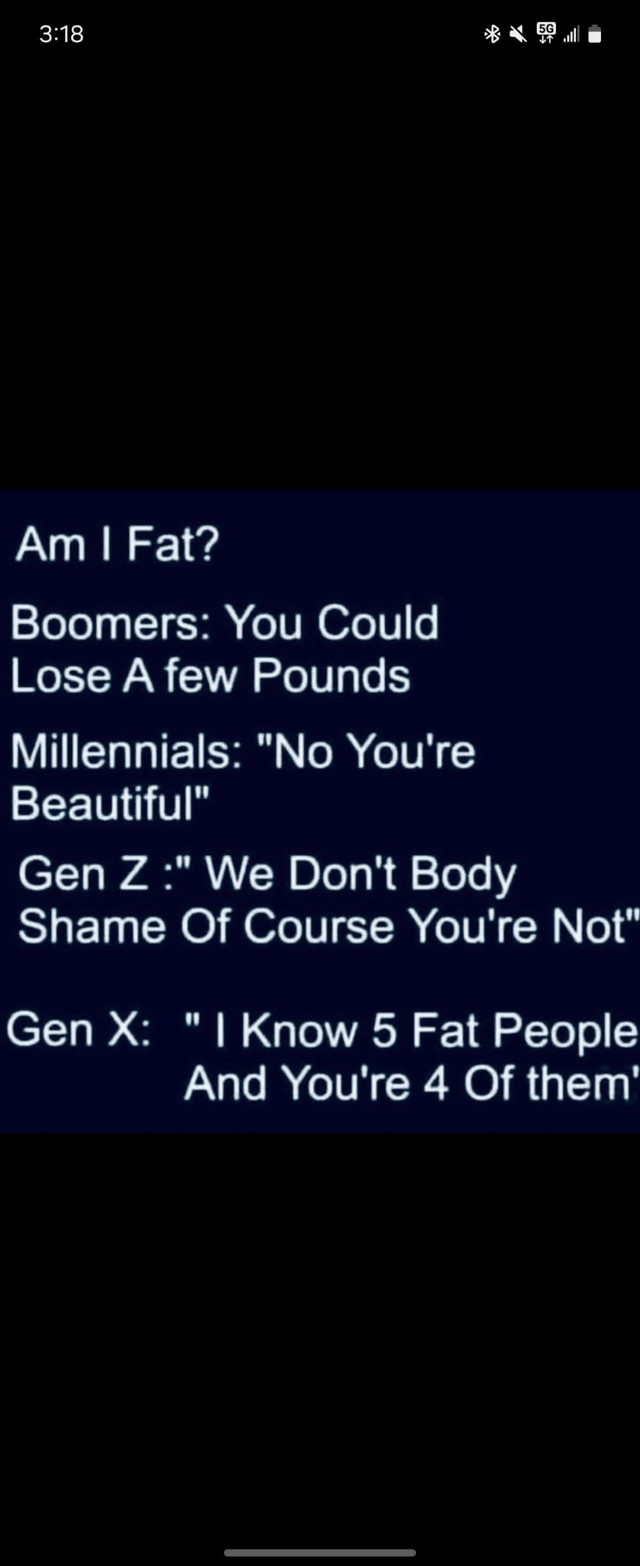
There we go, that nailed me.

English response to a fatty: Who ate all the pies? You fat bastard.
On the reading front, does anyone log their reading on Goodreads? I just started this year ; I average one book per week (mainly nonsense fiction).
The stand our so far has been Lectures in the Philosophy of Mathematics by Hamkins. It's absolutely cracking.

I've literally never ever thought about this. For some reason my mom and my mother-in-law both have some money that is "their money" but by and large both men run/ran the finances.
All of our stuff is just together and I know more of what's going on with it but we're both involved.
Although, I'm not sure what I need discretionary income for. Gacha summons I guess. Although someone bought me a 300 euro account so I'm moving up in the world anyway lol.

I've literally never ever thought about this. For some reason my mom and my mother-in-law both have some money that is "their money" but by and large both men run/ran the finances.All of our stuff is just together and I know more of what's going on with it but we're both involved.Although, I'm not sure what I need discretionary income for. Gacha summons I guess. Although someon
this arrangement is very common in traditional cultures with limited resources, when I was growing up in the USSR it was nearly universal
there was literally a term "заначка" - a place where the guys kept their "**** around" money hidden from their wives
not super useful in the first world countries where a single earner can easily cover all of the expenses and nearly all of the recurring ones can be automated anyways
Two workouts, both not great. Like I said pollution has made me sick. Remember in both December and January when I came I thought i had infections, but no this is just pollution related.
Upper
machine converging press: 1.5ppsx15, 12, 10
ng chins: 15, 10, 12
flat db press: 30kgx18, 15
Pulldowns: 3 sets
fin
no chest supported rows, mysterious pain in upper glute/lower back
Lower
Arm delt triset 3 rounds, ez curls, prone db raises, incline db skullcrushers
leg extenions: 3 sets
lying ham curls: 3 sets
RFESS: 10kgx12x2
hyperxtensions: bwx15, 10, 12
Not great workouts, but I'm just generally not feeling well physically.
Fun vacation but it's time to go home tomorrow. Sunday it's time to drop the hammer. Not going to add clen but get a bit more strict/srs with the diet and increase retatrutide dose.
Next Thailand trip I may have to go to Pattaya Pratanmak near muscle factory. I don't have the social circle I have here and I generally liked the average Pattaya person a lot less than their bkk counterpart, be they foreign or Thai, but this pollution sickness has been consistent and intense. It seems fine if I come in the rainy season in October, but I think other trips I need to be resigned to another destination or find some suitable prophylactic treatment.
Rick,
You raise some very salient points. And you are 100% correct. If you are looking at going to a near to awesome school for slightly less (save mebbe 50k) vs going to an elite school (Princeton) then obv pay up for the access. This is also based on your ability to leverage this.
I tried to help normalize an autistic dude who got popped for a felony a few years later (He threatened to stab me as well), but mebbe I'm a very shitty teacher. So goes life.
Guy,
Advice sounds p much fine? I'm def not an expert on this but advice that summarizes as "Don't block your muscles ur trying to show off" seems v good. But again wtf do I know. You're a dude in a dong thong doing TOTALLY NOT GAY STUFF. (Continuing the trope from before.) So let us see the tasty bits we pay to see, whether that is blocking a single serratus striation with an off hand or your massive BBC with a silly dong thong. Give the people what they want.
loco,
That meme hits. I think Monte and you are a smidge older than I am, but we are all in our 40s now. It be what it be as they say.
Yugo,
This really pains me. Its cool if your wife is a personal finance savant. But as a dyed in the wool autist who also professionally does tax/finance work it always makes me sad when someone doesn't know the bare bones basics. I literally had to tell a bro who prob has 5-8m that he can open an interactive brokers acct. This brings me some joy since I helped someone who was super dumb, but why is he super dumb? Why aren't we more frank with one another. The amount of money we have is just a number, but that number is critical to get solid financial advice. I also had conjoined finances with another grown man for over a decade so I'm probably the least qualified person to speak on this subject.
I also don't have actually conjoined finances with my wife. But I guess I run her holdco. Who knows. Do the thing that works for you.
But honestly if you''re masquerading as a grown man and you don't know how money works. gtfo. Go back on the playground and read your ****.
On the subject of finances:
Beat (Brag?): We basically live month to month, so we dont really have to worry about how to allocate finances, because there aren't any.
Silver Lining: A lot of it goes into paying the mortgage on our house, so theoretically the equity on our house is our "savings." And in 20-30 years this is not going to be a small number unless there is some serious zoning reform; which no one in the county I live in would ever vote for (Orange County, CA).
Beat: My wife never wants to sell, which means we functionally have no savings.
Brag: You own a house in Orange County? That's gotta be it, right?
Thremp - What part pains you? That I don't buy anything?
On the subject of finances:Beat (Brag?): We basically live month to month, so we dont really have to worry about how to allocate finances, because there aren't any.Silver Lining: A lot of it goes into paying the mortgage on our house, so theoretically the equity on our house is our "savings." And in 20-30 years this is not going to be a small number unless there is some serio
Men with stem phds in their 40s living month to month. Jfl America. Jfl fiat.
From Rob Henderson substack. I enjoyed it a lot. I don't have much commentary to add. This is among the things I wish I would have known as a young man... how much more vital status is than technical skill for life in general... fortunately it's useless for me to cathartically communicate this to my students for the very good reason of the fact that this is already completely known to them.
Experts and elites play fundamentally different games. Misunderstanding this distinction warps how we judge institutions—and who we choose to trust.
A few days ago, The Free Press published my Letter to the Editor discussing the difference between experts and elites—an insightful distinction I first encountered on Robin Hanson’s Substack.
Here I elaborate on this framework. I’ll be speaking with a certain amount of looseness and generalization. Any time you speak about social patterns there will be exceptions. Boundaries can be fuzzy. Still, this is a useful framework.
Defining Experts and Elites
In most societies, people fall into one of three roles: the masses, the experts, and the elites.
Experts are people who know things. They’re judged by other experts—people who speak the same language, use the same methods, and know the same details. You can spot experts by their credentials, their technical precision, or just the way they argue. They care about being right. They’re evaluated on whether their work holds up—whether it can be tested, measured, replicated, or defended under scrutiny. They debate each other, go deep into the weeds, and let the details decide who’s correct.
Elites are different. They’re not judged on technical knowledge but on being impressive across a broader range: wealth, looks, taste, social fluency, connections, charisma, and cultural feel. Elite institutions tend to screen for such qualities, which is why educational pedigree is also often important. This is why you can major in anything at Harvard and still get an elite job. No need for narrow expertise in, say, engineering or mathematics.
It’s common to see someone from an elite college with a degree in English or political science go on to work at a top consulting firm even though their degree had nothing to do with their job. Many elite organizations don’t filter for narrow technical expertise but rather roundedness and the qualities that make for an elite rather than an expert.
They talk to other elites—not necessarily in the same field, but from the same orbit. Their speech is less about precision and more about mood, values, and gestures. Social grooming and chimp politics. Instead of drilling down, they smooth over. Instead of proving their point, they bring people along to crystallize a consensus. They win arguments through allegiance rather than getting closer to the actual objective truth.
Recall season 6 of the television series Mad Men. Dr. Arnold Rosen, a relatively plain man, tells the tall and handsome protagonist, Don Draper, “If I looked like you and talked like that, I wouldn’t have had to go to medical school.” Don, who didn’t graduate from college, responds with a restrained smile.
The Expert–Elite Spectrum
You can think of experts and elites as ends of a spectrum.
At one end: the pure expert—say, a mathematician—does proofs all day and needs zero social skills. At the other: the pure elite—a politician, a CEO—who might not have much technical knowledge, but knows how to talk, how to read a room, how to get people on board.
Elites like to say they’re just following the experts. “We believe the science,” they’ll insist. But elites can overrule expert opinion—especially on issues charged with moral or emotional weight. They pretend their views came from neutral experts, when they often don’t.
A lot of elites, though, were experts first. Managers climb the ladder from technical roles. Thought leaders often start out as academics or journalists. Eventually they shift focus. From depth to breadth. From precision to persuasion. Many still call themselves “experts.” Elites understand audiences, coalitions, and cultural sensitivities. They know how to frame things. That’s what qualifies them, supposedly, to lead the conversation rather than merely contribute to it.
Academics tend to stay in their lane. “Here’s what I know about my field.” But they’ll stop short of broader recommendations. They’re cautious, disciplined, trained to qualify their claims. Their audience is other experts. The job is to be precise, not persuasive.
Public intellectuals play a different game. They range wider, speak more freely, and they’re more comfortable telling people what should be done. They aren’t just sharing knowledge. They’re trying to build coalitions, shape opinion, steer the ship. Which means their language shifts. Less jargon, less hedging.
And they’re judged differently, too. Academics get evaluated by other specialists: Does this person know what they’re talking about? Are they following the rules of the field? Public intellectuals, by contrast, have to impress a broader audience. They’re expected to have taste, poise, connections—celebrity-adjacent traits. It’s not enough to be right; you also have to be compelling.
Experts talk in a particular way. It’s precise, analytical, often skeptical. They’re comfortable pointing out flaws, raising objections, disagreeing in public. That’s part of the job—scrutinize the details, say what’s wrong, argue your case. Elite talk is different. It’s smoother. More flattery. More vagueness. More emphasis on values and shared goals.
Here I can’t help but recall a quote from Thomas Sowell: "For university presidents, as for politicians at all levels, one of the most valuable talents for the success of their careers is the ability to say things that make no sense, with a straight face and a lofty tone."
Elite talk is less about getting things exactly right and more about keeping people on board. Building consensus, projecting optimism, saying the kind of thing that motivates rather than scrutinizes. It’s not that one is better than the other—they serve different functions. Expert talk is for getting to the truth. Elite talk is for getting things to move. And in most real-world settings—institutions, media, politics—it’s elite talk that sets the tone.
At a conference, the person giving a talk is often more of an expert. The panel discussion afterward is more elite territory, where people will opine on topics they have no special expertise in. Academics tend to cluster toward the expert side. Public intellectuals drift elite. A frontline worker might know every detail of how a system works; their manager probably couldn’t do the job, but knows how to talk about it in a meeting. As people move up a hierarchy, they frequently try to move from expert to elite.
There are plenty of other examples of this expert–elite divide.
Take journalism. A beat reporter is closer to an expert—they’re supposed to gather facts, stick to the evidence, and get the details right. An opinion columnist, on the other hand, plays the elite role. They make broader claims, shape narratives, signal values. Their job isn’t just to report what’s true—it’s to tell you what it means and why it matters.
Same thing with boards. Advisors are the experts. They know a specific thing, and they’re brought in for that knowledge. Directors are elites. They’re there for judgment, influence, connections, and status.
Even Nobel Prize winners—arguably the peak of expert success—often try to make the leap. Once they win, many of them start writing op-eds, weighing in on topics far outside their field. The underlying assumption is: now that I’ve proven myself as an expert, I’ve earned the right to speak like an elite. Robin Hanson points out that even for Nobel Prize winners, it's really hard after a lifetime of the expert strategy to suddenly switch to trying to be the elite. Most of these Nobel Prize winners do not become accepted as elites.
And it goes both ways. High-status people often try to drape themselves in expertise. They want the authority of the expert label without the years of narrow focus. So there’s mutual envy: experts want reach, elites want credibility. You don’t need to become an expert first to become an elite. But that’s the usual direction within these two categories. Elites seldom strive to become experts; plenty of experts attempt to become elites.
Experts can be broke—or at least live in a zone of genteel poverty. Elites are usually better off financially as it’s easier for them to exchange status for money.
A lot of people who do public-facing work toggle between the two. Sometimes you demonstrate mastery of a subject. Other times you zoom out, gesture toward big themes, build alliances.
In most organizations, the people at the bottom are the experts. They’re the ones who actually know how things work. How to run the numbers, fix the systems, navigate the day-to-day operations. As you move up the chain, you get less technical expertise and more authority. The manager at the top usually can’t do any one job better than the people under them. But they make the big decisions.
Managers will often say, “I just listen to my team—they’re the real experts.”
We’re told that promotions reward competence—that people rise because they’re the best at what they do in terms of technical ability on the job. But in addition to expertise, promotions also reward eliteness: broad social fluency, political instincts, chimp politics. Promotions go to people would make good leadership material. People who talk the right way, signal good judgment, and don’t ruffle the wrong feathers.
This performance shows up in media and government too. Journalists say they “talk to the experts.” Agencies claim to “follow the science.” And often they do—to a point. But they’re still elites. They curate which experts get airtime, which findings get amplified, which stories get framed a certain way. They don’t just transmit expert knowledge—they manage it, shape it, and decide how it gets used.
When Elites Override Experts
When elites don’t care about a topic, experts are in charge. They set the norms, make the decisions, and everyone defers to their judgment. But the moment elites start paying attention—once they form a consensus—they take over.
You saw this during the Covid pandemic. Early on, many physicians and health experts were skeptical about lockdowns, travel bans, and masks. Then global elites started talking—governments, media, institutional heads—and settled on a different line. Almost overnight, the official expert view flipped to match the elite view. The messaging changed, and everyone followed.
Pandemic experts had access to decades, even centuries, of historical precedent and protocol. But as soon as elites aligned on what they wanted, the experts fell in line. It was instant. The kind of abrupt reversal that feels like something out of 1984. One day it’s “We never said that.” The next, it’s “We’ve always said that.”
When elites change their minds, the institutions and the experts within them usually follow.
I remember listening to a podcast in 2020 where two physicians discussed how strange it was to isolate healthy people during a pandemic, whereas in every other pandemic in history only the sick were quarantined. Elites called the shots and most experts went along with it.
You can see the elite/expert split in other arenas. Criminologists who track victimization surveys and randomized patrol experiments have long found that visible, data-driven policing deters violent crime. Yet elite commentators often champion “defund” slogans or broad-brush bans on proactive policing because those positions resonate with their social peers and align with their political commitments. The pattern is consistent: experts uncover important details, while elites curate narratives that feel morally and socially acceptable—often steering policy away from what the evidence actually supports.
We like to pretend that anyone can speak up, offer ideas, or take action. But in practice, we tend to accept important moves only when they come from elites. And even then, only when they’re delivered in the “correct” elite style.
Proposals for reforms, innovations, or new lines of research are rarely taken seriously unless they come from high-status people. Even when someone is clearly mistreated, we’re uncomfortable if they speak out too directly, especially if they don’t have status. The proper channel is to quietly bring it to the attention of someone higher up, and then wait to see if they choose to act.
This deference extends to almost everything sensitive. Cynicism, flirtation, taboo subjects, and uncomfortable truths are all tolerated more easily when they come from elites. Particularly if the delivery is polished. The same behavior that would get a lower-status person punished is often excused, or even admired, when it comes from higher up.
“Nobody gets fired for buying IBM.”
A lot of corporate innovation depends on borrowed prestige.
If an idea comes out of Harvard or from a high-status professor, companies are eager to cite it. They’ll say, “We’re working with someone from Harvard, and he recommends we do X”—and that alone gives them cover to proceed. But if the same idea comes from someone at a lower-status institution, they’ll usually ignore it. Not because the idea is worse, but because the association doesn’t offer enough protection. Recall the old adage “Nobody gets fired for buying IBM.”
Most people pushing new ideas need the support of someone with visible prestige. That’s what gives their proposal a chance.
This is also how management consulting works. A firm sends in recent graduates from elite schools—people with almost no domain knowledge—but they carry institutional prestige. If someone inside the company has an idea but lacks clout, they can bring in a consulting firm to repackage the same idea and give it the legitimacy it needs. It’s a status transfer. You buy the credibility you don’t have.
Experts alone often aren’t enough. They have to convince elites to endorse their ideas—whether it’s policy, behavior, or some emerging trend. Without that elite validation, it’s harder to get things moving.
Beauty, Brains, and the Nobel Prize Puzzle
Becoming a qualified elite means accumulating the right mix of traits: charisma, charm, social fluency, connections, and the ability to project status. Physical attractiveness also helps.
One interesting example here is the speaking market for scientists. A 2020 study found that social scientists earn more when they’re attractive, while natural scientists earn more when they’re unattractive.
The logic is intuitive. People mentally seem to categorize social scientists into the elite category, and natural scientists go into the expert category.
In both cases, what’s rewarded isn’t necessarily pure expertise—it’s alignment with the right image. Social scientists are paid for looking elite. Natural scientists are paid for looking like experts.
In most domains, being attractive helps. All else being equal, good-looking people get better jobs, make more money, and are seen as more competent. But a study found that among top-tier scientists, being attractive actually reduces the likelihood of receiving a Nobel Prize.
Scientists with average looks have the highest odds of winning. Very unattractive scientists are less likely to win, which is consistent with other research on how very plain individuals tend to be penalized in the job market.
Interestingly, the researchers of this paper suggest that one reason attractive scientists are less likely to win the Nobel is that they have more outside options. Physical attractiveness tends to boost career prospects—it opens doors to leadership roles, administrative posts, and public-facing opportunities that come with higher pay but also more meetings and less time for deep, focused research. Good looks help to move from expert to elite.
In academia, department chairs, deans, committee heads, journal editors, directors of funding agencies—these are the elites of the academic world. They’re not just researchers. They’re positioned to enter broader elite circles. If someone wanted to run for Congress, for instance, it would make more sense to come from a university presidency than a tenured professorship.
Elites Hide Their Ambition, Experts Don’t Have To
In some ways, the pursuit of expertise is a more recent development. Eliteness, by contrast, taps into something older and more instinctive.
The drive to become elite isn’t new. It’s an ancient human behavior, with deep roots in our psychology. We don’t need to be taught how to seek prestige—it comes naturally. The specifics vary by culture, but the basic impulse is universal.
This helps explain why eliteness isn’t about technical skill. It’s about general prestige—about seeming broadly impressive. One of the primary social functions of elites is to make it feel legitimate for others to defer to them. That deference is made possible by prestige. So elites need to project not just competence, but a package: grace, attractiveness, articulateness, generosity, and public-spiritedness.
They have to talk like they care about the greater good. About the country, the community, the big picture. Experts don’t have to do that. They’re allowed to seem narrowly focused, even self-interested. Elites, though, have to appear selfless—even when they’re not.
The elite persona is defined by a studied obliviousness to status-seeking. You’re not supposed to act like you’re chasing influence. You’re supposed to act like you just happened to end up there while pursuing truth or service.
It’s a double standard. Experts are allowed to be openly ambitious. Elites are supposed to act like they aren’t.
If you meet a 22 year old physics student who says “I want to win the Nobel prize some day,” you’ll hold him in higher regard than a 22 year old political science student who says “I want to be the president some day.”
Presidential candidates are a clear example. Everyone knows they want power—but they’re expected to pretend they’re just stepping up out of duty and concern for the nation.
Even celebrities follow this rule. Take athletes. Some qualify as elites simply by being exceptionally good at what they do. But to move fully into elite circles, raw talent isn’t enough. They still have to pass the other tests: Can they speak smoothly? Do they come off as gracious, thoughtful, socially fluent? If not, they get treated as narrow experts—people with skill, but not prestige.
I recently watched The Last Dance, about the golden age of the Chicago Bulls. The documentary pointed out that not only was Michael Jordan a superstar on the court, he was also handsome and clearly at ease speaking in front of a camera. That gave him crossover appeal such that people were willing to listen to him opine about topics outside of professional basketball.
The Battle for Elite Legitimacy
Knowing a lot about a specific subject makes you an expert. It qualifies you to make technical judgments in that domain. But that doesn’t automatically make you an elite. Elites aren’t defined by deep knowledge of one area—they’re defined by general social impressiveness. They move easily in leadership roles. People listen to them, not because of what they know, but because of who they are and how they carry themselves.
Some people try to climb into elite circles by becoming experts first. But they often underestimate how much else is involved—pedigree, polish, family background, institutional signals. It’s not just about intelligence or competence. If you’re missing those other signals, you’re unlikely to be accepted as one of them.
Another strategy is to find elites who are curious about experts. Some elites go “slumming”—they get it into their heads that they want to learn something technical, so they find an expert to talk to. That might be you. But even then, they don’t always hear what you’re actually saying. They often reinterpret it in ways that align with their own preferences or narratives.
This disconnect is part of why so many so-called populist movements frame themselves as revolts against elites. But in reality, most of these movements are just one elite faction fighting another. It’s an internal power struggle, with each side trying to claim a more authentic connection to “the people.”
One group of elites will go to the public and say, “Those other elites—you shouldn't trust them. We’re the real elites. They’re fake.” It’s a fight over legitimacy—who gets to count as a true elite, who gets excluded, and which coalition controls the story. These aren’t revolutions from below. They’re battles at the top.
Yugo,
I thought I was relatively clear. Mostly people who don't take interest in personal finance make me sad. I wish more people were interested in how their finances actually work and would make better financial decisions. Ironically this would harm me meaningfully financially as I lend money on the inherent basis that these people are kinda dumb. (May also make an AI chatbot to force feed people payday loan ads. Make the world a better place and all.)
It was a pretty simple and minor concept. If your consumption is vastly lower than your income, this stuff tends to not matter for normies. I know a bunch of millionaires (myself included) who do literally do no budgeting. Since $30 of pizza isn't gonna really make a meaningful difference on whether I can buy an Aston Martin one day.
Guy,
The part about experts is pretty great. Living in Yurop I get exposed to a lot of "follow the science" folks. (There is also a bunch of handwaving about the precautionary principle which is asinine, but for another day.) There are a variety of non-science based policies that are hilarious. Germany bans the general sterilization of dogs, which has a large amount of research with proven benefits for many breeds. England has a right to roam law for cats which is another law that has a large body of research showing that it is detrimental to their lives.
But the real juice is the fluoridated water debate. Eurotards will argue this vehemently without realizing that fluoride doses in toothpaste vastly outpace water doses and this mostly just helps homeless people with their tooth health. Or any other sociopath who doesn't use actual toothpaste. It is completely inconsequential and a public health issue for the most destitute in society with virtually zero negative consequences for everyone else. (Money tho) So yeah. No one actually wants to "believe the science" or "listen to experts" they wanna pick and choose and argue asinine bullshit.
On the subject of doggos, it is actually more complex: https://www.frontiersin.org/journals/vet... We can glean some information based on studies like this for non targeted breeds. But a lot of it is based on genetic lineage and the prevalence of hormones and their effect on cancer rates within the pool of 12 doggers or whatever that comprise virtually the entirety of pure blood breeds. I doubt most vets (mine definitely) are up to date on the current body of research for this subject.

